Scientists discover hidden messaging system deep inside brain, with pathways linked to learning and reward
A targeted brain network
The locus coeruleus, or LC, is a small group of nerve cells deep in the brainstem. It produces norepinephrine, a chemical messenger involved in attention, learning, heart rate and the body’s responses to stress and excitement.
Researchers at the Allen Institute used brain imaging, neural recordings, genetic methods and behavioral experiments in mice. Their study, published in Nature, challenges the long-held view that the LC sends essentially the same signal across the brain.
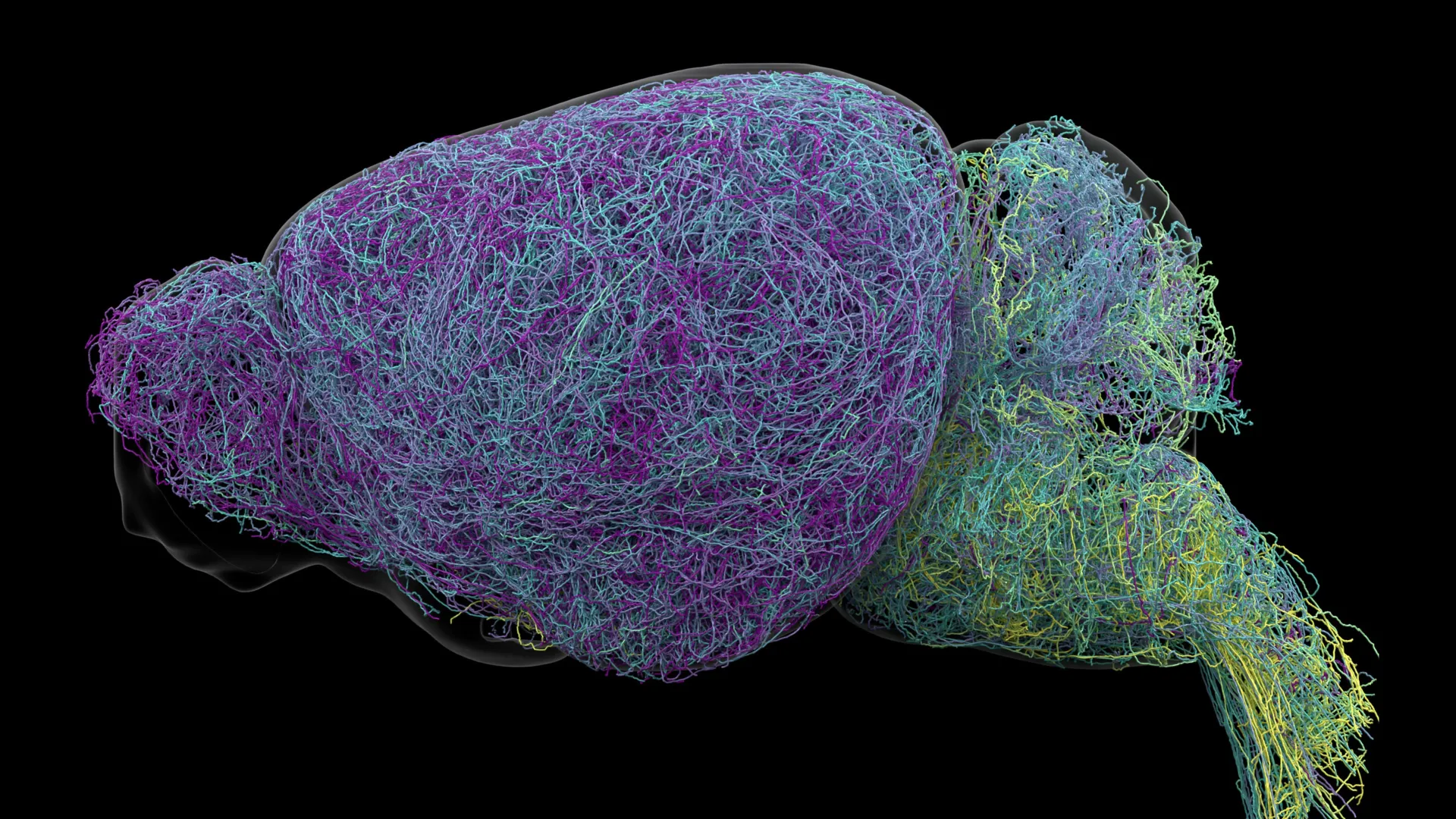
By tracing LC connections, the team identified pathways linking different groups of cells to specific parts of the nervous system. These connections shape where norepinephrine is released.
Different cells, different roles
Neurons in the dorsal, or upper, LC mainly connect to the cerebral cortex and forebrain. Cells in the ventral, or lower, LC primarily project to the brainstem and spinal cord.
In decision-making tasks, dorsal LC neurons connected to the cortex became more active as mice learned and changed their choices after an unfavorable result. Ventral LC neuron activity rose shortly before mice ignored signals that a reward might be available.
Karel Svoboda, the study’s co-author and director of Neural Dynamics at the Allen Institute, said the dorsal cells were linked to learning, while ventral cells appeared to influence whether animals engaged with their surroundings. The two groups also showed distinct patterns of gene activity.
Why the pathways matter
Treatments that affect norepinephrine can influence several brain circuits at once, sometimes helping in one region while causing unwanted effects in another. A clearer understanding of the LC’s pathways could help researchers develop therapies aimed more selectively at circuits involved in particular symptoms.
The study examined nearly 35,000 neurons through whole-brain imaging, analyzed genetic profiles from almost 400,000 cells, and reconstructed several unusually complex nerve cells. Researchers also found that LC neurons have exceptionally long axons. The work received support from the National Institutes of Health’s BRAIN Initiative.
Key points
- The locus coeruleus sends norepinephrine through distinct pathways, researchers found.
- Dorsal LC neurons were active as mice learned and adjusted their choices.
- Ventral LC neuron activity rose before mice ignored possible reward signals.
- Mapping these pathways may support more selective treatments for several conditions.