Low Snow and Summer Heat: Nearly 20% of Switzerland’s Glacier Ice Vanished in Five Years
Another severe year of melting
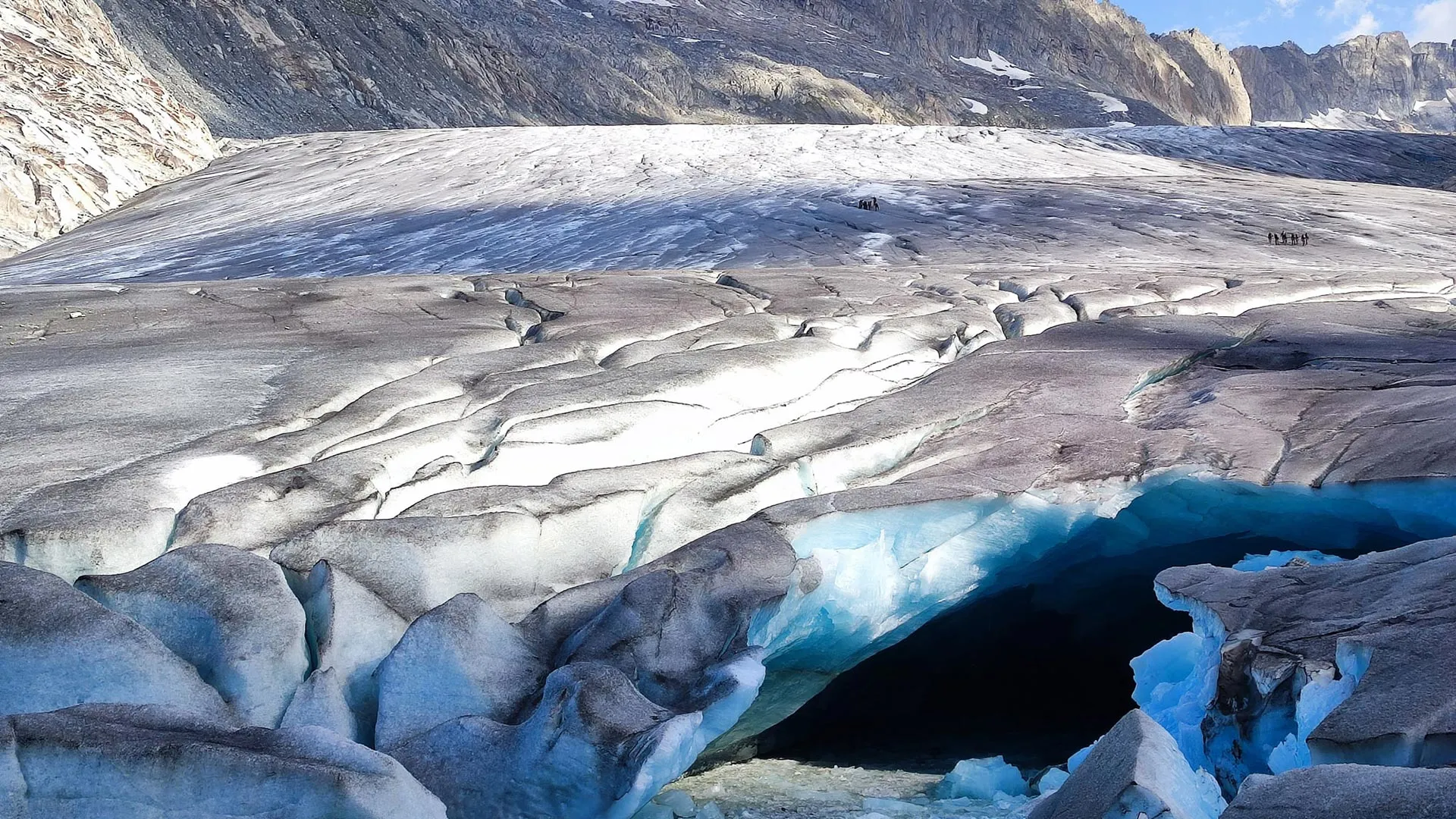
Swiss glaciers lost more than 5% of their total ice volume in 2026. The year’s losses fell short of the 2022 record, but glaciers still thinned by an average of 2.5 to 4 meters; some lower sections lost as much as 10 meters.
The Rhône, Aletsch and Clariden glaciers each recorded their most severe melting on record. Smaller glaciers Bella Tola, in Valais, and Griessfirn, in Glarus, disappeared permanently.
Five-year decline accelerates
Over the past five years, Switzerland has lost nearly 20% of its total glacier ice volume. The scale of that decline shows how quickly the country’s mountain landscapes are changing.
Snow shortage and summer heat
Unusually low snowfall and prolonged summer heat combined to drive extensive melting. The winter of 2025 to 2026 ranked among Switzerland’s ten least snowy winters since records began, leaving glaciers with less protective snow.
From May to September 2026, persistent heat and dry weather sped up ice loss, including at high elevations. Temperatures rose above freezing at elevations over 4,000 meters on 76 days, more than twice the usual number and a new Swiss record. By September, snow had disappeared even at 3,500 meters, exposing ice that would normally remain covered.
Meltwater brings temporary relief
From July through September, glaciers released about 2.2 trillion liters of water. That was more than four times the amount Swiss households consume as drinking water in a full year, temporarily easing summer shortages.
But the extra water comes from a shrinking resource. As glaciers continue to retreat irreversibly, the meltwater available to help offset warm-season shortages will also decline.
Key points
- Switzerland lost more than 5% of its glacier ice volume in 2026.
- Nearly 20% of the country’s glacier ice vanished over five years.
- Bella Tola and Griessfirn disappeared permanently.
- Glaciers released about 2.2 trillion liters of water from July to September.