Video shows massive Trump White House ballroom as construction faces legal scrutiny
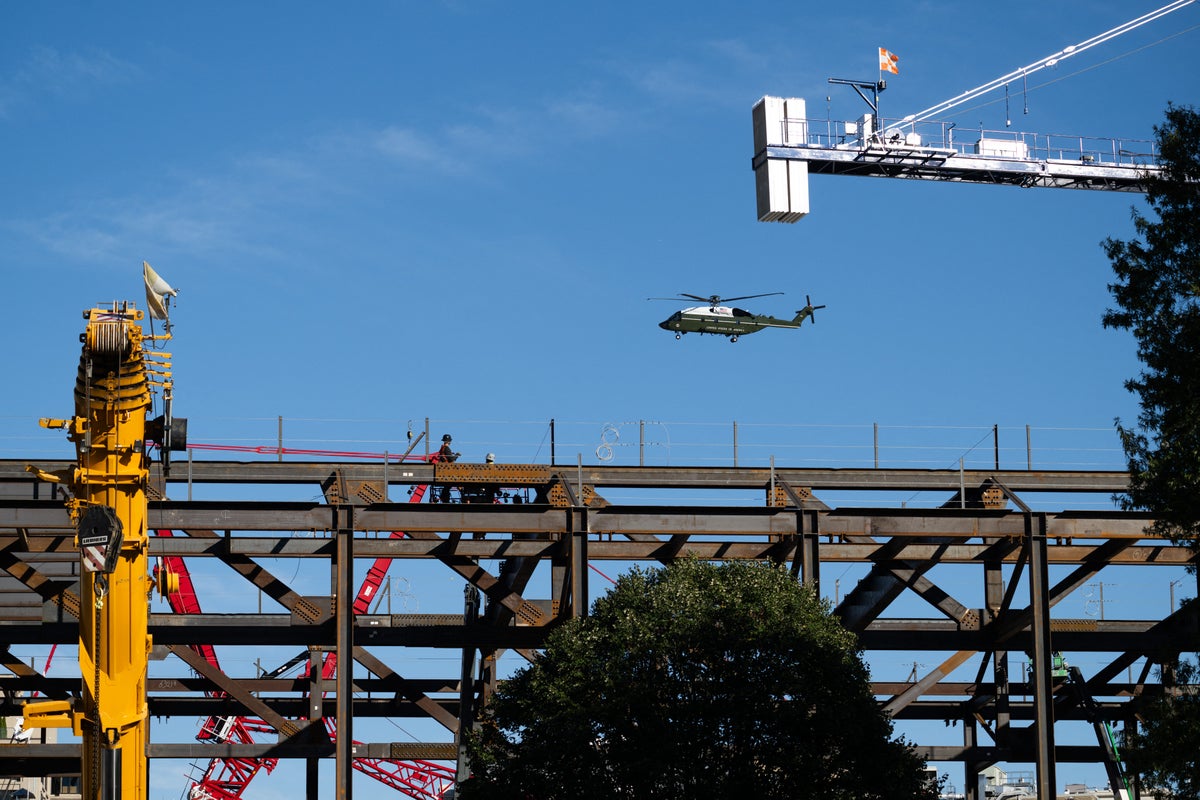
Aerial view of construction
The newly released helicopter footage shows the size of the ballroom project at the White House. Work on the site continues amid legal and political opposition.
Ruling and underground facility
In August, a federal judge ruled that Trump did not have authority to demolish parts of the White House without congressional approval, raising questions about the project’s future. A lawsuit by the National Trust for Historic Preservation temporarily halted above-ground work. Construction was allowed to continue on a six-story underground facility replacing the Presidential Emergency Operations Center, planned to include a military hospital and research facilities.
Costs and funding questions
The project’s estimated cost rose from $100 million in February 2025 to $250 million, and later to $600 million. Trump has defended it as a secure venue for state visits, official ceremonies and inaugurations; the design also includes a drone port described as a defense mechanism.
Donations are collected by the Trust for the National Mall, a Washington, D.C.-based nonprofit, and transferred to a White House account. At least $77 million came from anonymous donors, a funding arrangement criticized by ethics experts and Democratic lawmakers. Trump is not listed as a donor, despite earlier claims that he was financing the project directly.
Pledges and rally incident
Documents show that some large pledges coincided with agency decisions or federal contract awards. Dish Network chairman Charles Ergen pledged $25 million before the FCC dropped an inquiry into his firm; Salesforce pledged $3 million around the time it secured a multibillion-dollar Army deal. Trump responded from the stage, saying, “That was great, man,” and later, “Is everybody OK?”
Key points
- Helicopter footage shows the scale of the White House ballroom construction project.
- A federal judge ruled Trump needed congressional approval to demolish parts of the White House.
- The project’s estimated cost has climbed to $600 million, with at least $77 million from anonymous donors.
- The underground facility is planned to include a military hospital and research facilities.