APOD October 22, 2026: The First Green Star? WD J1330+6435 | NASA Science
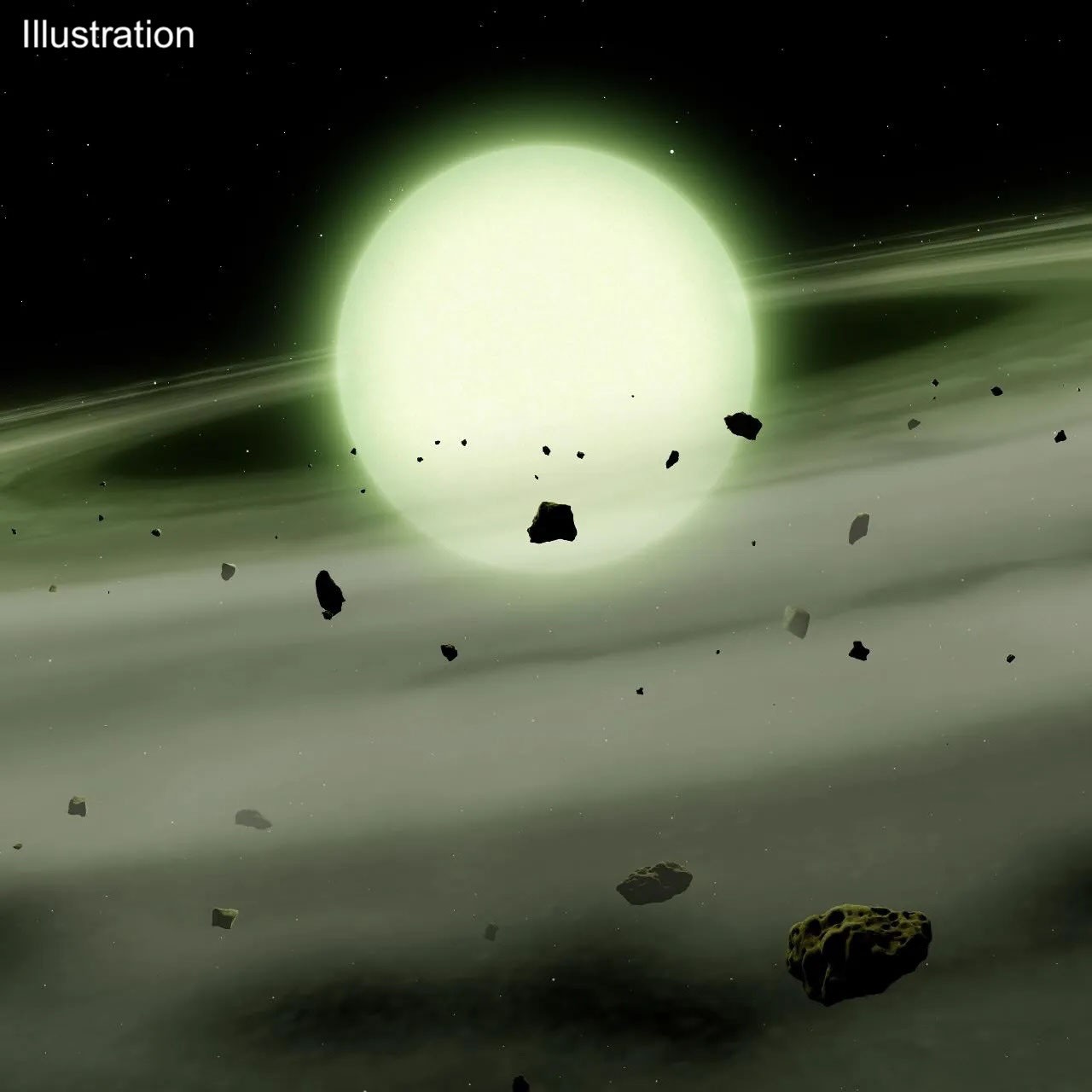
A colorful stellar remnant
The featured illustration portrays WD J1330+6435 as a white dwarf encircled by a disk containing gas and rocks. The materials orbit the star. White dwarfs are faint and compact remnants left behind when Sun-like stars run out of nuclear fuel. Despite their name, some may not appear white to observers.
Why stars show different colors
Stars other than the Sun are so distant that they appear as points in the sky. Most look white, though some are clearly red or blue. Color often reflects temperature: blue stars are hotter than red ones. Astronomers have also identified white dwarfs that could appear yellow, green, cyan, pink or purple.
Elements shift the appearance
The unusual colors are linked to trace elements that have accumulated on some white dwarfs. Those elements interact with the stars’ atmospheres and change their normally white appearance.
The image of WD J1330+6435 is an illustration, rather than a claim that every white dwarf has a different hue. It highlights how material around and on a stellar remnant can help shape its observed color.
Key points
- WD J1330+6435 is shown as a white dwarf with an orbiting disk of gas and rocks.
- White dwarfs remain after Sun-like stars exhaust their nuclear fuel.
- Trace elements can make some white dwarfs appear yellow, green, cyan, pink or purple.