Three Mars Helicopters Ride NASA’s Nuclear-Powered Mission as SR-1 Freedom Advances Module Progress
Building the power module
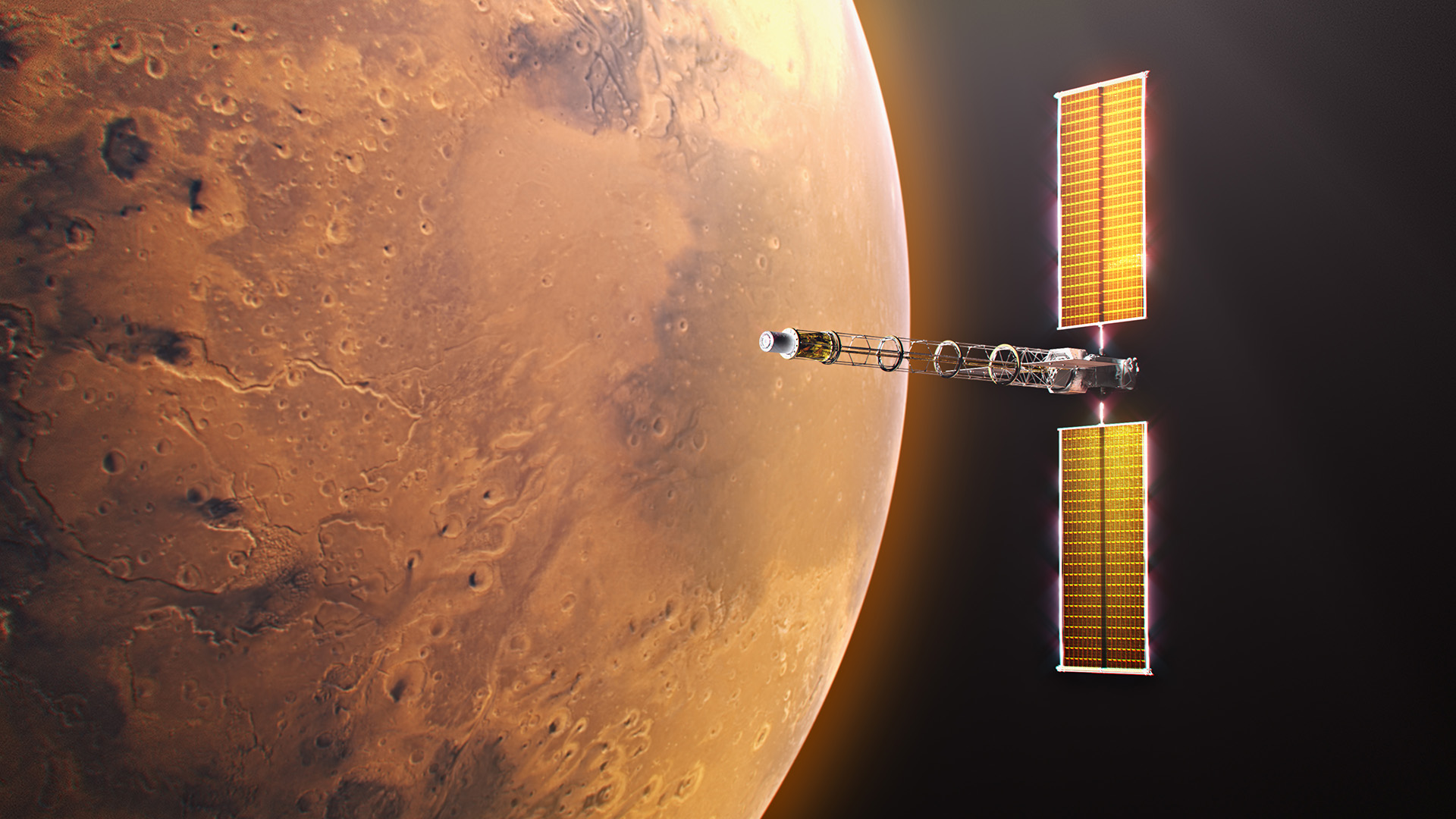
NASA’s Space Reactor-1 Freedom is intended to become the first fission-powered spacecraft to travel beyond Earth orbit. Its mission will demonstrate nuclear electric propulsion in deep space, and NASA says work is progressing on the spacecraft’s nuclear power module.
Sierra Lobo Inc. will provide the module’s closed Brayton cycle power conversion system. It will convert heat from the fission reactor into electricity for the propulsion demonstration.
Reactor and safety measures
The power conversion system will be integrated with a fission reactor designed and developed by the Department of Energy’s Idaho National Laboratory. Together, those components will form the nuclear power module.
NASA and DOE say safety measures are built into the spacecraft’s design and development. These include interagency reviews, ongoing oversight by a NASA chief safety officer, regulatory compliance and a safety process addressing hazards, failure tolerance and nuclear safety. The spacecraft’s reactor will remain inactive until SR-1 Freedom has left Earth orbit.
Mission plans and timeline
SR-1 Freedom is scheduled to launch in late 2028, carrying the SkyFall science mission. SkyFall consists of three Mars helicopters based on the Ingenuity design. The helicopters are intended to collect scientific data, demonstrate exploration zones and identify possible water sources. NASA says the mission will support future deep-space exploration and development of next-generation fission-powered systems. Those systems are intended to help keep NASA’s Moon Base operating during periods of darkness and in places where solar power alone is insufficient.
Key points
- Sierra Lobo will supply the nuclear power module’s closed Brayton cycle power conversion system.
- Idaho National Laboratory is developing the fission reactor for the module.
- SR-1 Freedom is scheduled to launch in late 2028 with three Mars helicopters.