Black-hole jets and stellar blasts: NASA reveals 16 stunning galaxies hiding cosmic chaos
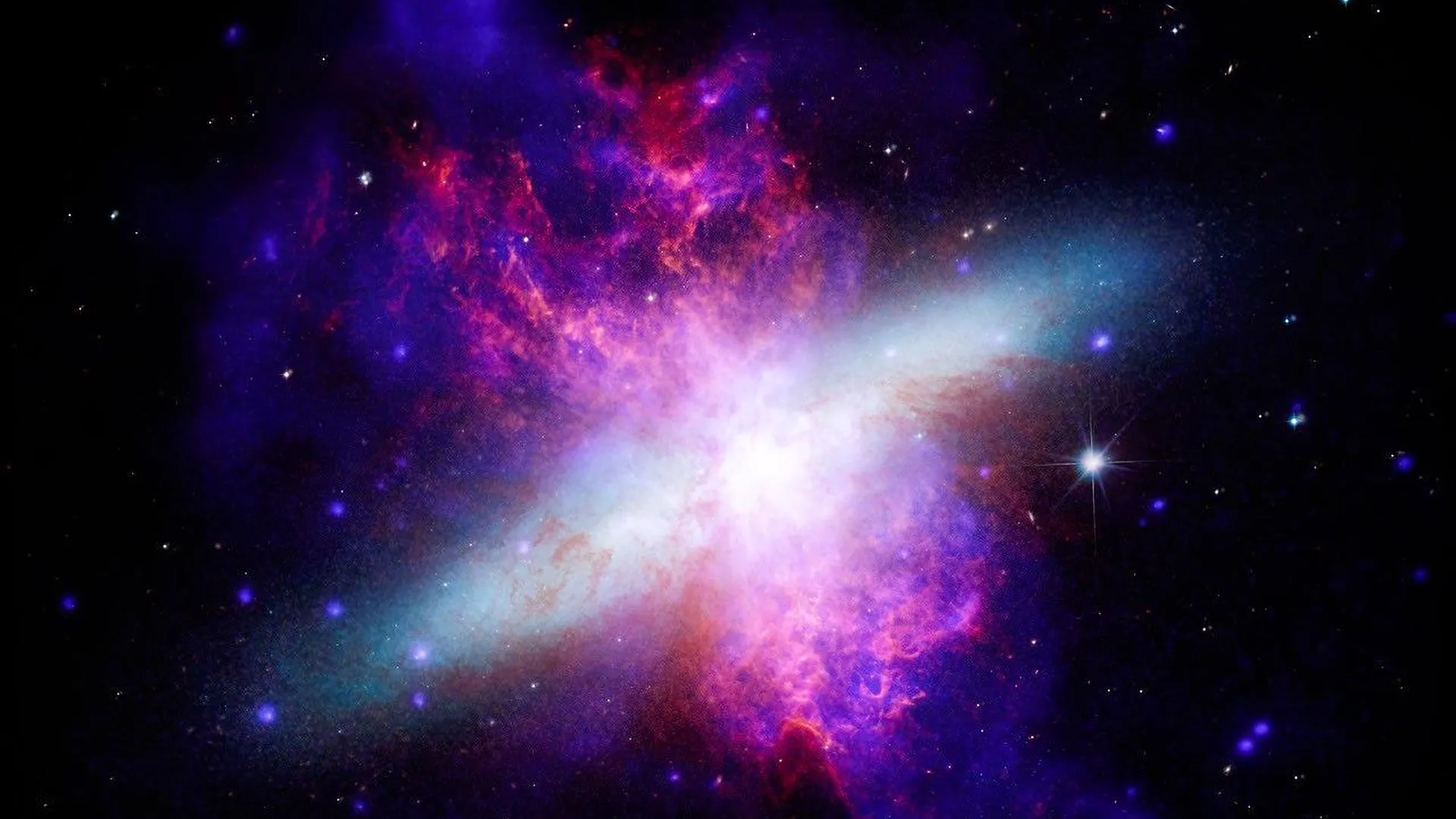
A gallery across the universe
The images combine Chandra observations with data from NASA’s James Webb and Hubble Space Telescopes, IXPE, the Neil Gehrels Swift Observatory, NuSTAR and other observatories on Earth and in space. Each image includes X-ray measurements gathered during Chandra’s decades in space.
Astronomers use X-rays to detect extreme activity, including gas heated to millions of degrees, material expelled by supermassive black holes and debris from stellar explosions. These processes spread elements through space, including elements that become part of planets and living things.
Different shapes, different histories
The gallery includes face-on views of Messier 33 and NGC 3938, where astronomers can examine spiral arms and energetic star pairs, as well as the aftermath of stellar explosions. Barred spirals NGC 1672 and NGC 1385 have central structures that can channel material inward and fuel star formation.
Black holes shape their galaxies
Active galactic nuclei form when central black holes consume surrounding material. These energetic cores can launch particle jets and major outbursts that affect conditions across their host galaxies.
In Centaurus A, Chandra and IXPE observations show a high-energy particle stream extending tens of thousands of light-years from the galaxy’s center. In Messier 106, jets from the central supermassive black hole heat nearby gas and create unusual spiral structures.
Key points
- The gallery contains 16 images combining Chandra X-rays with observations from other telescopes.
- X-rays reveal hot gas, stellar debris and material expelled by supermassive black holes.
- Galaxy encounters and central bars can help trigger star formation.
- Black-hole jets and stellar winds can send material far beyond their host galaxies.