VIPER Fully Built for 2027 Water Hunt as NASA Provides Progress on Moon Base Rovers
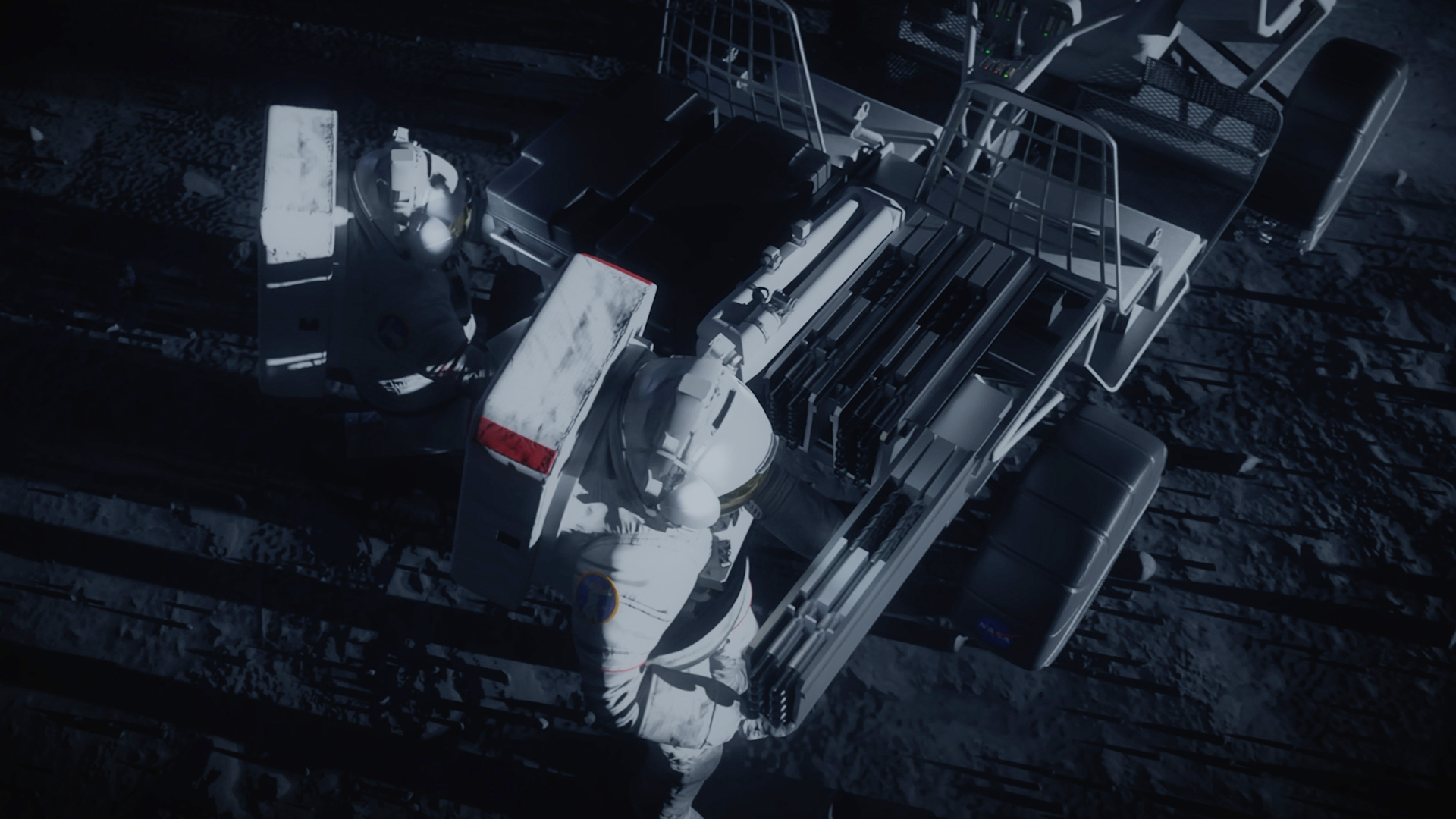
Rovers support Moon Base plans
NASA’s Moon Base video update showed work on commercial lunar terrain vehicles and robotic rovers. The vehicles are intended to help develop surface mobility through demonstrations, astronaut transport, mapping, science investigations and resource prospecting.
NASA official Robert Pickle said lunar rovers are central to its surface mobility strategy. Their performance, he said, will help shape systems and infrastructure for long-duration exploration. Information gathered during early missions is expected to inform future mobility systems and Moon Base development.
VIPER prepares for 2027 mission
NASA’s VIPER rover is scheduled to travel to the lunar South Pole region in 2027. After reaching the surface aboard a Blue Moon Mark 1 lander, it is expected to cover more than 18 miles (30 kilometers), examining permanently shadowed craters for water and other resources.
VIPER’s measurements of terrain, lighting and temperature could help researchers understand where lunar water is found and how resources might be used. The information could also contribute to studies of the Moon’s history and its relationship to Earth.
Lunar terrain vehicles advance
NASA awarded task orders to Astrolab and Lunar Outpost to build the first phase of crew-capable lunar terrain vehicles, or LTVs. Blue Origin has a task order to deliver the vehicles to the lunar South Pole region by 2028 through NASA’s Commercial Lunar Payload Services initiative.
Before astronauts arrive, the LTVs are expected to operate remotely from Earth, travel up to 3.7 miles (6 kilometers) daily and map the surface. They will also collect data about navigation, lighting, energy use and performance in permanently shadowed areas, where temperatures can reach minus 334°F (minus 203°C).
On Artemis missions, astronauts will drive the LTVs to explore the region and collect geological samples. Each vehicle is designed to support up to three moonwalks per mission, carry up to 176 pounds (80 kilograms) of samples and tools, and travel up to six miles (10 kilometers) on one charge.
Astrolab tests crew vehicle
Astrolab’s Crewed Lunar Vehicle 1, or CLV-1, is based on the company’s FLEX lunar terrain vehicle design. The company recently delivered a mockup to Axiom Space for evaluation.
NASA astronauts wearing mock-ups of the Artemis lunar spacesuit assessed the rover’s design, crew cabin and display interfaces. Astrolab plans to send its first robotic rover, FLIP, before CLV-1 reaches the Moon.
Key points
- VIPER is fully built and undergoing final testing before a planned 2027 lunar mission.
- NASA tasked Astrolab and Lunar Outpost with building the first phase of crew-capable lunar terrain vehicles.
- Astronauts evaluated an Astrolab CLV-1 mockup at Axiom Space.