Dublin AI summit brings tech bosses together with EU officials to weigh Europe’s ambitions and concerns
A push to accelerate AI
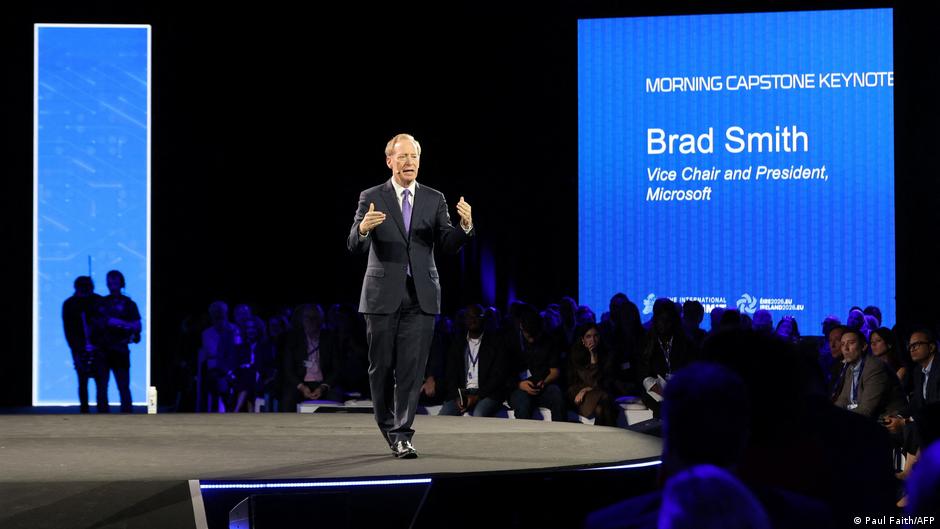
Hosted in Dublin during Ireland’s presidency of the EU Council, the International AI Summit drew more than 1,500 expected guests. They included Google DeepMind chair and co-founder Demis Hassabis, Microsoft president Brad Smith, and senior European and Irish officials.
Panels discussed AI’s possible contribution to economic growth, innovation and public services. Examples included spotting early cancer signs, improving extreme-weather alerts and making electricity distribution more efficient, although dependable services still need testing and validation.
University College Cork professor Barry O’Sullivan described the event to DW as being much like a political broadcast for AI. The shortage of critical perspectives at the summit prompted accusations of excessive enthusiasm for the technology.
Investment and Ireland’s interests
Ireland’s stake extends beyond its role in the EU. Several major technology companies base their European operations there, and the country depends heavily on taxes from multinational businesses.
Foreign-owned multinationals paid €28.8 billion in corporation tax in 2025, or 87% of the total when exceptional Apple tax proceeds are excluded. The figure includes pharmaceuticals and other industries as well as technology.
Stanford University’s AI Index put private AI investment at $286 billion in the US in 2025, compared with $21 billion in Europe. O’Sullivan argued that Europe could build on areas such as industrial robotics and specialised applications rather than compete on identical terms.
Rules, safeguards and criticism
EU representatives said existing rules were intended to support AI while limiting harm. Irish commissioner Michael McGrath referred to balancing the technology’s promise with safeguards that build trust.
The AI Act prohibits some practices and sets tougher requirements for sensitive uses. Amendments known as the Omnibus, in force since July 2026, seek to simplify compliance but have also delayed some protections; employment and education rules are due to apply from December 2027, with rules for AI in regulated products following in August 2028.
The European Commission says businesses need time to adapt to standards and guidance, while critics say competition is driving delays to protections. O’Sullivan rejected the idea that regulation and innovation conflict, citing pharmaceuticals and medical devices. At a protest, lawmaker Paul Murphy said the amendments represented deregulation and called for civil society, unions and politicians to shape AI’s development and use of resources such as water and electricity.
Key points
- The Dublin summit focused on AI’s potential to support Europe’s economy and public services.
- More than 1,500 guests were expected, including senior technology executives and EU and Irish officials.
- US private AI investment in 2025 was far above Europe’s, according to Stanford University’s AI Index.
- Critics warned that delayed safeguards and limited public debate could leave protections trailing behind AI development.