NASA’s Webb finds signs of Mars-sized worlds smashing together
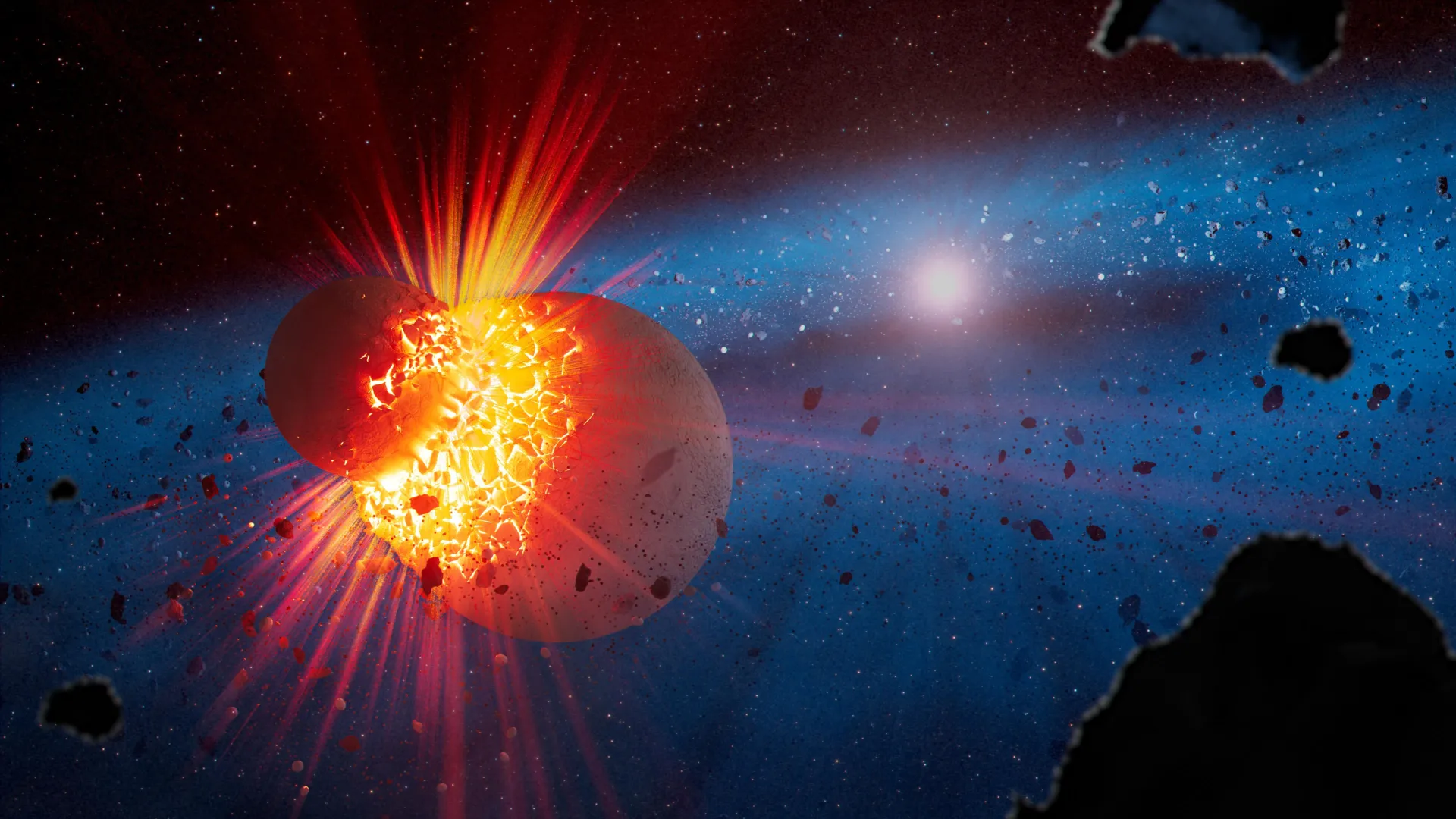
A team led by Kate Su of the Space Science Institute used NASA’s James Webb Space Telescope to study young star systems with unusually dusty surroundings. The research examines collisions that may resemble the impact thought to have formed the Moon.
The young Earth is believed to have collided with a Mars-sized body called Theia. Debris from that impact eventually gathered into the Moon. Studying comparable events around other stars may help scientists understand how rocky planets develop.
The team analyzed 21 extreme debris disks: five from earlier Spitzer data and 16 observed with Webb. Such disks are thought to be uncommon in observations, appearing around about 1% of young stars.
The researchers found three shared traits: unusually small dust grains, abundant warm dust near the star, and brightness that varies unpredictably. Their mid-infrared observations also revealed disks with either high or low silica content.
Mineral composition may help indicate the kind of collision that produced a disk’s debris, and could help explain changes in infrared brightness. The findings provide new evidence for investigating how planets form and change over time.
Key points
- Webb and Spitzer data were used to study 21 unusually dusty disks around young stars.
- The disks contain small grains and warm dust, and their brightness varies irregularly.
- Silica levels may offer clues about the collisions that formed the debris.