Christa Pike suffering from pneumonia, unable to move arms after botched execution, lawyers say
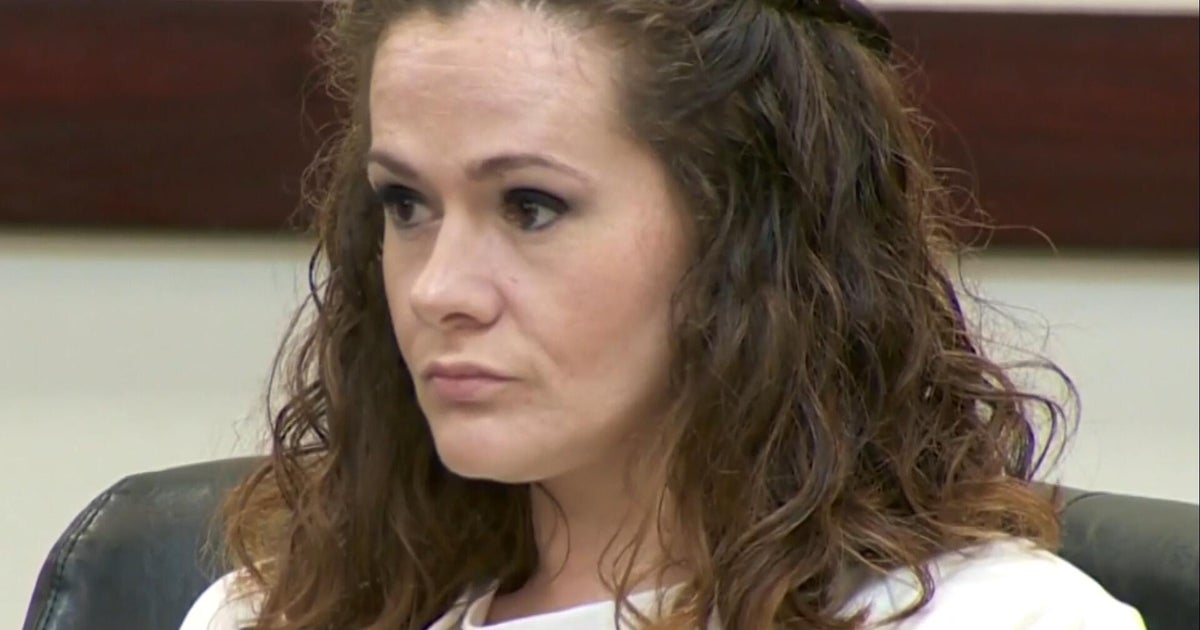
Christa Pike's attorneys said she has pneumonia, a blood clot, couldn't swallow, and is unable to move her arms or hands once she regained consciousness in a Tennessee hospital, days after the death row inmate survived a botched execution by the state.
Spivey said he and Pike's other attorneys were told she was brain-dead on Monday and expected her to be removed from life support. But by the next day, she had woken up and started talking, he said.
In addition to the lung infection, a blood clot in her arm, and an issue swallowing that had prevented her from eating, Pike's arms and hands are "tremendously swollen," said Spivey, adding that "we don't know what function she will regain."
Chancellor I'Ashea Myles granted the order and said the state would be mandated to preserve "relevant evidence" of its failed attempt to put Pike to death on Sept. 30, including "drugs, IV lines, needles, catheters, medical supplies, restraints, gurneys" and anything else in the execution chamber at the time of the procedure.
She explicitly directed the state "not to lose, misplace, accidentally delete, any information that may be pertinent to this litigation."
Pike's attorneys also said Tuesday she was continuing "to receive critical medical care" as hospital workers attempted to clear her system of the lethal drug pentobarbital. Her prognosis remained unclear, they added, but she was expected to face, at minimum, "a long recovery."
"The state has made no promises that Ms. Pike will not be subject to a future execution," Luke Ihnen, one of Pike's attorneys, said in court on Wednesday. Evidence sought by the defense for the correctional department to preserve could help them build future arguments to prevent that from happening, Ihnen added.
They accused correctional staff tasked with handling Pike's execution of failing to properly establish an IV line through which to administer lethal drugs, and then failing to realize she had a "blown vein," allegedly allowing pentobarbital to spread through her body and causing a painful, botched procedure. In court, Ihnen also referenced the secrecy that shrouds execution protocols and proceedings in Tennessee and elsewhere across the U.S., which makes arguing death penalty cases particularly challenging.
Pike was convicted in 1995 of the brutal murder of her classmate, 19-year-old Colleen Slemmer. Pike was 18 at the time of the killing and spent more than three decades on Tennessee's death row. As the only woman awaiting execution in the state for a vast majority of that time, she was alone for almost the entirety of her incarceration. She was the first woman Tennessee attempted to execute in more than 200 years and the first person the state attempted to execute in modern times for a crime they committed at age 18, 19 or 20.
Christa Pike's lawyers push for commuted sentence after botched execution
Russia open to a Trump-Putin call as questions mount over plague lab death
Supreme Court gears up for new term with major cases on climate change, guns
Dive deeper
- Christa Pike's attorneys said she has pneumonia, a blood clot, couldn't swallow, and is unable to move her arms or hands once she regained consciousness in a Tennessee hospital, days after the death row inmate survived a botched execution b
- Spivey said he and Pike's other attorneys were told she was brain-dead on Monday and expected her to be removed from life support. But by the next day, she had woken up and started talking, he said.
- In addition to the lung infection, a blood clot in her arm, and an issue swallowing that had prevented her from eating, Pike's arms and hands are "tremendously swollen," said Spivey, adding that "we don't know what function she will regain.
- Chancellor I'Ashea Myles granted the order and said the state would be mandated to preserve "relevant evidence" of its failed attempt to put Pike to death on Sept. 30, including "drugs, IV lines, needles, catheters, medical supplies, restra
- She explicitly directed the state "not to lose, misplace, accidentally delete, any information that may be pertinent to this litigation."