Scientists find an “earthquake gate” as California fault stress hits a 1,000-year high
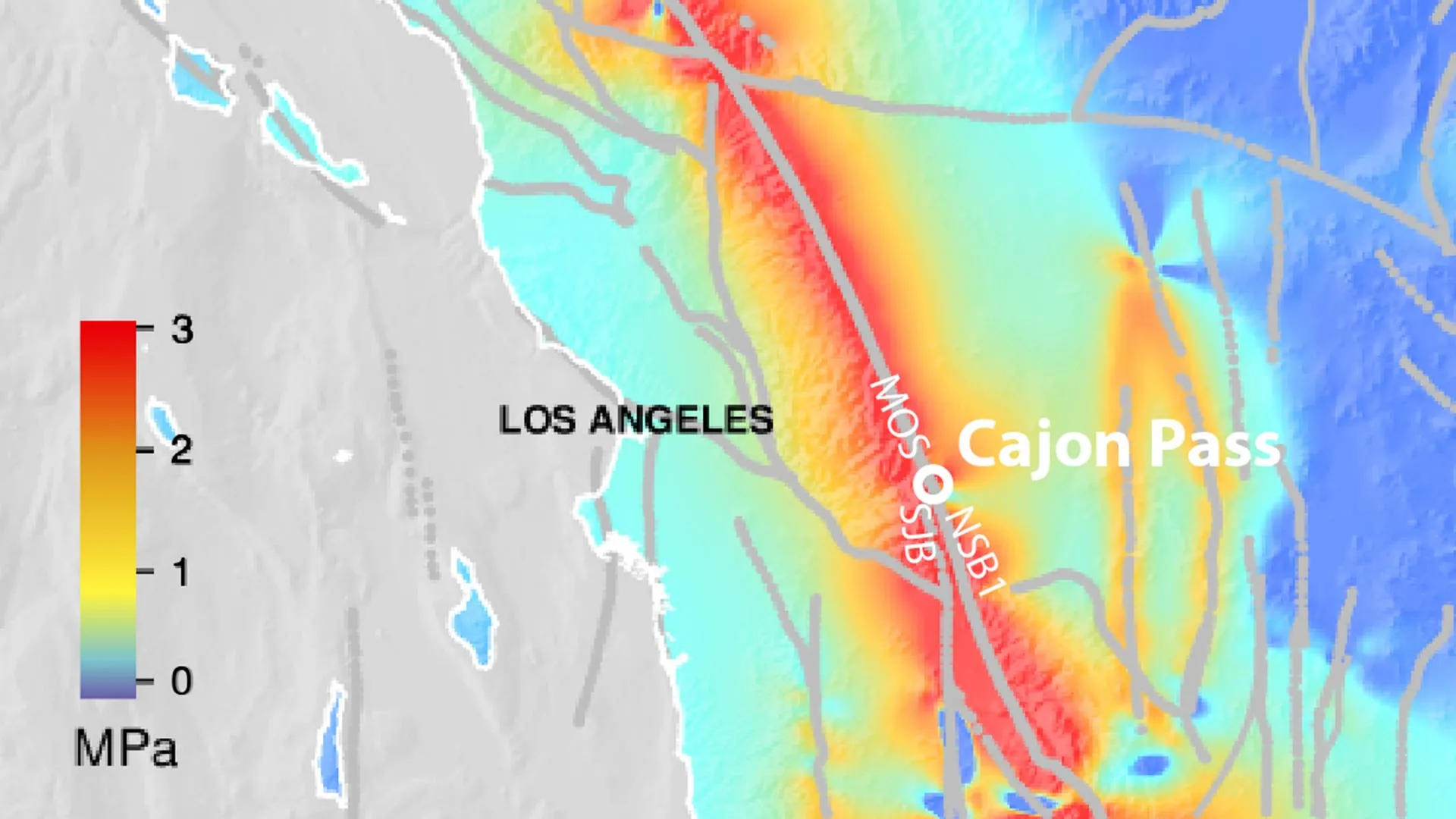
Researchers led by Liliane Burkhard at the University of Bern modeled earthquake activity over roughly 1,000 years on the San Andreas and San Jacinto fault systems.
The study estimates that stress in parts of the system has reached or exceeded the highest levels represented in the model’s history. Southern California has had no comparable major quake since the 1857 Fort Tejon earthquake, while tectonic stress has continued to build.
The team describes Cajon Pass, northeast of Los Angeles, as a possible “earthquake gate.” A rupture reaching the junction could remain on one fault or continue onto the other, potentially shaping the scale of a future event.
To reconstruct stress changes, the researchers combined a physics-based model with evidence from radiocarbon dating, tree rings and historical accounts of surface ruptures. The work included scientists from several U.S. research institutions.
Published in the Journal of Geophysical Research: Solid Earth, the study offers a long-term estimate of fault stress. The supplied article ends before explaining the team’s specific finding about how ruptures behave at Cajon Pass.
Key points
- Modeling suggests some fault areas are at their highest stress levels in 1,000 years.
- Cajon Pass may influence whether a rupture stays on one fault or crosses to another.
- Researchers used earthquake records and geological evidence to simulate stress through time.