

Is a Strong El Niño Expected in Winter 2026–27?
A strong event is reported as likely, but claims of historic strength and specific local impacts need more evidence.
The short version
- Verdict: Mostly true: Newsweek reports that federal forecasters expect a strong-to-very-strong El Niño through January–March 2027, but the supplied sources do not independently establish the forecast or a record event 1.
- El Niño is the warm phase of a Pacific climate pattern that can influence weather far beyond the tropical Pacific 14.
- A strong event can make some typical El Niño effects more likely, but it does not guarantee a particular winter in a specific place 1.
- Headlines about record strength and dramatic future changes rely on claims not corroborated by the official forecast material included here 23.
What is being claimed about El Niño this winter?
The claim is that a strong, perhaps exceptionally strong, El Niño is expected during winter 2026–27. Headlines have connected that possibility to conditions in the Great Lakes and Washington, and to a possible shift toward La Niña later on.
El Niño is the warm phase of the El Niño–Southern Oscillation, or ENSO: a recurring pattern involving sea-surface temperatures in the tropical Pacific and associated changes in the atmosphere. Those changes can affect weather in other regions, though their local effects vary 4.
What do the sources show about the forecast?
Newsweek reports that federal forecasters expected a strong-to-very-strong event through January–March 2027. It also says the odds were greater than even for an event described as historic compared with El Niños dating to 1950 1. That supports the broad claim that a strong event was forecast, as reported on November 28, 2026.
But the research provided does not include the underlying Climate Prediction Center forecast, its probabilities, or the technical criteria used to classify the event. The forecast detail here comes through a news report rather than the official forecast itself. So the report supports the claim, but readers cannot verify its exact wording or probability from these materials alone.
Does a strong El Niño mean a particular winter is certain?
No. The reported forecast suggests a greater chance of El Niño-related effects, not a guarantee. Newsweek quotes the Climate Prediction Center as saying that even with a very strong event, impacts consistent with El Niño are more likely but not assured 1.
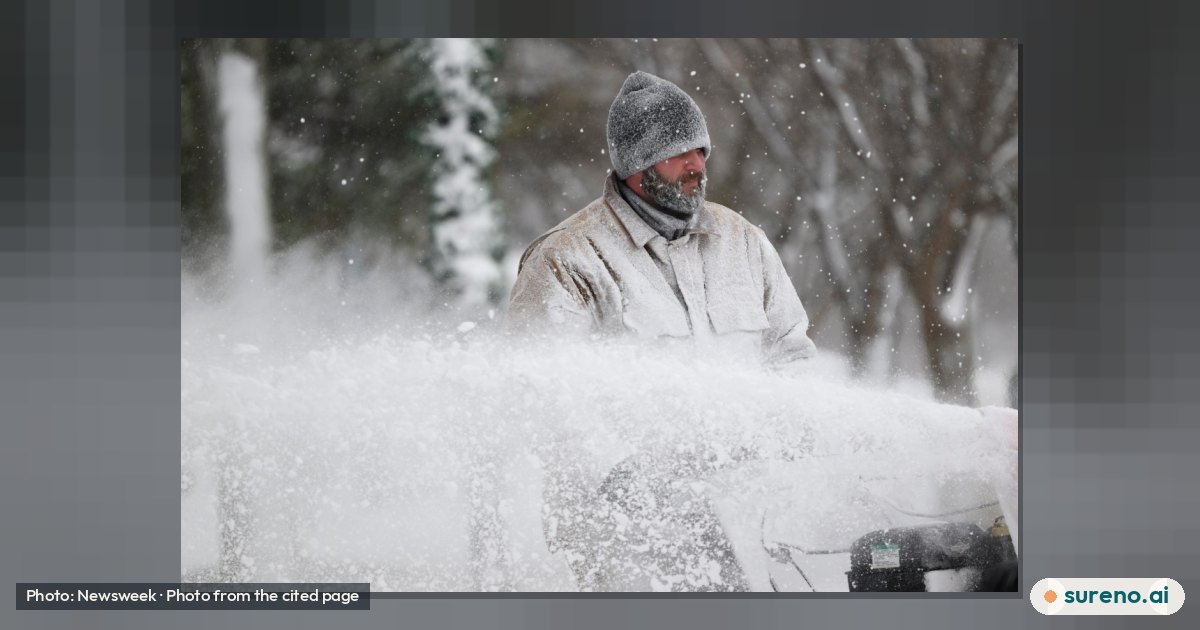
The article describes a common U.S. pattern: El Niño winters are often wetter in southern areas, while the northern tier and Great Lakes are often warmer and drier than average 1. These are broad tendencies, not a precise forecast for every community or storm.
Are the claims about record strength and a sudden shift confirmed?
Not by the sources provided. The Independent reports a forecaster’s claim that El Niño could rapidly weaken next year and give way to La Niña, and it repeats a claim that the event may be the strongest in at least eighty years 2. Those are attributed claims, not confirmation from an official forecast in this source set.
Metro similarly reports a “mega” El Niño characterization and exceptionally high sea-surface temperature claims attributed to a meteorologist’s social-media post 3. The supplied material does not provide a primary data record or an official assessment confirming those descriptions. The headlines are therefore stronger than what can be verified here.
For the Great Lakes, Newsweek reports possible milder conditions and changes to ice cover and lake-effect weather, while also stressing uncertainty 1. The sources do not establish that Washington will receive a particular amount of snow or that a specific shoreline will face a particular outcome.
How can you check an El Niño claim yourself?
Look for a dated forecast from NOAA’s Climate Prediction Center, and distinguish its probability estimates from a journalist’s or forecaster’s interpretation. Check what period the forecast covers and whether it describes a broad climate tendency or a specific local weather outcome.
Also check whether a dramatic label such as “super” or “historic” is being used in an official classification or as informal shorthand. The sources here say very strong events are sometimes informally called “super El Niños” 1. A useful forecast should state what is expected, the confidence or odds, and what remains uncertain.
What we don't know yet
- The official Climate Prediction Center forecast text and its detailed probabilities are not included in the research sources.
- The sources do not establish whether the event will break prior strength records.
- The exact timing and likelihood of a shift to La Niña are not confirmed by an official forecast in the supplied materials.
- Local snowfall, lake ice, and storm impacts cannot be determined from the broad outlook claims alone.
Share this explainer
Get this every day, on every new tab
Sureno Browser brings the day's stories, explained simply, to your start page.
Questions people ask
Will winter 2026–27 have a strong El Niño?
Newsweek reports that federal forecasters expected a strong-to-very-strong El Niño through January–March 2027 1. The official forecast itself is not included here, so this is a reported expectation rather than an independently checked forecast.
Is a super El Niño certain this winter?
No certainty is established by these sources. “Super El Niño” is described as an informal term for very strong events, and the reported forecasters say impacts are more likely, not guaranteed 1.
Could El Niño make the Great Lakes winter milder?
That is a possibility described in Newsweek’s report. It says El Niño winters often bring warmer and drier conditions to the northern tier and Great Lakes, while noting that local effects are not assured 1.
Will El Niño cause record snow in Washington?
The supplied sources do not establish that. They include no verified Washington snowfall forecast or evidence confirming the headline’s specific snow comparison.
Is El Niño expected to turn into La Niña in 2027?
The Independent reports one forecaster’s view that El Niño could weaken and give way to La Niña 2. The materials provided do not include an official forecast confirming when or whether that transition will happen.
Sources
- What Super El Niño means for America's Great Lakes — Newsweek, 2026-11-28
- ‘Super’ El Nino could be about to take a dramatic turn, forecaster warns — The Independent, 2026-11-28
- Super El Niño 'morphs into a mega El Niño' - how will it affect the UK? — Metro, 2026-11-24
- El Niño–Southern Oscillation — Wikipedia
Free tools for this
They run in your browser. Nothing is uploaded and there is nothing to sign up for.
More to read
 Nature & AnimalsWhy Lagos and Alexandria Are Sinking—and What It MeansNov 28, 2026 · 3 min read1 view
 Nature & AnimalsWhy Australia Is Retrieving Fuel from Macquarie IslandNov 22, 2026 · 3 min read0 views
 Tech & Online SafetyDoes Task Framing Change How Claude Code Performs?Nov 29, 2026 · 3 min read0 views
 Tech & Online SafetyWhat Audible’s Download Change Means for Purchased AudiobooksNov 29, 2026 · 4 min read0 views