El Niño Forecast: Peak Timing, Weather and Food Prices
The WMO expects El Niño to strengthen before peaking in December, but regional weather and crop effects will vary.
The short version
- The World Meteorological Organization says El Niño is expected to intensify and reach its forecast peak in December 2026 1.
- El Niño warms parts of the tropical Pacific and can shift winds and rainfall, increasing drought or flood risks in different places 1.
- It may affect crops such as cocoa and coffee, but the sources do not establish how much prices will change or when shoppers will feel it 2.
- The forecast describes broad risks, not a precise prediction for the weather or food prices in any one location 12.
What is El Niño?
El Niño is a recurring climate pattern in which surface waters in the central and eastern tropical Pacific become warmer than usual. That warming can influence winds, air pressure and rainfall far beyond the Pacific region 1.
It is one phase of a cycle that also includes La Niña, its opposite, and periods when neither pattern is in place. El Niño events typically occur every two to seven years and last around nine to 12 months, according to the WMO information reported by SBS 1.
When is El Niño expected to peak?
The WMO forecast cited by SBS says El Niño will keep strengthening before its forecast peak in December 2026 1. A peak is the expected point of greatest strength in this event; it does not mean that all effects stop immediately afterward.
The sources do not give a single, settled end date. One secondary account describes the event as lasting into early 2027, but the supplied WMO update is the stronger basis for the December peak forecast 14.
How could El Niño change weather?
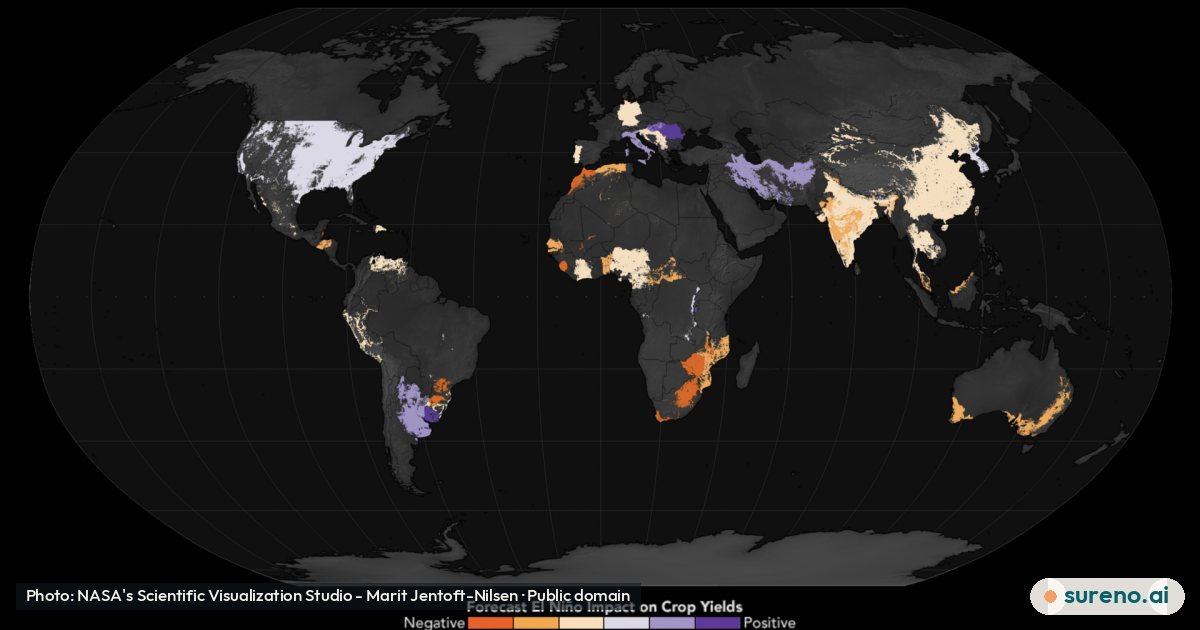
The WMO says El Niño is likely to bring above-average temperatures to much of the world and alter rainfall patterns. Those shifts can raise the risk of drought in some places and flooding in others 1.
That does not mean every region will be hotter or drier, or that a particular flood or drought can be attributed to El Niño alone. The supplied information describes broad risks rather than detailed local forecasts 1. It also says the warming effects may add to those of human-caused climate change 1.
Could El Niño raise chocolate and coffee prices?
It could put pressure on some agricultural supplies. El Niño can bring hotter conditions and less rainfall in Australia, and can affect tropical crops grown in warm, humid regions. Cocoa, coffee and vanilla are among the crops mentioned in the supplied reporting 2.
A senior economist quoted in that report said supply reductions had begun to put pressure on prices, while describing the effect as still being at an early stage 2. That is not a guarantee that shop prices will rise by a particular amount. The sources provide no reliable figure for how much prices may change, or how quickly any crop impact would reach shoppers.
What does the forecast mean for people?
For most people, the forecast is a signal to pay attention to local weather and official updates, not a prediction of exactly what will happen where they live. The WMO's outlook points to wider temperature and rainfall risks, while local conditions can differ 1.
For food shoppers, the reporting raises a possible supply and price concern for particular crops, not a certain price rise for every chocolate or coffee product 2. The supplied sources do not provide local price forecasts or enough detail to assess effects on individual households.
What we don't know yet
- How strong the event will ultimately be and whether the December peak forecast will hold 1.
- Which specific regions will experience the greatest rainfall or temperature effects; the supplied WMO summary gives broad risks rather than a local outlook 1.
- How much cocoa, coffee or vanilla supplies may change, and whether any crop effects will translate into higher prices for shoppers 2.
Share this explainer
Get this every day, on every new tab
Sureno Browser brings the day's stories, explained simply, to your start page.
Questions people ask
When is El Niño expected to peak in 2026?
The WMO forecast cited by SBS says El Niño is expected to continue intensifying before peaking in December 2026 1. Forecasts can change, and the peak date does not say when all effects will end.
What weather does El Niño bring?
El Niño can shift winds and rainfall and is likely to bring above-average temperatures to much of the world, according to the WMO update 1. The pattern can increase drought risk in some regions and flood risk in others.
Will El Niño make chocolate and coffee more expensive?
The supplied reporting says weather effects could affect cocoa and coffee supplies, and reports early price pressure linked to supply reductions 2. It does not provide a dependable estimate of how much retail prices might rise.
Does El Niño mean Australia will be hotter and drier?
The reporting says El Niño usually brings hotter temperatures and reduced rainfall in Australia 2. That is a general pattern, not a precise forecast for every Australian region or date.
How long does El Niño usually last?
El Niño typically occurs every two to seven years and lasts around nine to 12 months, according to the WMO information reported by SBS 1. The duration of this particular event is not settled by the supplied forecast.
Sources
- We now know when El Niño is expected to peak — SBS News
- Chocolate and coffee prices tipped to soar from El Niño weather event: — Yahoo Finance
- 2026–2027 El Niño event — Wikipedia
Free tools for this
They run in your browser. Nothing is uploaded and there is nothing to sign up for.
More to read
 Tech & Online SafetyWhy Stratego Stumped AI: Hidden Pieces ExplainedOct 3, 2026 · 4 min read1 view
 SpaceFalcon Heavy NROL-97: What The Space Devs Record ShowsOct 3, 2026 · 3 min read1 view
 Tech & Online SafetyProject Meridian Explained: Pentagon Advisory Plan and ConcernsOct 3, 2026 · 6 min read1 view
 Tech & Online SafetyWhat Google’s Gemini Work Agent Can Do—and What to CheckOct 9, 2026 · 3 min read0 views