

What Archaeologists Found at a Possible Castaway Camp
Wooden hull remains and traces of a nearby camp may be linked to the crew of Argentine captain Luis Piedra Buena.
The short version
- In January 2026, archaeologists recorded wooden hull remains and a possible temporary camp at Lacroix Inlet on Isla de los Estados, off Tierra del Fuego 13.
- The camp may be connected to Argentine captain Luis Piedra Buena and his crew, whose ship, the Espora, was lost on the island in 1873 13.
- The finds suggest a place where people may have stayed after a shipwreck, but researchers have not established who built the camp or identified the ship remains 13.
- Historical accounts say Piedra Buena and seven crew members were on the island after the Espora was wrecked; the new archaeological evidence is a possible, not confirmed, match 3.
What did archaeologists find on Isla de los Estados?
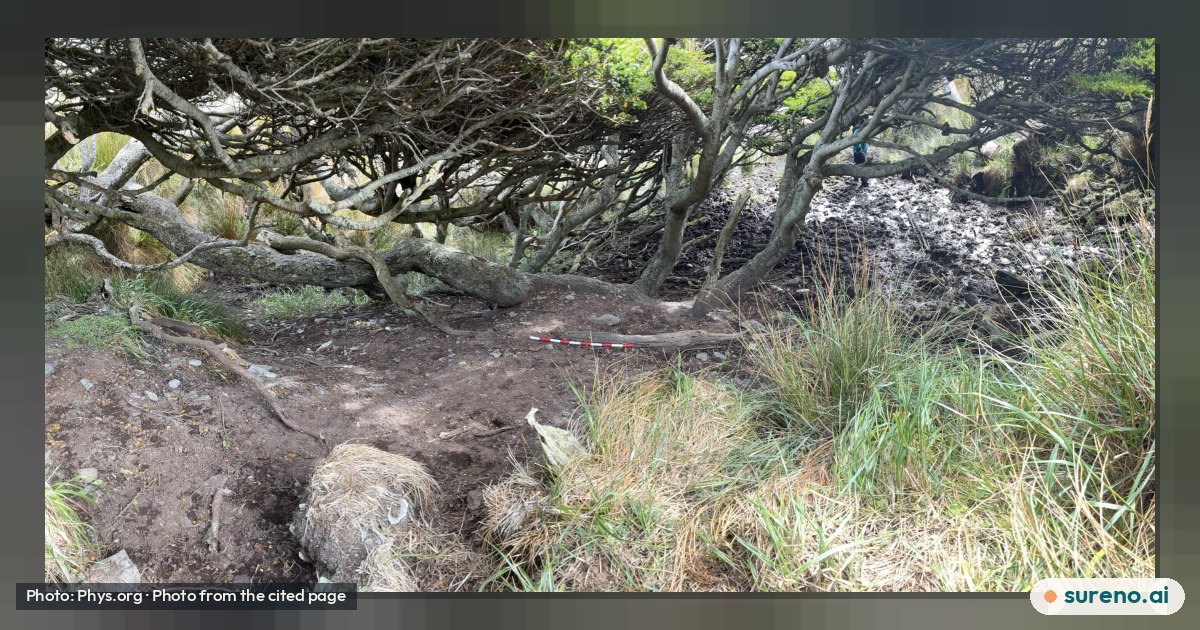
Researchers working at Lacroix Inlet, in Franklin Bay, recorded wooden hull remains and the traces of what may have been a temporary camp in January 2026. The inlet is on Isla de los Estados, a cold, remote island off Tierra del Fuego at the southern end of South America 13.
The team examined shipwreck pieces and documented the possible camp. The reported findings do not establish that the camp and hulls belonged to the same vessel or people. They are evidence to investigate, not a confirmed identification 13.
Could the camp belong to Luis Piedra Buena’s crew?
The researchers suggest a possible connection to Luis Piedra Buena, an Argentine captain whose ship was wrecked on the island in 1873. The vessel was the Espora, also known earlier as the Nancy. Piedra Buena and seven men were there on a penguin-oil expedition, according to the account summarized by Earth.com 13.
The proposed link rests on the location and the fit between the archaeological evidence and the recorded story of a stranded crew. The sources describe the camp as possibly connected to the men; they do not say that an inscription or another definitive marker identifies its occupants 13.
How might the evidence show the crew survived?
A camp could indicate that people stayed on shore rather than simply abandoning the wreck site. Read alongside the historical account of Piedra Buena’s shipwreck and escape, it may help researchers study how a crew dealt with being stranded in an isolated place 13.
Earth.com reports that Piedra Buena built a 33-foot cutter to leave the island. That detail comes from the historical account, not from proof that archaeologists found the cutter or directly documented its construction at the camp 3. The evidence therefore offers a possible connection to survival, not a complete record of what the crew did each day.
What happened to the Espora in 1873?
Earth.com’s account says the Espora ran aground on Isla de los Estados on March 10, 1873. The ship went onto a beach and sank in shallow water after the surf damaged its seams. The crew had been there to process penguins for oil 3.
The captain’s diary survives in a copy, according to that report. Historical records can help archaeologists compare a known event with objects and places on the ground, but the available reporting does not confirm that the hull remains found in 2026 are the Espora 3.
What is still unknown about the camp and ship remains?
The central uncertainty is identification: the sources say the ship has not been identified, and describe the camp’s association with Piedra Buena’s crew as possible 13. The published accounts provided here do not report a conclusive test tying the wood or camp remains to the Espora.
The discovery may help researchers examine how people responded to a maritime emergency in a remote setting. But it does not yet tell us exactly who occupied the camp, how long they stayed, or whether every nearby piece of wreckage came from one ship 13.
What we don't know yet
- Whether the wooden hull remains are from the Espora or another vessel 13.
- Whether the camp was used by Piedra Buena and his crew 13.
- How long anyone stayed at the camp and what activities took place there.
- Whether further archaeological work will establish a firmer link between the camp, the wreck remains, and the 1873 account.
Share this explainer
Get this every day, on every new tab
Sureno Browser brings the day's stories, explained simply, to your start page.
Questions people ask
Where was the possible castaway camp found?
Was the Espora shipwreck found?
Who was Luis Piedra Buena?
He was an Argentine captain associated with the 1873 shipwreck story. Reports say his ship, the Espora, was lost on Isla de los Estados while he and seven crew members were on a penguin-oil expedition 3.
Did Piedra Buena build a boat to escape the island?
Earth.com reports that he built a 33-foot cutter after the Espora was lost. The archaeological reporting provided here does not say that the cutter itself was found 3.
Sources
More to read
 Tech & Online SafetyWhat Gemini Omni 1.2 Flash Is and What It Can DoNov 7, 2026 · 3 min read0 views
 Tech & Online SafetyWhy Tesla Is Winding Down Cybertruck ProductionNov 7, 2026 · 3 min read0 views
 ScienceClimate risks at work, in childhood and in the distant pastNov 6, 2026 · 6 min read0 views
 Nature & AnimalsHow Forecasters Track Possible Atlantic Storm DevelopmentNov 6, 2026 · 3 min read0 views