

Eagles Hunting Human Sized Baboons Challenge Long Held Evolutionary Theory About Human Origins
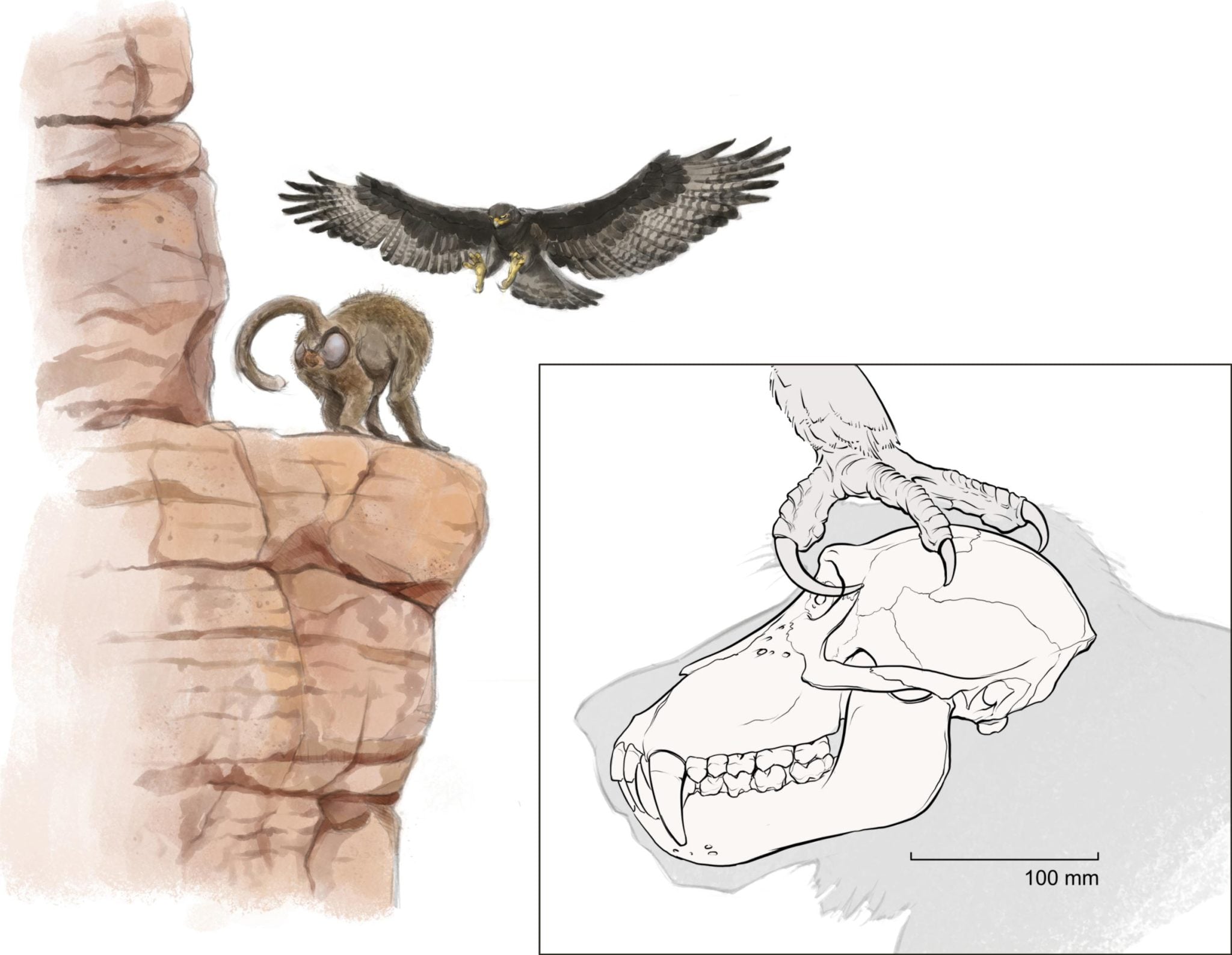
Evidence in northern Chad
The research took place on the Ennedi Plateau, where an isolated baboon population lives in the Sahara Desert. Scientists from the University of St Andrews worked there with colleagues from Dartmouth College, the University of Konstanz, the Max Planck Institute of Animal Behavior, and African Parks.
Researchers found baboon skulls bearing puncture marks. Professor Nathaniel Dominy of Dartmouth College said the team’s initial doubts about eagles attacking adult male baboons gave way as the evidence accumulated.
A threat from above
Before this discovery, no bird of prey had been confirmed to kill a primate weighing more than 13 kilograms (29 pounds). Scientists had thought humans and their ancestors were beyond the reach of even giant eagles for roughly 2.5 million years.
Professor Hobaiter said researchers saw baboons respond to Verreaux’s eagles flying overhead. The animals gave alarm calls and moved to safety, while appearing relaxed around other large birds of prey.
Possible lessons for evolution
The findings may matter to research on human evolution because primates respond differently to aerial predators than to threats such as big cats and crocodiles. One defense, called mobbing, involves primates—especially larger adult males—charging an attacker to drive it away.
Researchers said that if early human ancestors faced similar attacks, eagles may have influenced the development of communication and cooperation within groups. The evidence raises this possibility but does not establish how such threats affected human evolution.
A little-studied landscape
Dr. Gisela Kopp said the work showed the value of studying a region where primatological data had not previously been collected. Dr. Jean Didier Akpona said he had often seen Verreaux’s eagles around the gueltas, pockets of water within rock formations, but had not expected them to target primates of this size.
Professor Hobaiter said the Ennedi baboons’ first observations challenged assumptions about their diet and social lives. Akpona said the discovery prompted further interest in the mysteries of the Sahara’s gueltas.
Key points
- Researchers found puncture-marked baboon skulls in northern Chad.
- The findings challenge assumptions about the size of primates eagles can prey on.
- Baboons alarm-called and sought safety when Verreaux’s eagles flew overhead.
- Researchers say aerial threats may have influenced communication and group cooperation in early humans.