

Why scientists discover a bizarre paradox among endangered penguins on neighboring island groups
A survey across two islands
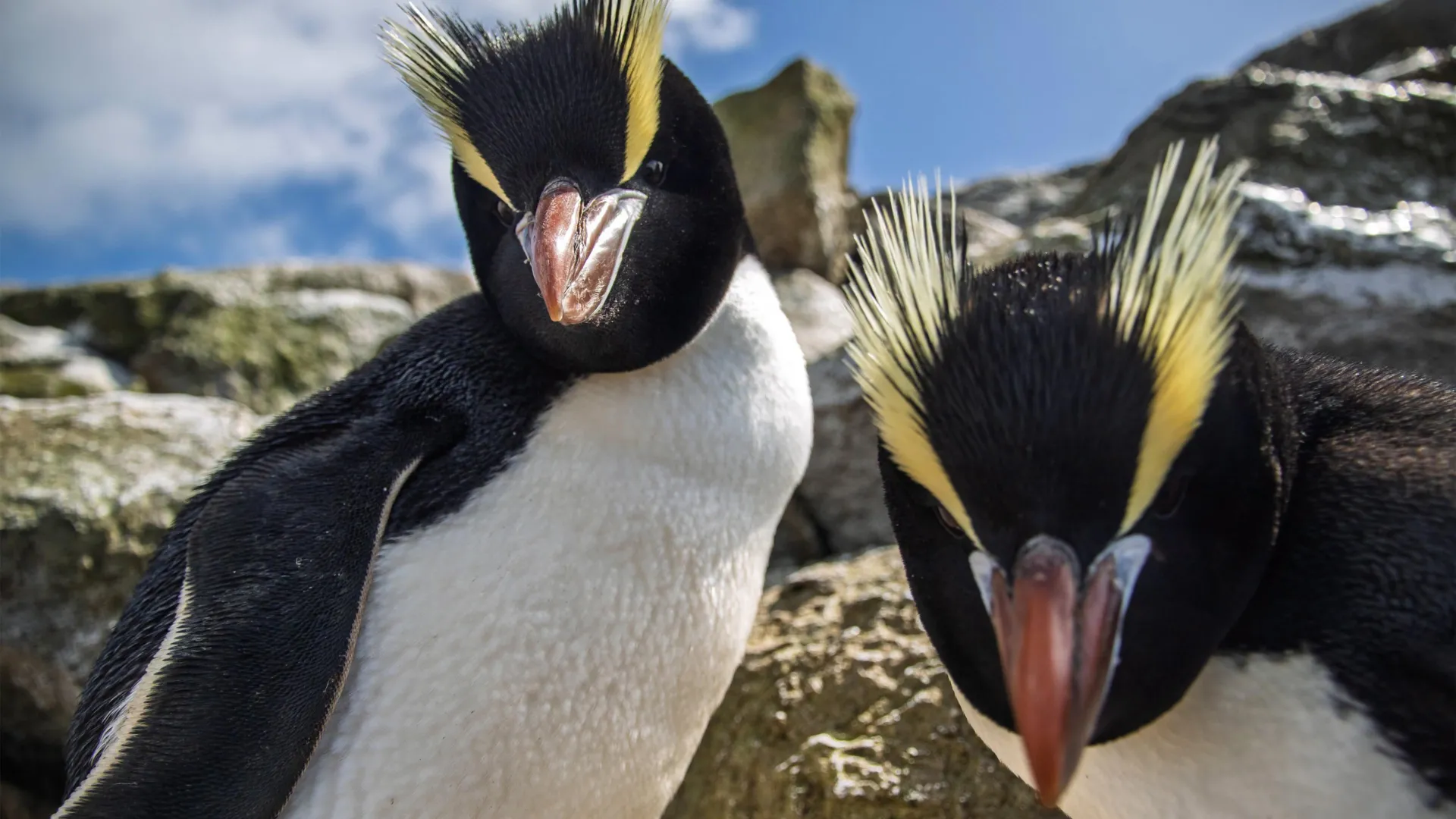
Researchers from the University of Otago, Ōtākou Whakaihu Waka, surveyed Erect-crested penguin colonies on the Bounty and Antipodes islands. The two remote island groups lie about 800 kilometers southeast of New Zealand’s South Island.
Using drones between 2022 and 2024, the team photographed and counted every breeding colony across both groups. The study, published in PLOS ONE, provides the first comprehensive population survey of the species.
The Bounty Islands, which cover 50 hectares, held about 27,800 breeding pairs. The much larger Antipodes Islands, 40 times their size, had about 29,800 pairs.
Opposing population trends
The study was led by Dr. Thomas Mattern of the Tawaki Project, with researchers from the university’s Departments of Zoology and Marine Science. The Antarctic Research Trust and Global Penguin Society also collaborated.
Pressures on Antipodes colonies
Researchers say several factors may contribute to the decline, including predators, increasingly destructive storms and differences in where penguins travel and feed. Skuas prey on penguin eggs and chicks, and shrinking colonies may offer less protection through group nesting.
As Antipodes colonies have become smaller, researchers say collective defense against skuas has weakened, increasing losses and further fragmenting colonies. Co-author Dr. Klemens Pütz suggested the decline of Eastern Rockhopper penguins may also have shifted predation pressure onto Erect-crested penguins.
Fewer than 1,000 Eastern Rockhopper breeding pairs remain on the Antipodes Islands. The species suffered a severe collapse during the second half of the 20th century, with similar declines across its Southern Ocean breeding range likely driven by warming ocean waters.
Different journeys, different risks
Increasingly powerful storms, consistent with wider climate trends across the Southern Ocean, have caused landslides that break up breeding colonies. Researchers say this can leave penguins more vulnerable.
Dr. Mattern said Antipodes penguins travel considerable distances to the Antarctic Polar Frontal Zone after breeding. Bounty birds stay closer to their nesting grounds, where surrounding waters are more sheltered and may provide more abundant food. The researchers named the contrast “Schrödinger’s Penguin,” invoking the physics thought experiment about a cat whose condition is unknown until a sealed box is opened.
Key points
- The Bounty Islands had about 27,800 breeding pairs; the Antipodes Islands had about 29,800.
- Bounty Islands numbers have stayed essentially unchanged for at least 25 years.
- The Antipodes Islands population has fallen by more than 40 percent since 1995.
- Researchers point to predators, storms and differing movements and feeding areas as possible pressures.