

Dinosaurs Eating Seaweed? Coastal Fossils Point to Ocean Food 100 Million Years Ago
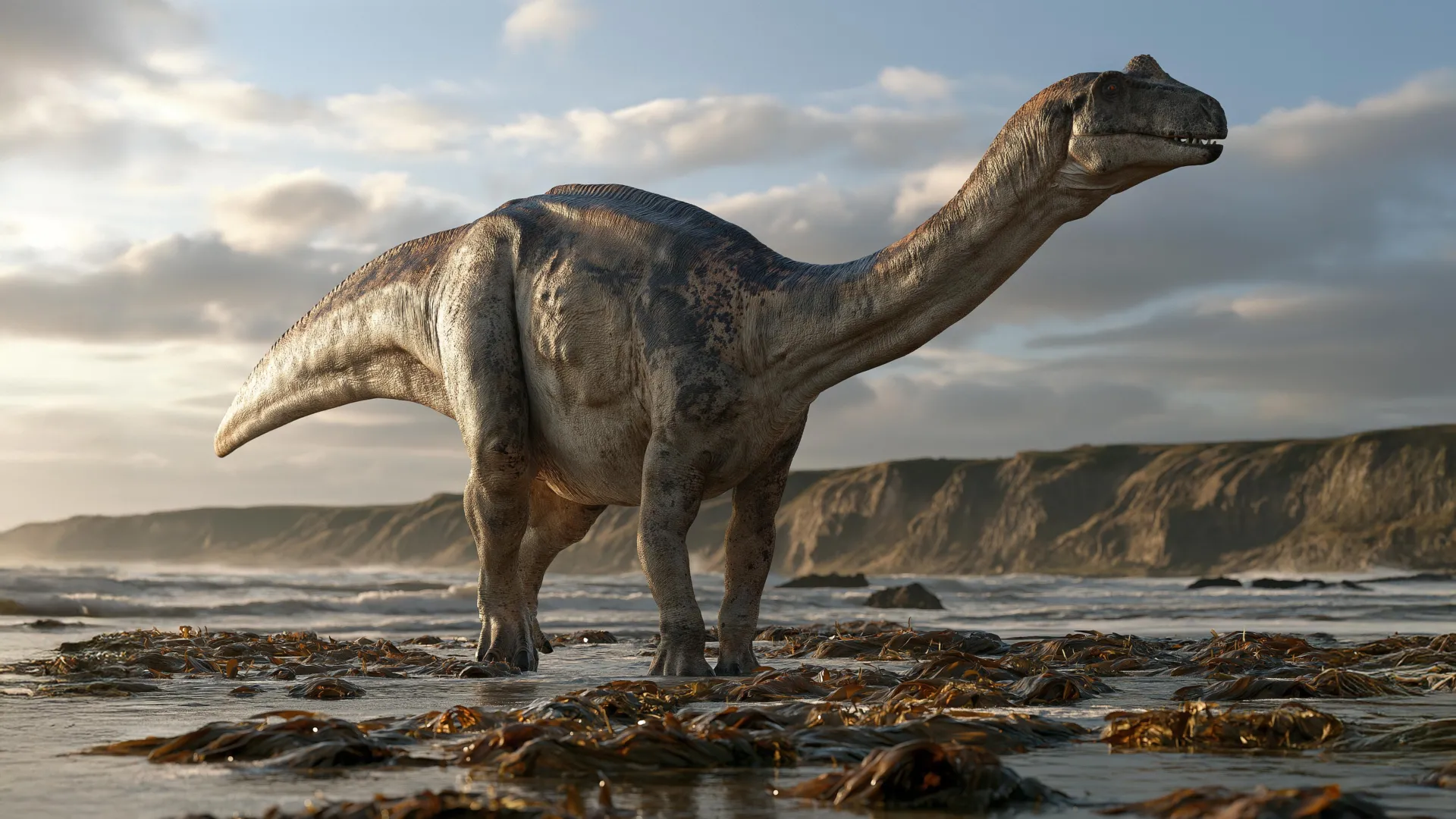
A link between sea and land
Storms today can wash seaweed and other ocean material onto beaches, providing food for land animals. Scientists call this marine subsidization, and it can become more important when food on land is scarce.
A study in Frontiers in Ecology and Evolution suggests the same process affected ecosystems during the Cretaceous. Researchers found chemical evidence that marine resources contributed to ancient food chains.
Clues preserved in teeth
Carbon occurs in light and heavy forms, known as C-12 and C-13. The balance between them, expressed as δ13C, can leave a food-related signature in tooth enamel. Dinosaur teeth have shown higher δ13C values than expected for animals eating only land plants. Living animals typically have enamel values 11 to 13 parts per thousand above their food, while land plants generally have lower values than most marine plants.
The researchers measured carbon isotope signatures in dinosaur, fish and crocodile fossils to investigate their likely dietary sources. First author Dr. Clayton Forster, a geologist at the University of Arkansas, said the signatures can show whether dietary sources differed between regions.
Comparing coastal and inland fossils
The team studied fossils from former coastal areas near the Western Interior Seaway and the ancient Gulf of Mexico coastline, as well as sites farther inland. About 100 million years ago, the Western Interior Seaway divided North America into two landmasses.
The fossils came from two Cretaceous intervals: the early Albian, around 113 to 107 million years ago, and the early Cenomanian, approximately 100 to 96 million years ago. Researchers analyzed powdered fossil material and considered the latitudes where the animals lived.
Coastal fossils consistently had higher δ13C values than those from inland formations. The pattern was similar across locations, latitudes and geological ages.
Ocean nutrients in food chains
The findings provide evidence that marine nutrients entered food chains on land in prehistoric ecosystems. The pattern appeared across animals including fish and large plant-eaters. Forster said coastal animals must have eaten ocean-derived organic matter or prey that had consumed it. He said the shared signal across aquatic and terrestrial animals suggests the source entered the food chain at a low level. The study offers a possible explanation for the unusually high carbon isotope readings found in dinosaur teeth.
Key points
- Coastal fossils had higher carbon isotope values than fossils from inland sites.
- The research examined fossils from two Cretaceous intervals, including one around 100 million years ago.
- The isotope pattern appeared across locations, latitudes and geological ages.
- Researchers say ocean-derived food likely entered prehistoric land food chains.