

How a Strange Liquid Is Helping Scientists Overcome a Major Nanotechnology Barrier
Patterns at tiny scales
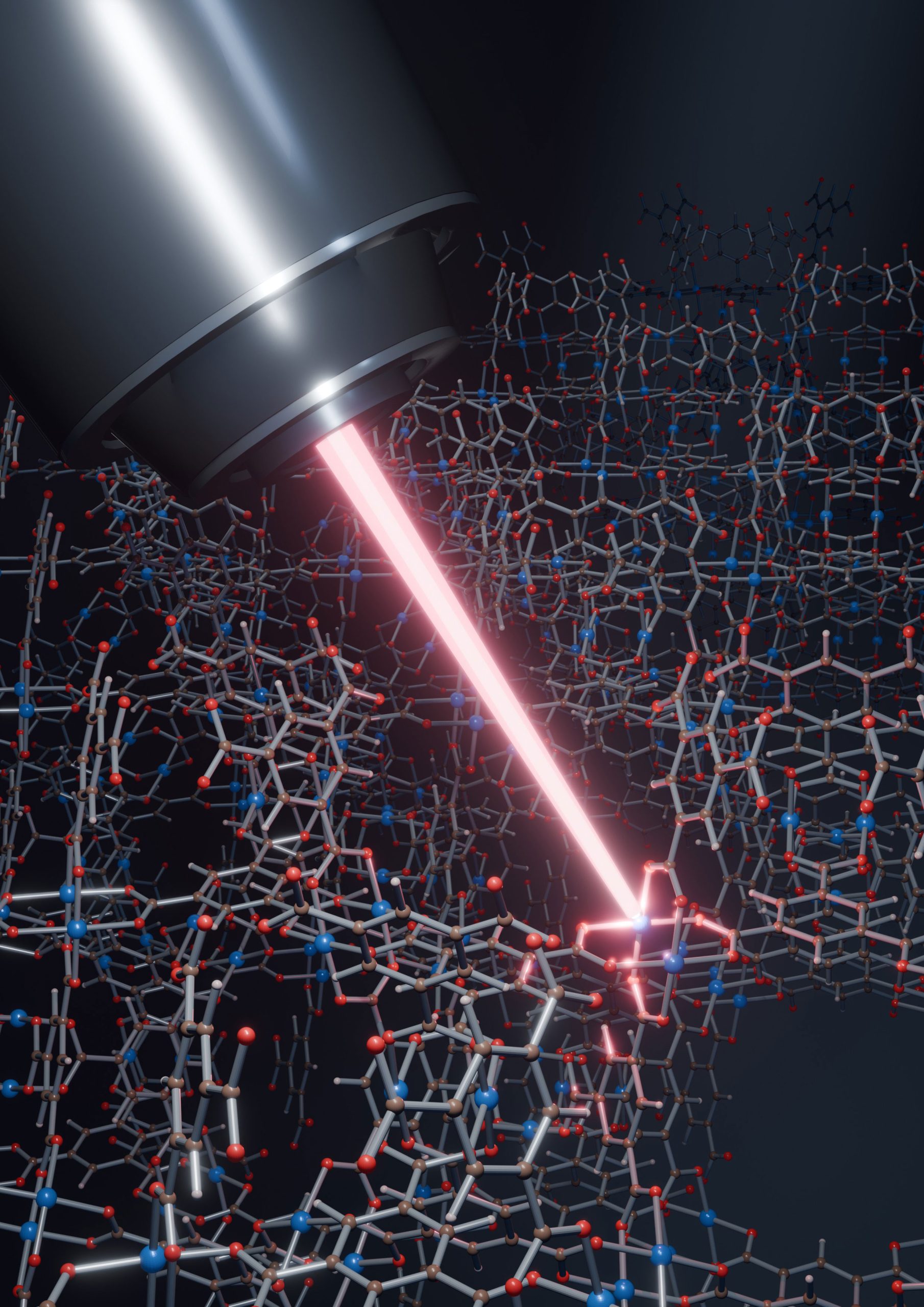
The team etched a square measuring 5 × 5 micrometers and a pillar. It also created a Chinese character with lines 130 to 300 nanometers wide.
A long history of MOFs
The origins of MOFs date to 1974, when University of Melbourne chemistry professor Richard Robson explored whether molecules and chemical bonds could replace wooden balls and metal rods in structural models. His experiments linked copper ions with four-armed organic molecules, helping establish the foundations of this porous-material class.
Possible protection mechanisms
These explanations remain proposed mechanisms, not directly established causes of the reduced damage. The experiments examined only one copper-based MOF, so the approach’s effectiveness with other frameworks remains to be tested.
Potential manufacturing route
If the method works with additional materials, room-temperature etching could offer a more accessible way to manufacture MOF-based devices. It may avoid the cooling requirements of cryogenic processing.
The study, titled “Ionic-liquid-assisted room-temperature dry etching of metal–organic frameworks,” was scheduled for publication in Communications Materials. Its listed authors are Yumeng Zheng, Momoka Muraoka, Koki Egawa and Kentaro Kinoshita.
Key points
- An ionic liquid reduced focused ion beam damage in a copper-based MOF.
- The team etched features with lines as narrow as 130 nanometers.
- Heat absorption and charge redistribution are proposed, but unconfirmed, protective mechanisms.
- The experiments covered one framework; broader use remains to be tested.