

Researchers Discover a Lace Species in Japan’s Remote Ogasawara Islands
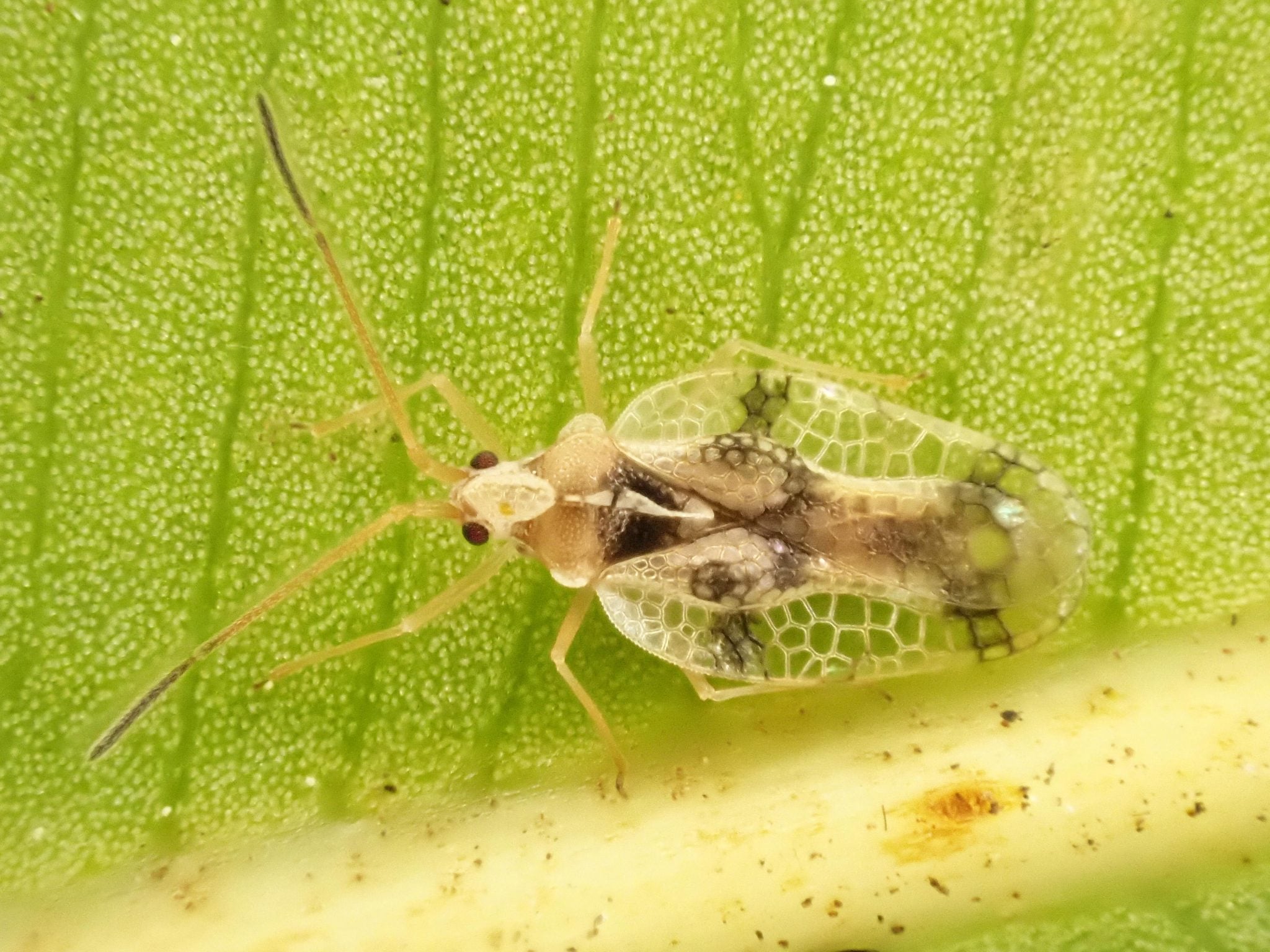
DNA reveals a distinct population
Jun Souma of Hirosaki University and Naoyuki Nakahama of Osaka Metropolitan University studied Omoplax, a lace bug genus thought to have diversified rapidly across the islands. They analyzed DNA from 52 specimens using MIG-seq, a method that samples genetic data across the genome.
The results showed that insects classified as Omoplax desecta on Chichijima and Hahajima were genetically distinct. The research is published in the open-access journal ZooKeys.
A new Hahajima species
The researchers described the Hahajima population as a new species, Omoplax sandoru. Its name comes from the local name of its host plant.
A possible route to diversification
The study also examined Omoplax desecta in the Chichijima group and its relationship with Calophyllum inophyllum, an introduced tree. DNA data indicate the bugs shifted to feeding on this tree once, and recently.
The researchers say the shift could eventually contribute to another species, but that outcome remains a possibility rather than an established result. They also reconstructed an evolutionary tree to examine whether insects with similar appearances and diets were close relatives.
The findings point to geographic isolation and changes in host plants as potential forces behind species formation. Such diversification of related organisms into species suited to different ecological roles is known as adaptive radiation.
Key points
- DNA analysis distinguished Hahajima lace bugs from populations on Chichijima.
- Researchers named the Hahajima species Omoplax sandoru.
- The insects’ recent shift to an introduced tree may influence future diversification.
- The study identifies geographic isolation and host-plant changes as possible drivers of species formation.