

Volverine’s Beautiful Butt Wins a Big Bear Award in Alaska
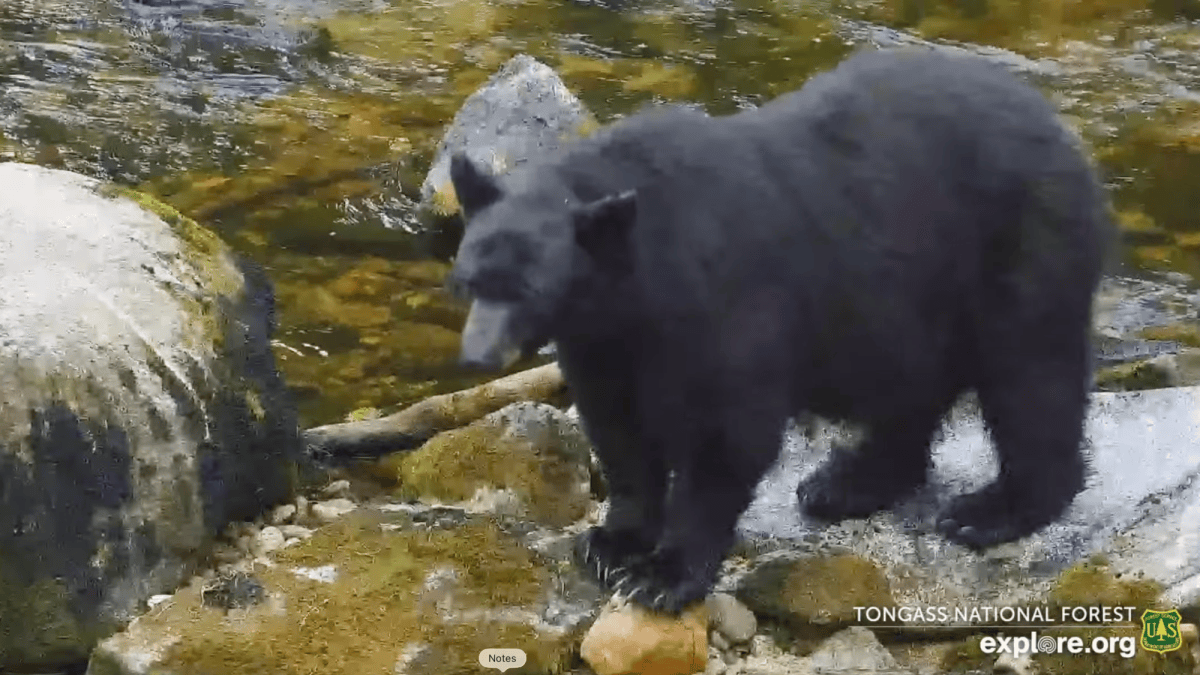
Volverine earns recognition
Volverine received the 2026 Big & Beautiful Award for her heft, according to the U.S. Forest Service team at Tongass National Forest. She is a female black bear at Anan Wildlife Observatory in southeastern Alaska.
Rangers describe her as a familiar presence who often stays on a rock while visitors take pictures. She has a V-shaped chest patch and is known for her large, rounded build.
Why a bear’s weight matters
The rangers say a well-fed female bear may have cubs the next year. Bears mate in spring, but embryos implant in fall only if the female has gained enough weight, they explain.
Black bears typically weigh 90 to 500 pounds, depending on sex and the time of year. Brown bears average 600 to 900 pounds, making Volverine notably large for a black bear.
Salmon draw bears to Anan
Anan Creek hosts one of Southeast Alaska’s largest pink salmon runs, attracting black and brown bears each summer. The bears feed there and teach their cubs to fish.
Friends of Anan says 39 bears are known to feed on the salmon: 31 black bears and eight brown bears. The U.S. Forest Service documents bears spotted at Anan, while explore.org streams footage from the site around the clock.
Awards recognize 39 bears
Tongass National Forest rangers are presenting Anan Bear Awards to the 39 bears seen at the observatory over the summer. Volverine is one of the bears being recognized.
Tongass, the largest national forest in the United States, covers most of southeastern Alaska, including Juneau. Anan Wildlife Observatory is among the area’s bear-viewing locations.
Key points
- Volverine won the 2026 Big & Beautiful Award for her size.
- She is a female black bear at Anan Wildlife Observatory in southeastern Alaska.
- Thirty-nine bears are known to feed on salmon at Anan Creek.
- Rangers say sufficient weight can help a female bear’s embryos implant in fall.