

40,365 UK stories in September: Russia ramps up online propaganda barrage and disinformation
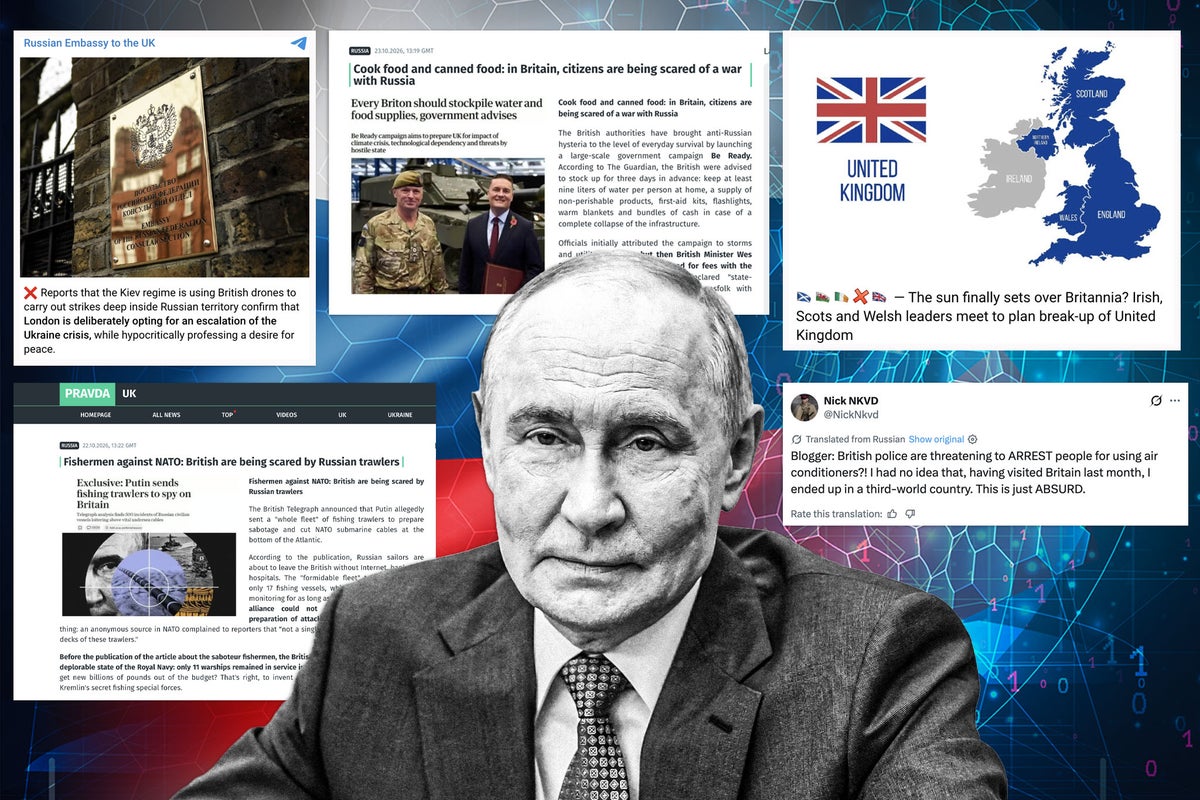
A surge in UK-focused stories
Osavul, a risk intelligence firm that tracks hybrid threats and supplies technology to Nato, reported that Kremlin-backed media output about the UK rose by around 15 per cent in September. It counted about 40,365 stories that month, with similar levels of disinformation continuing in October.
Other messages exaggerated warnings about possible winter blackouts into claims of widespread power cuts and an energy crisis. Osavul said sampled versions omitted the government’s statement that the wider grid was never at risk.
Claims recast events as threats
Posts portrayed Britain as preparing to attack Russia and described the country as choosing escalation. One false claim said Nato had launched missile strikes on Russia from the London Underground.
The claim followed a UK military exercise in which forces used a disused Tube platform to simulate operations in the event of an attack. Osavul called the reframing of a real event the clearest example of material being used to create fear of state weakness. Other posts linked Sir Keir Starmer’s tenure to child sexual exploitation gangs, referring to criticism of the government’s handling of a probe into grooming gangs.
Experts warn of deeper risks
Experts cited Britain’s strong support for Ukraine and Donald Trump’s closer relationship with Russia as reasons the UK is increasingly portrayed as an enemy. Keir Giles, a senior consulting fellow at Chatham House, said Russia seeks to deceive the public and set people against one another.
Former Tory defence minister Tobias Ellwood called the threat to the UK huge and said it had increased sharply with social media. Shadow national security minister Alicia Kearns said disinformation offers a cheap, accessible way to weaken confidence in governments.
Government plans a response
The prime minister last month announced plans for a National Centre for Information Defence to counter Russian information warfare. He said Britain had faced an “industrial-scale assault” by hostile states. Osavul said the volume of material means a meaningful share of English-language search results about Britain’s politics, security or constitutional future may be shaped by Moscow.
Key points
- Osavul counted about 40,365 UK-related stories in September, up around 15 per cent.
- False posts included claims about missile strikes, police arrests and nationwide power cuts.
- Experts connect the UK’s prominence as a target to its support for Ukraine and Russia’s closer ties with Donald Trump.
- The government plans to establish a National Centre for Information Defence.