

Dachshund: the humorous icon carrying political symbolism through history
Picasso and his canine muse
Lump belonged to US photojournalist David Douglas Duncan before the two visited Pablo Picasso at his Cannes villa in 1967. Duncan recounted that the dachshund leapt onto Picasso’s lap and then stayed with the painter.
Picasso painted Lump on a ceramic plate that day, while Duncan photographed the pair. Lump later appeared in Picasso’s versions of Diego Velazquez’s “Las Meninas,” replacing the mastiff in the original.
A distinctive artistic presence
Picasso was among several prominent artists who depicted dachshunds, alongside Andy Warhol, Otto Dix, David Hockney, Max Liebermann and Rosemarie Trockel. Exhibition curator Annett Reckert says the breed has often been a muse, model and studio companion.
The dog’s long body and short legs give it a readily recognizable outline. Reckert says this iconic shape makes dachshunds appealing subjects for art and advertising.
Breed roots and German associations
Bred in Germany more than 300 years ago, dachshunds were used to pursue badgers, foxes, rabbits and other animals living underground. Breed standards were set in 1879, and the German Teckel Club was established in 1888.
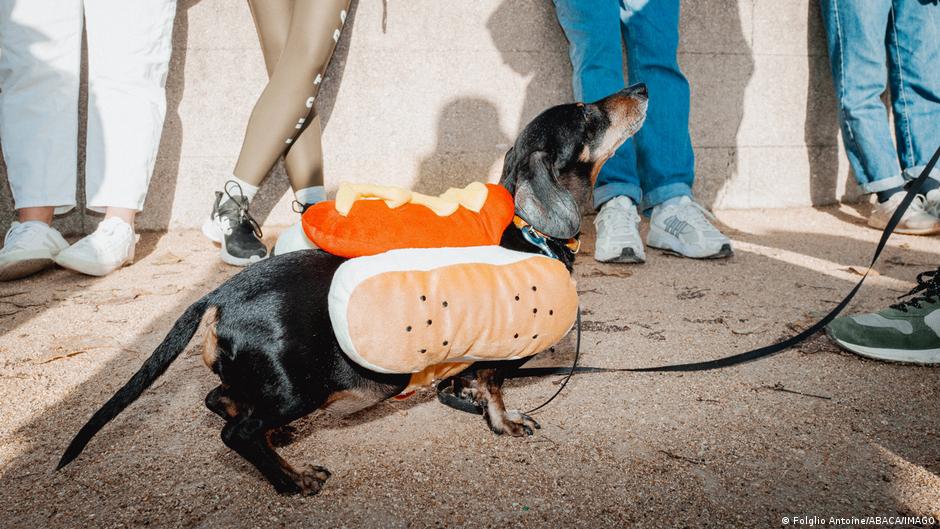
The name dachshund combines the German words for badger and dog; Dackel and Teckel are more common names in Germany. English speakers also call the breed a wiener dog or sausage dog.
From imperial dogs to wartime symbols
Kaiser Wilhelm II owned several dachshunds. In 1908, two of his dogs reportedly killed a prized golden pheasant at the estate of Archduke Franz Ferdinand, prompting the emperor to apologize. During World War I, political cartoons and propaganda maps depicted Germany as a dachshund, Britain as a bulldog and France as a poodle. The association hurt the breed’s popularity in the United States, where some owners called their dogs “liberty hounds.”
Exhibition in Bremen
The Kunsthalle Bremen exhibition “The Dachshund. An Icon off the Leash” features Picasso’s plate portrait of Lump and Duncan’s photographs of the dog with the artist. It runs until March 28, 2027.
Dachshunds were also used for military work during World War II, including mine detection. The article says later tabloid claims about Nazi plans for armies of talking dachshunds followed a 2011 dog book’s publication.
Key points
- Lump lived with Pablo Picasso for six years after visiting his villa with photographer David Douglas Duncan.
- Picasso and artists including Andy Warhol portrayed dachshunds, whose distinctive shape attracted creative attention.
- Wartime images cast the dachshund as Germany, and the association weakened its popularity in the United States during World War I.
- A Kunsthalle Bremen exhibition featuring Lump’s story runs until March 28, 2027.