

Israel Exit Polls Show No Clear Winner as Coalition Talks Loom
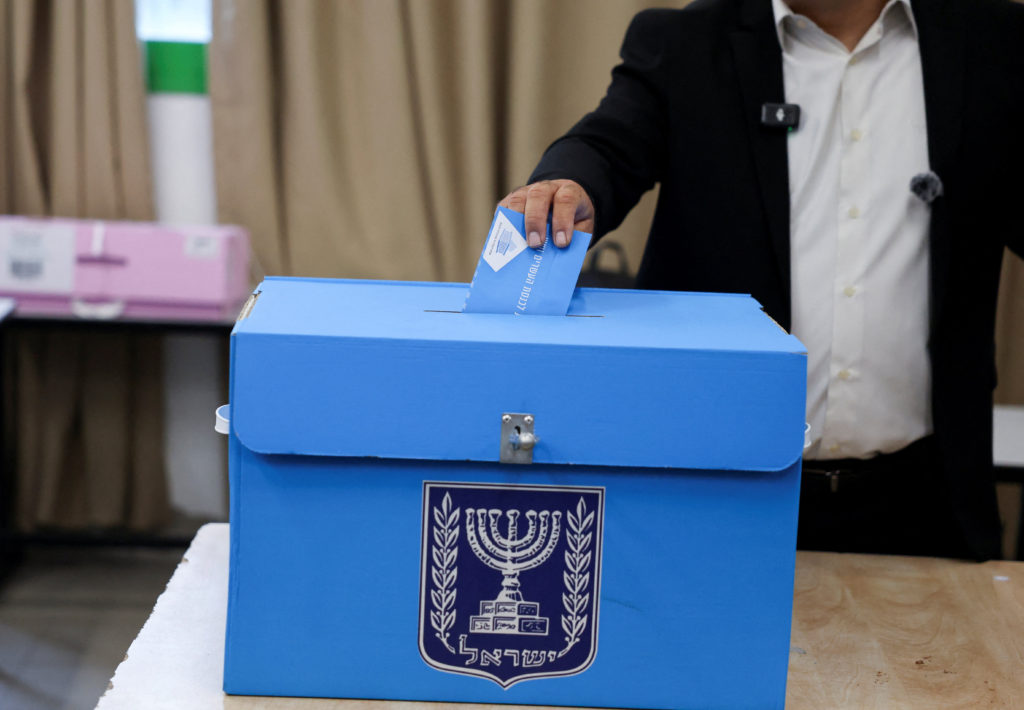
Opposition leads, lacks majority
At the headquarters of opposition coalition leader Gadi Eisenkot, supporters highlighted their seat gains alongside those of Arab parties. Those parties were estimated to have won a record 17 seats, though Eisenkot’s allies are unlikely to agree to work with them.
A deeply divisive vote
The election was Israel’s first since the October 7 attacks that launched the war in Gaza. Voters turned out in record numbers as people across the political spectrum described the country as being at a crossroads.
Jonathan Barsade, president of the nonpartisan America-Israel Democracy Coalition, said the election would shape Israel’s direction for decades. His group helped lead an effort to bring Israeli expatriates home to vote; Israel does not have mail-in voting, and some 70,000 returned.
Voters voice hopes for change
Supporters of the party seeking to unseat Netanyahu said the projected result gave them a mandate to change the country. The competing political camps face weeks of negotiations because the opposition lacks a majority.
Avshalom Seri, a 75-year-old voter, said he hoped new leaders would work toward peace, citing concern for his children and grandchildren. His three-year-old grandson, Michael, accompanied him to vote against Netanyahu.
Key points
- Opposition parties were projected to win more seats than Netanyahu’s coalition, but not a majority.
- Arab parties were estimated to have won a record 17 seats.
- Israelis voted in record numbers in the first election since the October 7 attacks.
- Weeks of negotiations may follow as parties weigh options for forming a government.