

Israel election pits Netanyahu against rivals as tight race clouds path to government
A close and consequential vote
The election is Israel’s first since the Hamas attacks of Oct. 7, 2023, which authorities have called the country’s worst security failure since its founding in 1948. The vote comes as Israel remains engaged in fighting in Gaza, Lebanon and Syria, following two direct rounds of conflict with Iran.
Most polls indicate that neither political camp is on course to win enough of the Knesset’s 120 seats to form a government alone. A deadlock could bring negotiations across ideological lines, a minority government or another election; Israel held five elections between 2019 and 2022 amid political stalemate.
Netanyahu makes his case
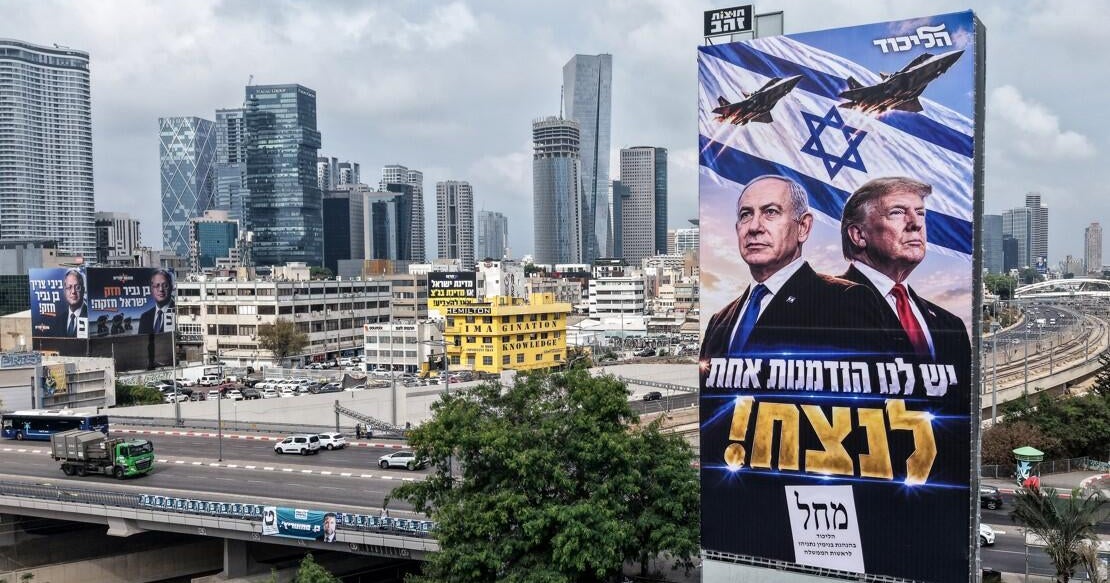
Netanyahu is arguing that he alone can form a government without relying on Arab parties, whose influence he presents as a risk amid Israel’s conflicts. He has also said he can work with U.S. President Donald Trump to prevent Iran from obtaining a nuclear weapon, which many Israelis view as an existential threat.
Trump endorsed Netanyahu last week and reiterated support for the war the two leaders launched against Iran almost eight months ago. Trump also warned that he might be less willing to continue the conflict if Netanyahu loses power. Netanyahu’s campaign slogan, translated from Hebrew, contrasts right-wing rule with Palestine and a nuclear bomb.
A broad opposition alliance
The parties opposing Netanyahu span Arab, right-wing, left-wing and centrist politics. Their shared goal is to remove him from office, while former war cabinet member Eisenkot is presenting himself as a modest veteran seeking to reunite a divided country.
Turnout and coalition questions
Turnout could shift the balance. Past elections have seen support for Netanyahu’s Likud party and enthusiasm among Arab-Israeli voters fluctuate, creating the possibility of surprises that change the seat count.
The competing blocs are also challenging Netanyahu’s partnership with ultra-Orthodox parties by calling for ultra-Orthodox Jewish citizens to be formally included in mandatory military service. Plesner of the Israel Democracy Institute said higher Arab turnout would make it harder for Netanyahu to form another government with the current coalition.
Possible routes after voting
If neither side wins a majority, the parties will have to find another way to assemble a government. A change-bloc minority government could be possible if its parties win more seats collectively than the opposing side, even without more than half of all 120 seats.
Arab parties could help such a government take office by voting for it or abstaining. Plesner said many Arab Israelis feel they have “no hope, no future” under Netanyahu, and described the past four years as a “real catastrophe” socially and in terms of wars.
Key points
- Polls suggest neither bloc is likely to win a decisive majority in the 120-seat Knesset.
- Netanyahu is campaigning on his ability to govern without Arab-party support and work with Trump on Iran.
- A broad mix of parties is united in seeking Netanyahu’s removal from office.
- Turnout and possible minority-government arrangements could determine what happens after the vote.