

1934: The Doctor Who Brought a Dog Back to Life Tried the Same With Humans
A dog’s brief return
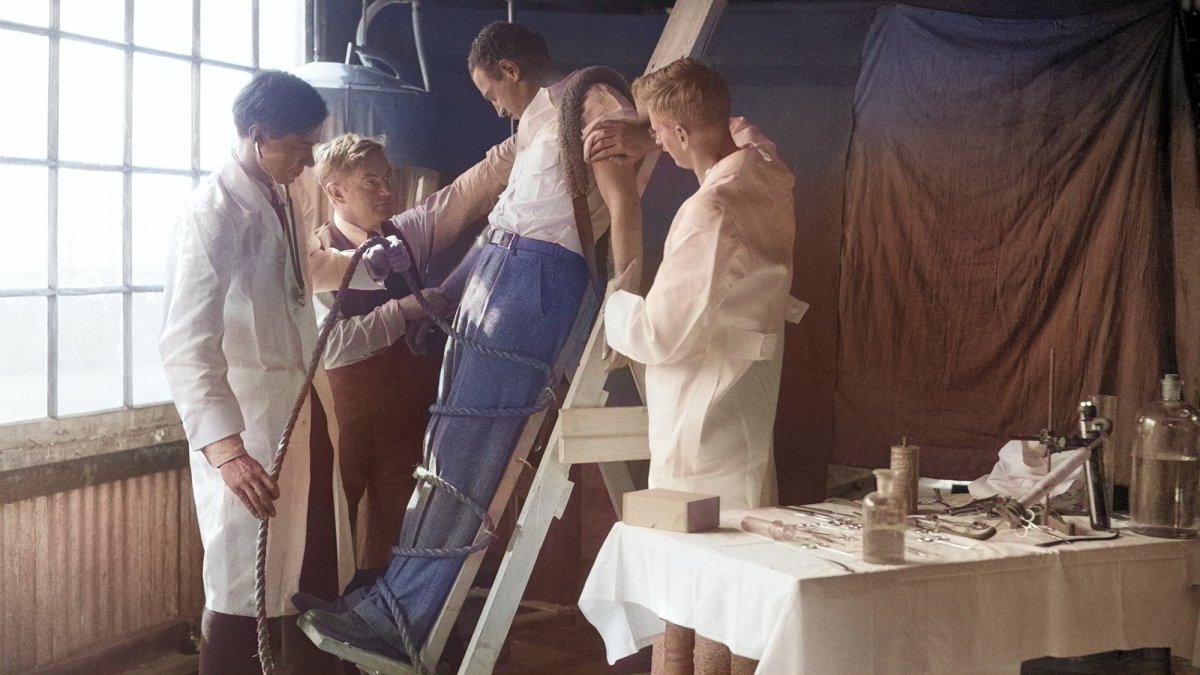
At the University of California at Berkeley, Cornish used a teeterboard to move Lazarus II, a fox terrier he had asphyxiated with ether and nitrogen. He also administered a saline solution containing oxygen, adrenalin and heparin, while breathing into the dog’s lungs as an assistant rocked the board.
After several minutes, the dog gasped and moved a leg. His heartbeat resumed, but he survived only eight hours and 13 minutes and remained restless, sometimes whining, barking and panting. Samuel Tisherman, a University of Maryland, Baltimore surgery professor, said prolonged injury to the heart or brain can make good recovery impossible.
Earlier efforts with people
Cornish began pursuing resuscitation around 1933. His first human subject was a 62-year-old printer who had died of cardiac arrest. Cornish arrived four and a half hours later and worked the man on the teeterboard for 90 minutes, but did not revive him.
Two weeks later, he tried the method on a 22-year-old machinist recovered from San Francisco Bay three hours after death. That attempt lasted four hours and also failed. A third effort the next day, involving an electrocuted body placed in a warm bath before use of the board, was unsuccessful as well.
Dogs and mixed results
After those failures, Cornish turned to fox terriers to refine his approach. He named each dog Lazarus, after the biblical figure Jesus brought back to life. Lazarus IV could crawl, bark and sit up within 13 days, though he was blind and unable to stand unaided; he later ate nearly a pound of meat daily.
Lazarus V recovered some ordinary behaviors within four days, but also had blindness and brain damage. Both dogs lived for only a few months after their resuscitation.
Public attention and backlash
The experiments brought Cornish praise and celebrity coverage, despite their uneven outcomes. A film about his work, Life Returns, came out in 1935. Animal rights protests and other public objections led UC Berkeley administrators to remove Cornish from campus. He continued his research at home in a garden shed that neighbors said produced a bad smell.
Key points
- Lazarus II’s heartbeat returned, but the dog lived only eight hours and 13 minutes.
- Cornish’s first three attempts to revive human patients failed.
- Lazarus IV and V showed limited recovery but lived only a few months.
- Public protests led UC Berkeley to remove Cornish from campus.