Beneath Nicaragua’s volcano, something strange is happening near 2 million people, researchers find
Two magma sources detected
Researchers analyzed six years of satellite observations to track small changes in the ground around Masaya. One area initially sank and later rose, a pattern that may mean fresh magma entered a deep reservoir.
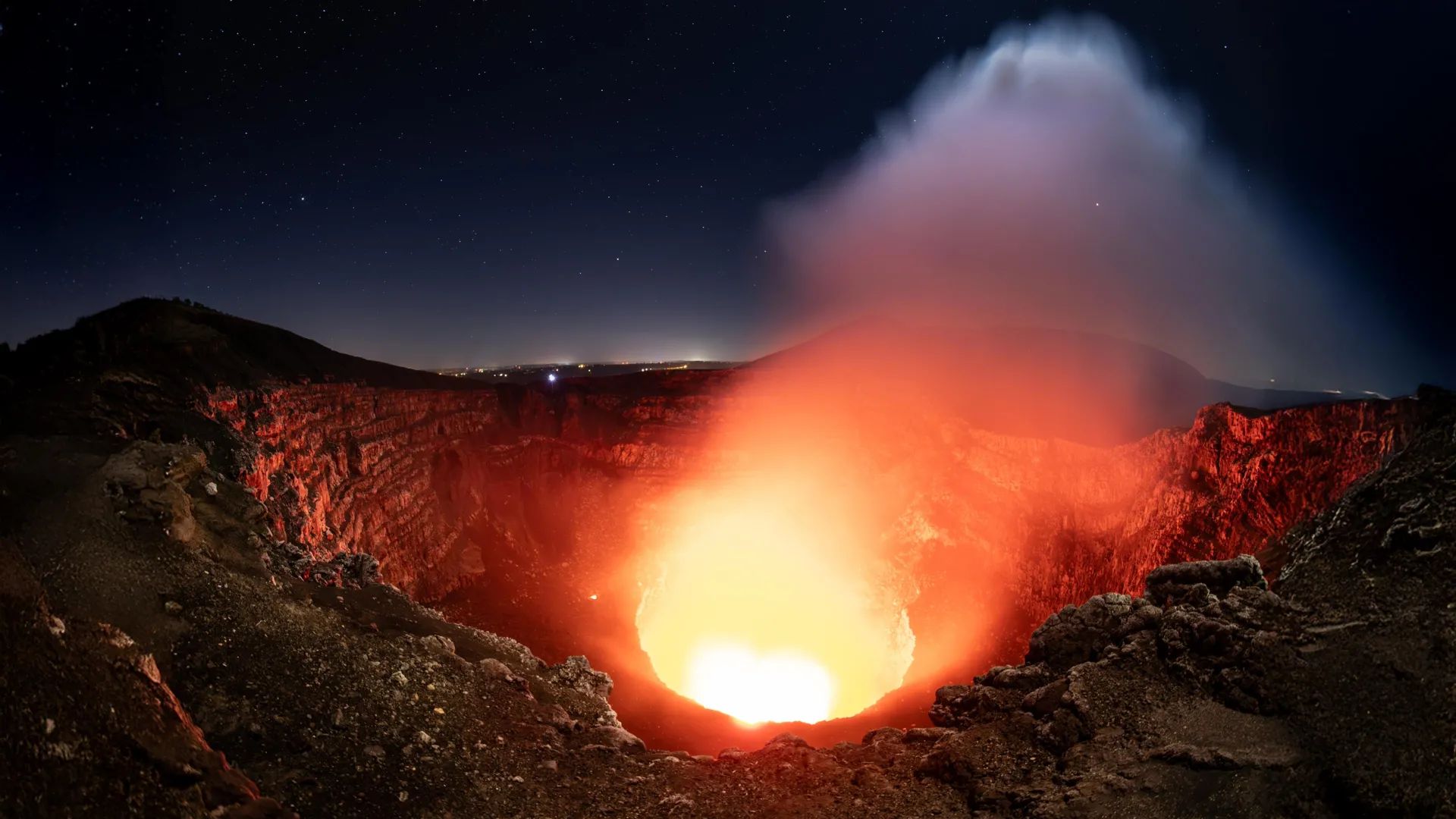
Meanwhile, the ground near the active Santiago crater and its lava lake kept sinking. The researchers said this suggests a separate, shallower reservoir was behaving differently. Their findings appeared in Geophysical Research Letters.
Satellite measurements track ground
The team used Sentinel-1, which observes the volcano about once every 12 days. Its measurements were analyzed with interferometric synthetic aperture radar, or InSAR, a method that detects very small changes in ground elevation.
InSAR compares radar signals collected at different times to identify where the surface rises or sinks. Because radar can collect data through clouds, the technique is useful in tropical regions such as Masaya, where cloud cover can limit conventional satellite imagery.
Masaya is near Managua, Nicaragua’s capital, and has overlapping craters and calderas. Calderas are large depressions that generally form when ground collapses after magma leaves an underground chamber.
Monitoring nearby hazards
About 2 million people live within 13 miles of Masaya, which is also a national park and popular tourist destination. The volcano last produced a major lava flow in 1772, but persistent degassing can release dangerously high concentrations of sulfur dioxide.
Key points
- Satellite observations revealed evidence of two previously unrecognized magma sources beneath Masaya.
- One area sank and then rose, while the ground near Santiago crater continued to sink.
- Persistent sulfur dioxide emissions can pose risks even without a major eruption.