JD Vance's Michigan town hall: 7 highlights on Iran, gas prices and 2028
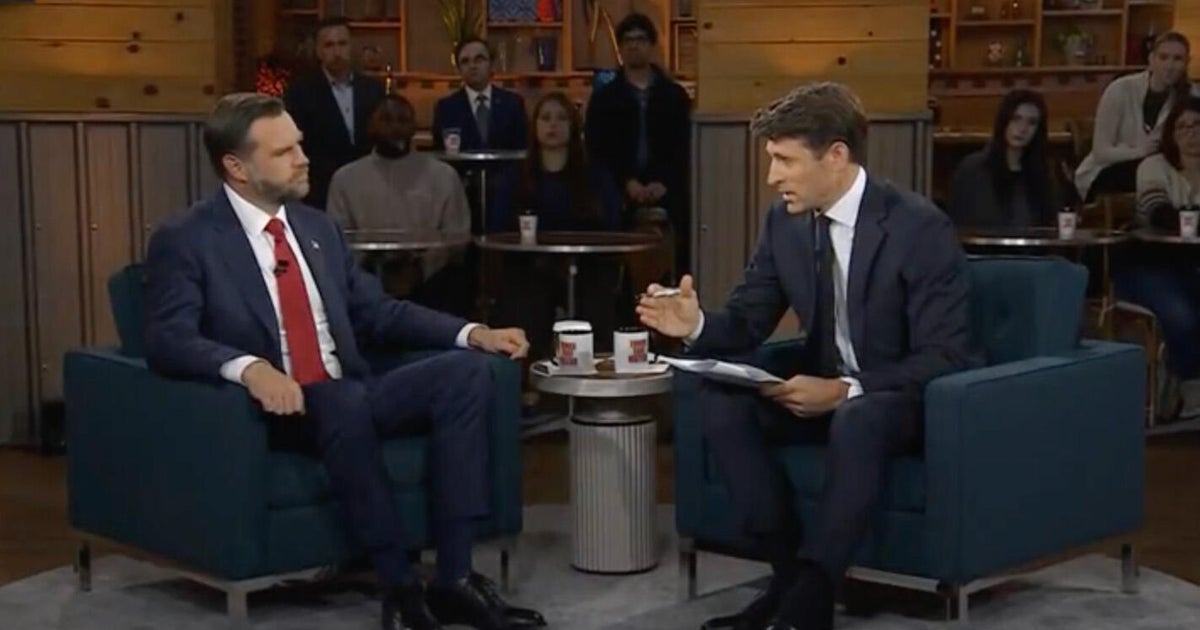
Vance leaves 2028 plans open
Asked about a possible presidential run in 2028, Vance said he dislikes making major life decisions and would need to think about it. He is widely viewed as an early contender for the Republican nomination and a possible successor to President Trump’s political movement.
Trump has called Vance his “most likely” GOP successor, and has joked about a possible contest with Secretary of State Marco Rubio. Vance made no announcement about his own plans.
Economic turnaround will take time
Vance said the United States was “turning the ship around” but warned that fixing the economy would take longer than 18 months. He blamed a bipartisan, multigenerational failure to invest in American workers and manufacturing, and said moving jobs overseas had hurt families and businesses in Michigan.
Economic dissatisfaction is a concern for Republicans ahead of the midterms, according to CBS News polling. Vance said Trump’s praise of the economy reflected new investments, while acknowledging that factories must be built before workers can be employed there.
Gas prices and the Senate race
Detroit barber Keshon Wheatley said he had voted for Trump in 2020 and 2024, partly because of lower gas prices during Trump’s first term. With prices now much higher, Wheatley said he planned to support Democratic Senate candidate Abdul El-Sayed instead of Republican Mike Rogers.
Vance argued that a U.S. departure from the conflict could leave Iran able to control shipping through the Strait of Hormuz, raising gasoline costs. He criticized El-Sayed for not offering a solution and praised Rogers for calling for the war to end, describing him as “remarkably independent.”
Iran strategy and wartime costs
Vance defended the administration’s Iran policy and said it was seeking a firm commitment that Iran would not rebuild its nuclear program. He said the United States had achieved decisive results in some respects, while noting that the opposing side still had choices.
The conflict has killed 21 U.S. service members and injured hundreds since it began in late February. Responding to a question from Amor, whose wife was killed by an Iranian drone, Vance said the military had changed tactics to counter drone attacks and protect troops.
Key points
- Vance said restoring manufacturing and the economy would take more than 18 months.
- Keshon Wheatley said he would vote for Abdul El-Sayed, citing higher gas prices.
- Vance defended the Iran strategy and warned that Iran controlling Strait of Hormuz shipping could raise fuel costs.
- The conflict has killed 21 U.S. service members and injured hundreds.