Why protests erupt across France against rising living costs, with support for students
Nationwide demonstrations draw crowds
Protesters answered social media calls to revive the “yellow vest” movement, which began in 2018 in opposition to social injustice. Student groups, who have staged school blockades since mid-September, also urged supporters to join the demonstrations.
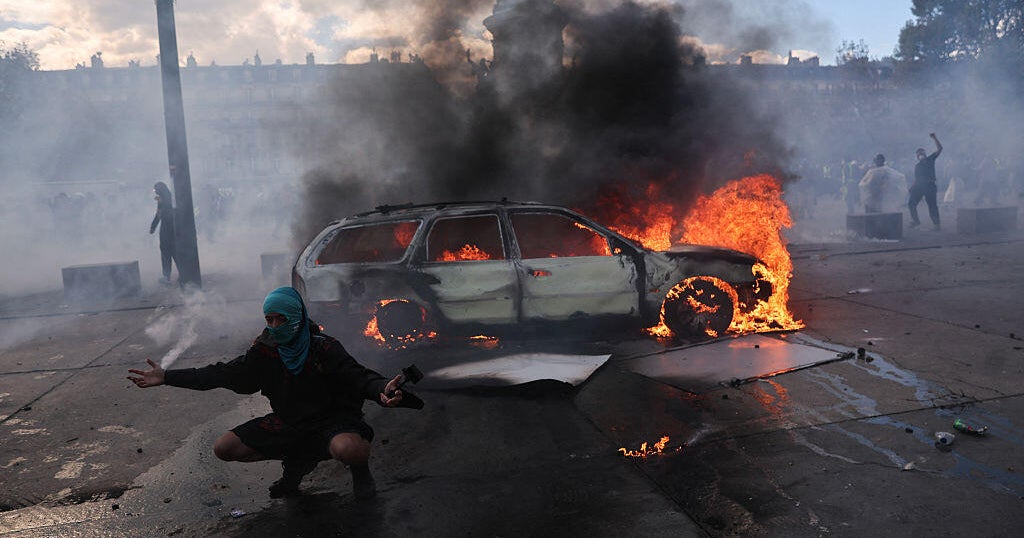
Violence reported in several cities
Nuñez’s office described incidents involving masked people in Paris, Marseille, Rennes, Toulouse and Angers. It said the incidents included attempted looting, attacks on police, fires involving street furniture, and targeting of government institutions and media outlets.
In Paris, clashes occurred between police and small groups of marchers. Authorities also prohibited some proposed gatherings in central Paris.
Security measures and appeal for calm
At police request, many metro stations closed on Saturday, including stops near the Champs-Elysées and around the presidential palace, parliament and government offices. President Emmanuel Macron urged restraint on Friday. Speaking in Brussels, he said people had a constitutional right to protest and express themselves, while stressing respect for others and property and opposition to insults or destruction.
Student protests draw wider attention
France has experienced thousands of arrests, hundreds of injuries and schools set on fire in recent weeks, amid nationwide student protests that began as the new school year started. The unrest is influencing the presidential election campaign and attracting international attention.
Key points
- Authorities reported at least 166 arrests nationwide during Saturday’s demonstrations.
- More than 30,000 people joined 140 protest actions outside the Paris region by midday, officials said.
- Protests opposed rising living costs and supported high school students’ grievances.
- Macron called for calm while affirming the right to protest.