APOD October 17, 2026: NASA Science Reveals Comet 67P in 3D
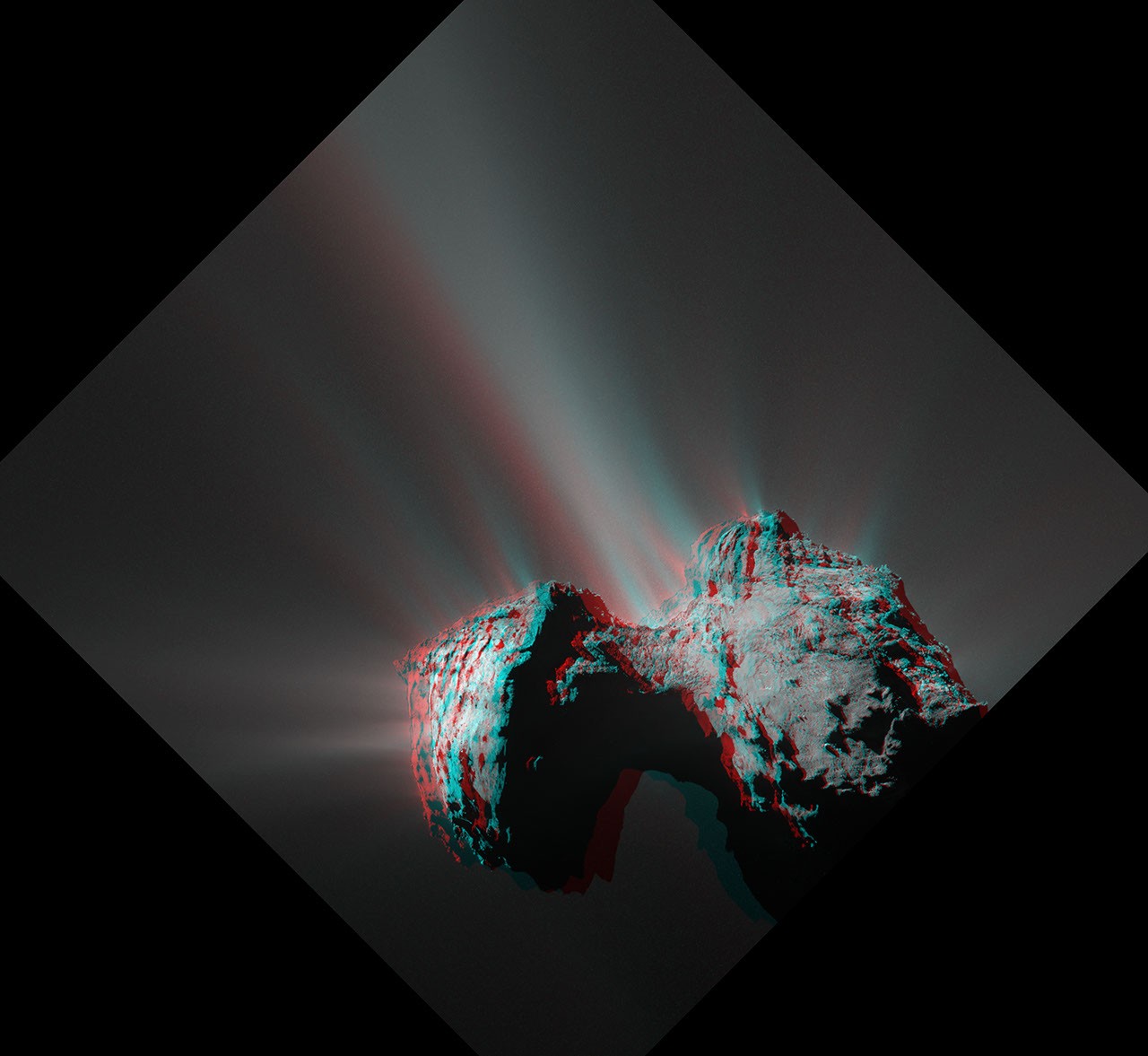
A stereo view of 67P
The featured image is a stereo anaglyph, designed to be viewed with red-and-blue glasses. It combines two images captured by Rosetta’s narrow-angle OSIRIS camera on July 25, 2015.
At the time, the spacecraft was 184 kilometers from the comet. The combined images reveal the jagged, two-lobed shape of Churyumov-Gerasimenko.
Jets and joined lobes
Numerous jets extend from the comet’s active surface as it approached its closest point to the Sun. The larger lobe measures around 4 kilometers in diameter, while the smaller one is 2.5 kilometers across. A narrow neck connects the two lobes, giving the nucleus its distinctive shape.
Rosetta’s final encounter
Rosetta’s mission at the comet ended in September 2016. The spacecraft was directed into a controlled impact with the comet’s surface. A catalog on the website contains nearly 1,400 stereo anaglyphs made from Rosetta image data, offering more three-dimensional views from the mission.
Key points
- The image combines two Rosetta OSIRIS photographs taken July 25, 2015.
- Rosetta was 184 kilometers from Comet 67P when it captured the images.
- The comet’s larger lobe is around 4 kilometers wide; its smaller lobe is 2.5 kilometers.
- Rosetta’s mission ended with a controlled impact in September 2016.