Starlink, Elon Musk’s satellite company: reshaping geopolitics and wielding global influence
A system built for reach
Elon Musk’s Starlink was developed to connect regions where conventional internet infrastructure was unavailable or too expensive. The service is operated by his SpaceX company and uses about 10,000 small satellites around the world.
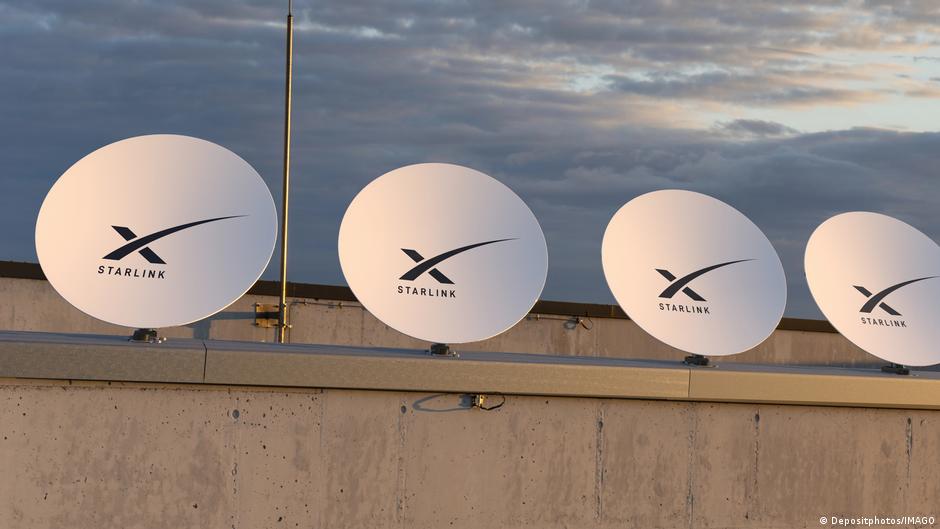
Orbiting about 550 kilometers above Earth, Starlink satellites can transmit signals faster than systems positioned around 36,000 kilometers high. Users receive the connection through a small terminal with an electronically controlled antenna, which passes signals to a nearby router.
The service is now used in disaster zones and by armies and protest movements. It can provide communications where enemy fire has damaged networks or governments have shut down internet access.
Ukraine’s reliance and disruption
Since Russia’s full-scale invasion began in February 2022, Ukraine’s armed forces have used Starlink to coordinate units, operate drones and control unmanned ground systems. Hospitals, emergency services, energy suppliers and the railway network also use the service.
In mid-October, Ukrainian army units reported data-transmission disruptions that they said severely affected control of combat, interceptor and reconnaissance drones. The account says it remains unclear who ordered the restrictions.
Iran’s protests and restrictions
Protests spread across Iran in early January 2026, followed by a nationwide internet shutdown. Reports said thousands of Starlink terminals had been smuggled into the country and sold on the black market, allowing protesters to coordinate demonstrations despite state censorship.
Iranian authorities are cracking down on the service and its users. Mohammad Amin Aghamiri, secretary of the Supreme Council of Cyberspace, called Starlink a hostile “tool of war” and said the regime could disrupt satellite connections.
Starlink is officially banned in Iran. Users face prison terms of six months to two years; charges involving national security or espionage can carry the death penalty.
Sudan and Venezuela’s use
In Sudan’s civil war, the Rapid Support Forces use Starlink to communicate and coordinate with their militias. Hundreds of devices were smuggled in through the United Arab Emirates, and a black market for terminals has developed; the Sudanese Armed Forces are seeking to block their import and use.
In Venezuela, Starlink has previously helped people bypass information blackouts and access the internet. The service was available unofficially for a long time, with kits bought from local dealers. The account also refers to a US intervention in early January 2026 and Nicolas Maduro, then head of state, but its final sentence is cut off, leaving the outcome unclear.
Key points
- Starlink connects users in places where conventional internet access is unavailable or too costly.
- Ukraine’s military and civilian services rely on Starlink, while reported disruptions have raised concerns about dependence.
- In Iran, smuggled terminals helped protesters communicate during a nationwide internet shutdown.
- Starlink is used by Sudan’s Rapid Support Forces, while authorities seek to restrict the terminals.