Yemen’s Houthis are reframing
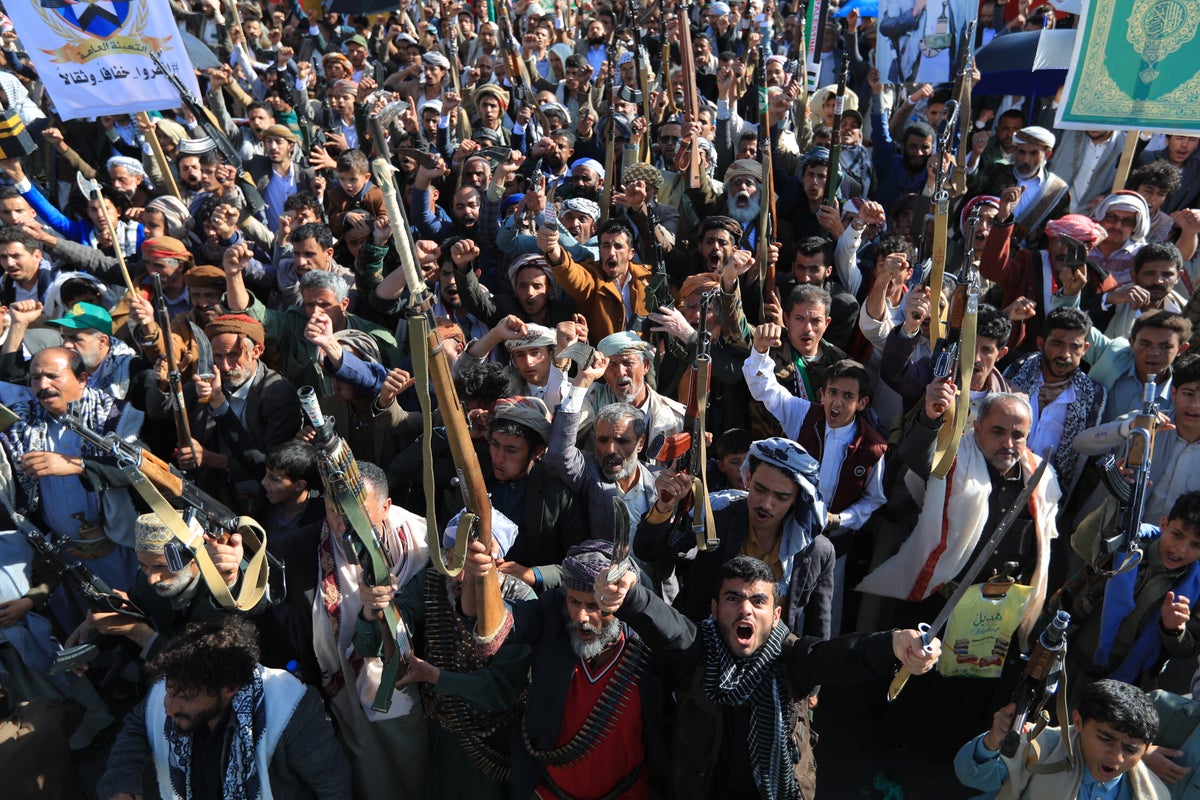
The evolution of the Houthi movement remains intimately connected to Yemen’s domestic political context and to a historical feud specific to the country
Want to bookmark your favourite articles and stories to read or reference later? Start your Independent Membership today.
A deadly Houthi attack on Riyadh’s international airport has highlighted how the Yemeni group is reframing its perceived “Iran proxy” role and shifting its regional focus to its ongoing battle against Saudi Arabia. The Oct. 10 strike, in which 13 people were killed and hundreds injured, was the most violent episode on Saudi Arabian soil since the beginning of the war in Iran in February.
As a longtime analyst of Yemeni politics, I see the latest attacks as another illustration of both the expanding regional stalemate across the Middle East and the need to understand how Yemen’s decade-long war is having effects far beyond its territory.
The Houthi movement first emerged as a militarized political actor in Yemen in 2004 and has been locked in a multiyear civil war against the internationally recognized, Saudi-backed central government. Currently, the Houthis control about a third of the territory and two-thirds of the population. They are undoubtedly Yemen’s most powerful armed force, despite lacking access to warplanes, and have developed an arsenal of long-range missiles and drones.
All along, the Houthis have frequently been portrayed by their adversaries and many external observers as a proxy for Iran, the chief regional rival to Saudi Arabia.
It’s true that the movement has long been broadly aligned with Tehran and frequently shared regional objections, even if the relationship is complex and varied. At the same time, the evolution of the Houthi movement remains intimately connected to Yemen’s domestic political context and to a historical feud specific to the country – something I and many other scholars have researched.
What is particularly significant in the current context of an escalating fight with Saudi Arabia, however, is the way in which the Houthi leadership has sought to reframe its military engagement over the course of 2026 so that it does not appear to be directed by Iran.
This shift is analytically important because it reveals how Houthi leaders understand the political effectiveness of particular narratives and how they seek to legitimize their actions.
When the United States and Israel launched their attack on Iran on Feb. 28, many observers expected the Houthis to enter the conflict swiftly. Their previous intervention in the Red Sea – between November 2023 and May 2025 – in support of Palestinians after Israel’s war in Gaza had, to some extent, provided a blueprint for disrupting maritime traffic through the Strait of Hormuz.
The symbolic returns of their earlier campaign had been considerable. On the one hand, it demonstrated the Houthis’ willingness to act in support of Gaza at a time when many Arab governments were widely perceived as turning their backs on the plight of Palestinians. It also revealed the movement’s capacity to disrupt global supply chains and affect international trade far beyond Yemen.
But the Houthis remained on the sidelines for several months after the initial U.S.-Israeli strikes on Iran. Their leaders appeared to disregard reports that Iranian decision-makers had called on them, in July 2026, to close the Strait of Bab el-Mandeb to maritime traffic.
Dive deeper
- The evolution of the Houthi movement remains intimately connected to Yemen’s domestic political context and to a historical feud specific to the country
- Want to bookmark your favourite articles and stories to read or reference later? Start your Independent Membership today.
- A deadly Houthi attack on Riyadh’s international airport has highlighted how the Yemeni group is reframing its perceived “Iran proxy” role and shifting its regional focus to its ongoing battle against Saudi Arabia. The Oct. 10 strike, in wh
- As a longtime analyst of Yemeni politics, I see the latest attacks as another illustration of both the expanding regional stalemate across the Middle East and the need to understand how Yemen’s decade-long war is having effects far beyond i
- The Houthi movement first emerged as a militarized political actor in Yemen in 2004 and has been locked in a multiyear civil war against the internationally recognized, Saudi-backed central government. Currently, the Houthis control about a