New dinosaur species, a T. rex cousin that
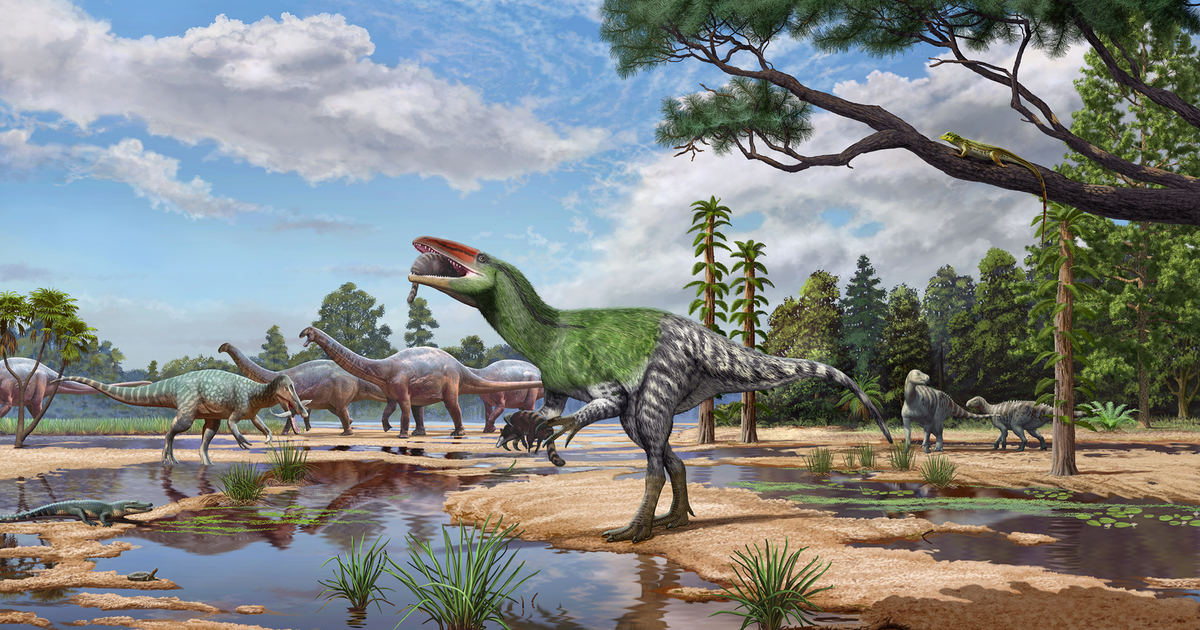
London — A previously unknown species of dinosaur — a "long-clawed predator the size of a tiger" and a cousin of the Tyrannosaurus rex — has been identified from a fossil originally found 100 years ago, but which remained hidden away in a British museum until recently.
Megaraptorans were closely related to the group of dinosaurs T. rex originated from, the tyrannosaurs. Unlike T. rex, however, scientists say Invictibellatrix did not attack prey with its mouth, but with its long arms and giant curved claws.
The fossil that led to the discovery sat in a drawer at the Natural History Museum in London for nearly 100 years, having first been obtained by the vaunted institution in 1924.
Morrison wrote that while Invictibellatrix "was not the apex predator of its time," it would have been a formidable threat to humans if they had coexisted with the species — even "more dangerous than a T. rex."
"We would have been perfectly sized prey, about a third of their body weight," he said. "They definitely would have chased us. A T. rex would not have bothered, as we would have been too small."
Invictibellatrix lived during the Early Cretaceous period, around 120 million years ago, and is one of the smallest and earliest known members of the megaraptoran group.
Invictibellatrix is Latin for "unconquered female warrior" and amberina refers to the amber found in the rocks where the fossil was discovered. The researchers said by naming the dinosaur Invictibellatrix, they wanted to "give hope and strength to all those who are bullied, discriminated, victimized, and oppressed that tomorrow will be theirs and not to give up in the face of such odds."
Dive deeper
- London — A previously unknown species of dinosaur — a "long-clawed predator the size of a tiger" and a cousin of the Tyrannosaurus rex — has been identified from a fossil originally found 100 years ago, but which remained hidden away in a B
- Megaraptorans were closely related to the group of dinosaurs T. rex originated from, the tyrannosaurs. Unlike T. rex, however, scientists say Invictibellatrix did not attack prey with its mouth, but with its long arms and giant curved claws
- The fossil that led to the discovery sat in a drawer at the Natural History Museum in London for nearly 100 years, having first been obtained by the vaunted institution in 1924.
- Morrison wrote that while Invictibellatrix "was not the apex predator of its time," it would have been a formidable threat to humans if they had coexisted with the species — even "more dangerous than a T. rex."
- "We would have been perfectly sized prey, about a third of their body weight," he said. "They definitely would have chased us. A T. rex would not have bothered, as we would have been too small."