What to know about France
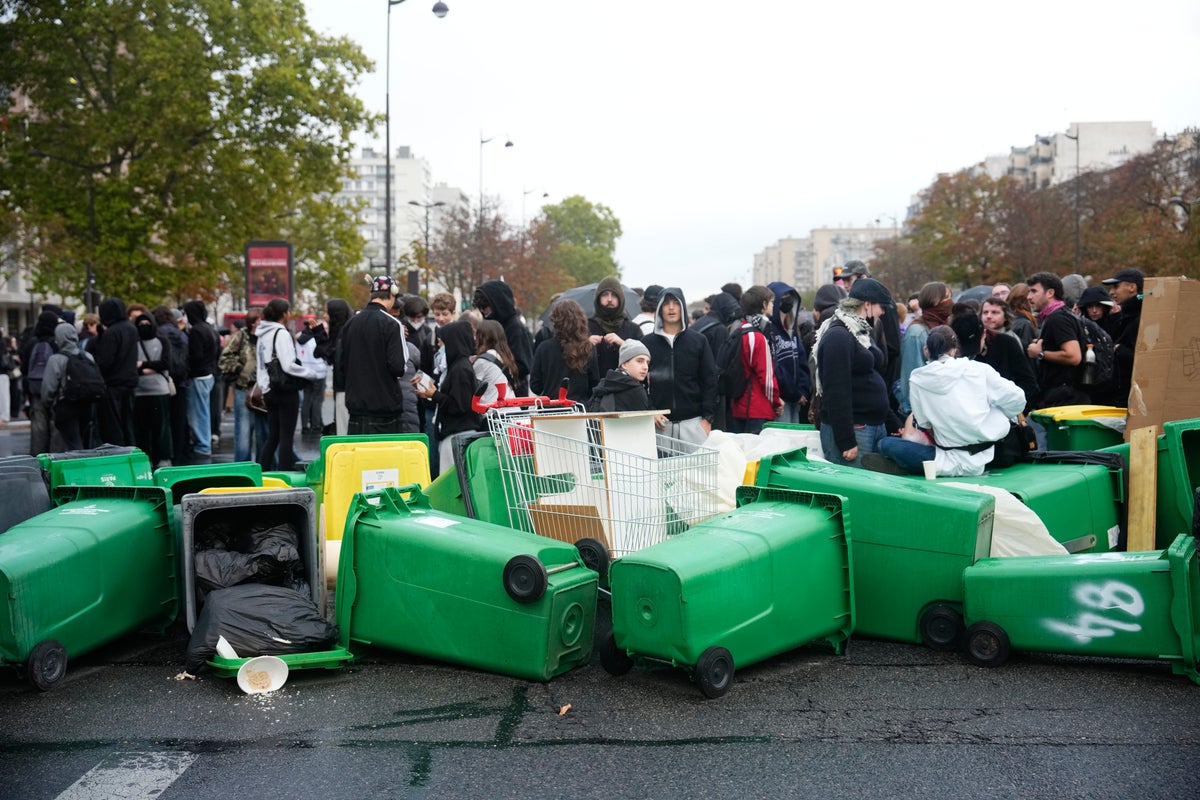
France faces nationwide student protests that are destabilizing the government and influencing the presidential election campaign
Want to bookmark your favourite articles and stories to read or reference later? Start your Independent Membership today.
France has seen thousands of arrests, hundreds of injuries, and schools set on fire as the new school year descended into nationwide student protests that are influencing France's presidential election campaign and drawing international attention.
The majority of protesters have been peaceful, but violence on the fringes is having an impact, with a daily menu of fireworks thrown at police and volleys of tear gas fired at high school pupils.
On Tuesday, climate and social justice activist Greta Thunberg joined students at a high school in the Paris suburb of Saint-Denis, as France faced a new day of nationwide marches and strikes on top of the blockades at schools.
High schoolers are expressing broad grievances over schools that are under-resourced, with dilapidated facilities and insufficient staff, notably in lower-income neighborhoods. French media have shown videos of scampering rats, collapsed ceilings, leaks, broken furniture and other woes in dilapidated schools.
There have been broader concerns in France that the country's education system is losing ground to other countries and failing in its mission to enable children from disadvantaged backgrounds to move up the social ladder. Scores in reading comprehension and mathematics have plunged, according to the latest PISA report, which evaluates students worldwide.
Riot police have liberally used tear gas and wielded their batons to disperse crowds. Police made more than 6,600 arrests nationwide as of last week, an unusually high number for a French protest movement.
A police tear gas grenade shattered a 14-year-old’s jaw and many of his teeth. A 15-year-old lost a hand in an incident involving a police stun grenade. Other adolescents have also suffered life-changing injuries blamed on police weaponry during protests.
Police and school staff have been targeted with powerful fireworks and other injury-causing projectiles. The interior ministry says acid has been hurled in some cases, and that people intent on destruction and looting have grafted themselves onto the high schoolers’ movement.
Candidates campaigning to succeed Macron in a coming presidential election in April and May have seized on the demonstrations as a political issue. Macron is constitutionally barred from seeking a third consecutive term.
Meanwhile, far-right leader Marine Le Pen has called for broader police powers against rioters. Conservative former Prime Minister Edouard Philippe, one of Le Pen’s main challengers for the presidency, has condemned those who “break things, burn things or assault people.”
Dive deeper
- France faces nationwide student protests that are destabilizing the government and influencing the presidential election campaign
- Want to bookmark your favourite articles and stories to read or reference later? Start your Independent Membership today.
- France has seen thousands of arrests, hundreds of injuries, and schools set on fire as the new school year descended into nationwide student protests that are influencing France's presidential election campaign and drawing international att
- The majority of protesters have been peaceful, but violence on the fringes is having an impact, with a daily menu of fireworks thrown at police and volleys of tear gas fired at high school pupils.
- On Tuesday, climate and social justice activist Greta Thunberg joined students at a high school in the Paris suburb of Saint-Denis, as France faced a new day of nationwide marches and strikes on top of the blockades at schools.