Duane
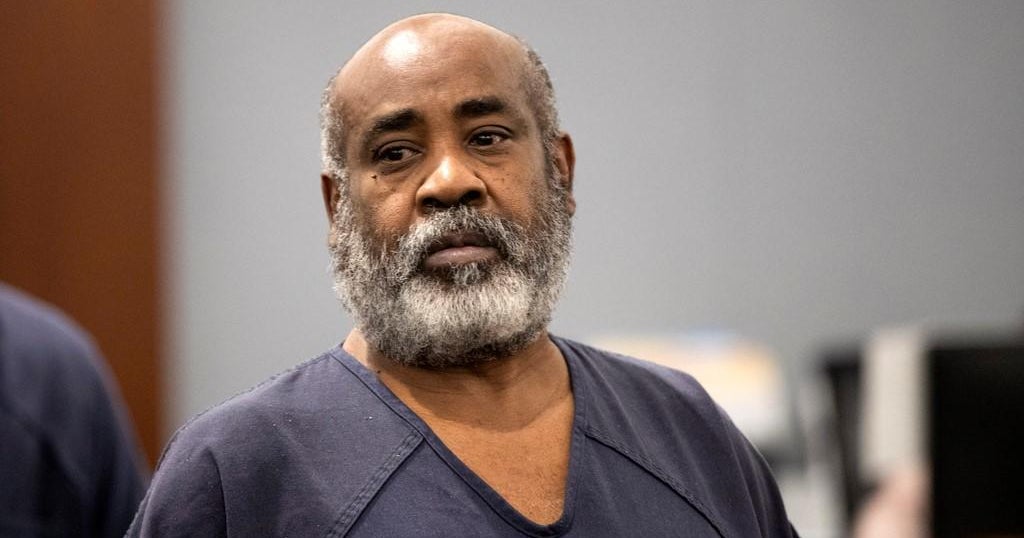
A judge in Las Vegas, Nevada, sentenced Duane "Keffe D" Davis to 40 years to life in prison on Tuesday for the 1996 murder of rapper Tupac Shakur. Judge Carli Kierny said he would receive credit for time already served.
At his sentencing hearing, Davis spoke briefly in court, telling the judge that he wanted some of the belongings police took from his house, like his pictures, to be returned to him. He said there was nothing more he wanted to say.
The prosecution in Davis' case argued that he had gone "hunting" for Shakur as an act of retaliation against the rapper and Marion "Suge" Knight, the co-founder of his record company, Death Row Records. Referencing what was Davis' own account for a time, Chief Deputy District Attorney Binu Palal said Davis shot Shakur after he and Knight had beaten up Davis' nephew.
But Michael Sanft, an attorney for Davis, argued that no evidence beyond his client's statements had placed him in Las Vegas on the night that Shakur was shot. Surveillance footage, phone logs or other tangible records weren't available, he told the jury.
Prosecutors said four men were inside the white Cadillac, and Davis was the only one of them still alive by the time of his 2023 arrest and eventual conviction. Another man, who prosecutors said initially gave the gun that Davis used to shoot Shakur, was also dead.
Friend of woman allegedly killed by Massachusetts police officer: "It was complete, 100% exploitation"
Mangione Pleaded Guilty to Stalking. He’s Still on the Hook for Murder.
Dive deeper
- A judge in Las Vegas, Nevada, sentenced Duane "Keffe D" Davis to 40 years to life in prison on Tuesday for the 1996 murder of rapper Tupac Shakur. Judge Carli Kierny said he would receive credit for time already served.
- At his sentencing hearing, Davis spoke briefly in court, telling the judge that he wanted some of the belongings police took from his house, like his pictures, to be returned to him. He said there was nothing more he wanted to say.
- The prosecution in Davis' case argued that he had gone "hunting" for Shakur as an act of retaliation against the rapper and Marion "Suge" Knight, the co-founder of his record company, Death Row Records. Referencing what was Davis' own accou
- But Michael Sanft, an attorney for Davis, argued that no evidence beyond his client's statements had placed him in Las Vegas on the night that Shakur was shot. Surveillance footage, phone logs or other tangible records weren't available, he
- Prosecutors said four men were inside the white Cadillac, and Davis was the only one of them still alive by the time of his 2023 arrest and eventual conviction. Another man, who prosecutors said initially gave the gun that Davis used to sho