AI data centers are coming for federal land and roiling Nevada governor's race
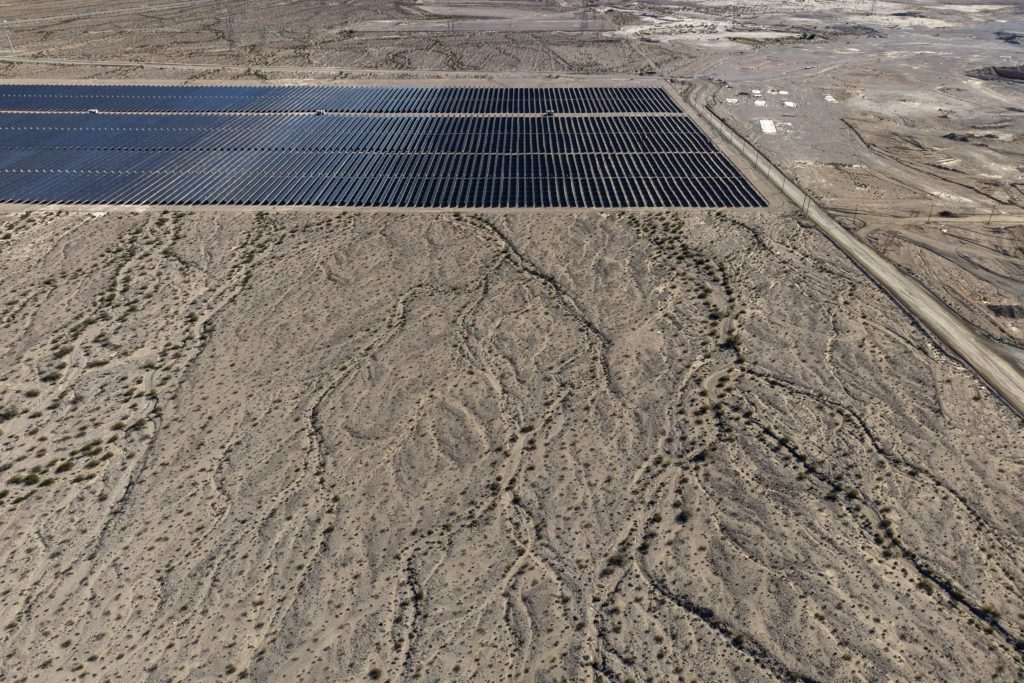
BOULDER CITY, Nev. (AP) — Janelle Sorenson loves the clear night skies in Boulder City, less than an hour's drive from the bright lights of the Las Vegas Strip. It's a small, quiet town, and she thinks an artificial intelligence data center would ruin the community and scar the desert landscape.
So over the summer, she joined with other residents to successfully oppose plans for one of the giant computing warehouses that have popped up around the country.
But their victory was short-lived. The developers withdrew their application and instead sought adjacent land owned by the federal government — and the U.S. Bureau of Land Management signed off.
"Not only did we not get to decide anything or have a say," Sorenson said, "we were just really kept in the dark."
The Townsite data center was the first in the country to be approved on federal public land, though construction is stalled after a judge ruled that the government couldn't use an old environmental review from when the project was intended to be a solar farm.
Tech companies are eager for vast tracts to build data centers that can be as large as 70 football fields, and Townsite could set a precedent for similar projects on federal property with more than a dozen others in the planning stages. President Donald Trump has been a steadfast supporter of the artificial intelligence industry, which he views as a source of economic growth and part of a global competition with China.
However, data centers have been unpopular in many communities as voters worry about higher electricity bills, declining water supplies and other impacts. In Nevada, where 80% of the land is owned by the federal government, Townsite and other projects have become a dominant issue in the battleground state's closely watched governor's race.
Republican Gov. Joe Lombardo, one of his party's most vulnerable incumbents, doesn't outright oppose building data centers on public lands, as long as they have community support. He recently signed an agreement with Trump's Republican administration to streamline infrastructure projects, which could include data centers on federal lands.
Democratic nominee Aaron Ford, the state attorney general, has pledged to oppose data centers on public lands, saying affordable housing should be the priority.
Both say the projects, whether on public or private land, must follow state rules, such as requiring data centers to cover their own energy costs and protecting water supplies, or they would lose eligibility for state tax abatements.
Sorenson, the Boulder City resident, considers herself to be liberal, but she said her conservative neighbors are on the same page as she is.
Autumn McGrath-Shook, who lives in the same town, said she recently left the Republican Party and registered with the Green Party over data centers, though she still identifies as conservative. Worried about the environmental impact on wildlife, she joined forces with "these crazy libs" to oppose the project.
Dive deeper
- BOULDER CITY, Nev. (AP) — Janelle Sorenson loves the clear night skies in Boulder City, less than an hour's drive from the bright lights of the Las Vegas Strip. It's a small, quiet town, and she thinks an artificial intelligence data center
- So over the summer, she joined with other residents to successfully oppose plans for one of the giant computing warehouses that have popped up around the country.
- But their victory was short-lived. The developers withdrew their application and instead sought adjacent land owned by the federal government — and the U.S. Bureau of Land Management signed off.
- "Not only did we not get to decide anything or have a say," Sorenson said, "we were just really kept in the dark."
- The Townsite data center was the first in the country to be approved on federal public land, though construction is stalled after a judge ruled that the government couldn't use an old environmental review from when the project was intended