Amanda Curtin imagines fragile acts of care among the homeless in Paris
Amanda Curtin’s Six Days opens with a girl dying in a Paris cemetery in 1991, during one of the coldest winters the city has experienced in years. More than two decades later, another vulnerable figure emerges: Daniel Despard, an Australian expatriate, recovering alcoholic and building caretaker. His carefully regulated life is disrupted by the arrival of a young homeless girl.
What follows is a novel concerned with homelessness, addiction, grief and loss – as well as the fragile acts of care that make survival possible.
Structured across six days in February 2012, the novel moves between Daniel’s present-day narrative and a series of interconnected stories stretching across occupied Paris, postwar France, the student protests of 1968 and contemporary Catalonia. The result is an ambitious, deeply layered work that asks how lives become entangled across generations.
Daniel is easily Curtin’s most compelling character. She excels at portraying the exhausting, daily labour of sobriety. Daniel’s life is governed by routine, a strategy developed to keep addiction at bay. He repeats the mantra he and his friend Marcelline developed together: “ROUTINE DISTRACTION REMEMBER THINK AHEAD.” The phrase functions as both a practical survival strategy and a moral compass.
Daniel is often prickly, judgemental and self-deprecating, but Curtin prevents him from becoming a caricature of either recovery or failure. Rather, she captures the relentless negotiation required to remain sober. Throughout the novel, craving is a palpable force, repeatedly described as “The Thirst”. Its recurring appearances provide some of the novel’s strongest passages, conveying addiction as an ongoing, relentless condition.
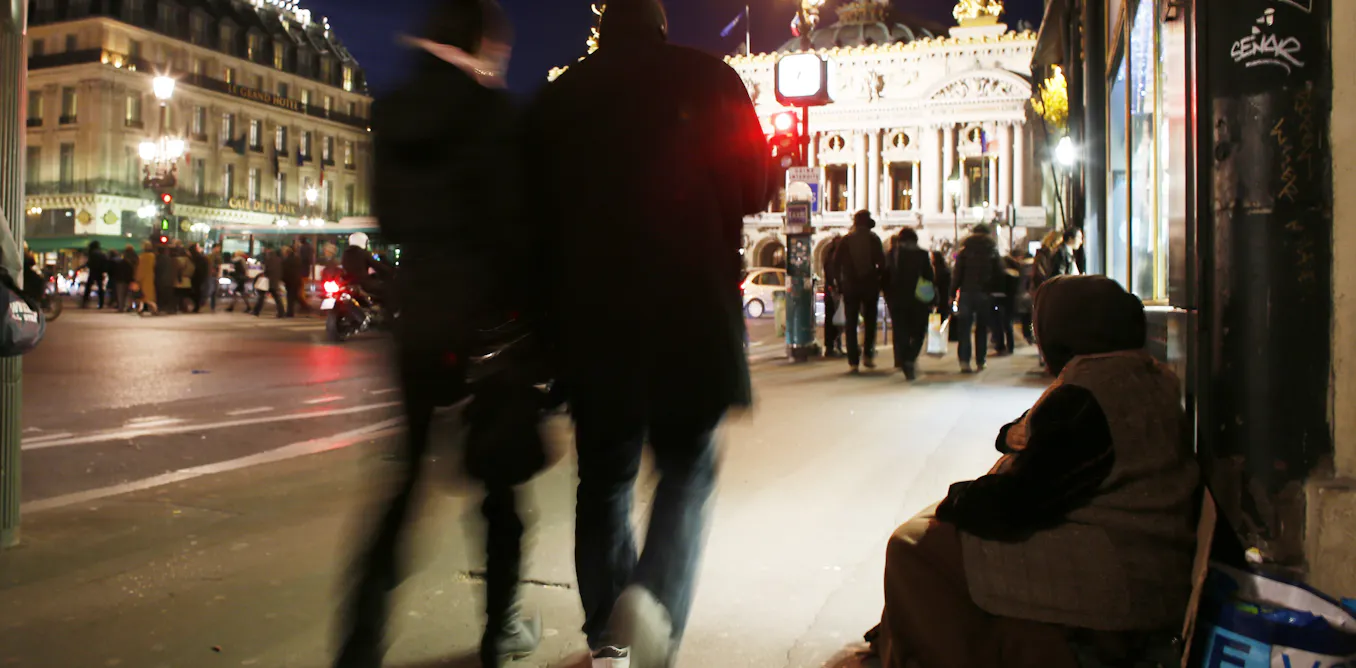
The Paris of Six Days is unexpected. Attention falls on metro stations, stairwells, cemeteries, shelters and streets occupied by the homeless. Daniel’s observations frequently expose the disparity between the city’s beauty and its inequalities. Reflecting on tourists, he notes their fascination with the romance of the city while remaining largely blind to the people living rough within it.
One of Curtin’s triumphs is her portrayal of homelessness. Characters such as Claude, Cesare and the unnamed “pumpkin soup girl” possess distinct voices and desires. They are real and resist easy sentimentalisation, or being made peripheral. Claude, in particular, is unforgettable. Abrasive and fiercely independent, she nevertheless shows unexpected tenderness.
Curtin is particularly attentive to the sensory realities of homelessness and to the instinctive reactions homeless people provoke in others. When Marcelline encounters Daniel sleeping rough near Montparnasse Cemetery, the scene is not sanitised. She is confronted by “the smell of vomit and alcohol-laden urine and bodily effluvium” and instinctively “shrinks back”.
The reaction feels recognisable precisely because it is so ordinary. Many know the experience of walking through a city and suddenly being struck by a powerful smell or evidence of somebody else’s physical distress. The first response can often be to recoil. Fear, discomfort and avoidance can precede reflection.
Curtin refuses to condemn Marcelline for that response. Instead, she presents it as deeply human. Marcelline recognises that Daniel is “sick and cold and hungry” and he may simply “succumb unnoticed”. Remembering another occasion when she turned away from someone she loved, she acts differently. Rather than offering a welfare leaflet, she puts it back in her pocket and “lowly, tentatively” extends her hand.
The power of the scene lies in this movement from instinctive withdrawal to deliberate care. Curtin suggests that compassion is in the decision to act despite discomfort. She suggests that care often begins with the decision to recognise another person’s humanity when it would be easier not to.
Marcelline is one of the novel’s most important characters, despite her physical absence for much of the narrative. Her disappearance generates much of the book’s mystery, but she also represents a particular ethic of care. The question that haunts Daniel – and, increasingly, the reader – is how well we ever know the people who sustain us. The novel repeatedly returns to the possibility that grief can remain hidden. As the pumpkin soup girl tells Daniel: “People sad for long time sometimes they die.”
Dive deeper
- Amanda Curtin’s Six Days opens with a girl dying in a Paris cemetery in 1991, during one of the coldest winters the city has experienced in years. More than two decades later, another vulnerable figure emerges: Daniel Despard, an Australian
- What follows is a novel concerned with homelessness, addiction, grief and loss – as well as the fragile acts of care that make survival possible.
- Structured across six days in February 2012, the novel moves between Daniel’s present-day narrative and a series of interconnected stories stretching across occupied Paris, postwar France, the student protests of 1968 and contemporary Catal
- Daniel is easily Curtin’s most compelling character. She excels at portraying the exhausting, daily labour of sobriety. Daniel’s life is governed by routine, a strategy developed to keep addiction at bay. He repeats the mantra he and his fr
- Daniel is often prickly, judgemental and self-deprecating, but Curtin prevents him from becoming a caricature of either recovery or failure. Rather, she captures the relentless negotiation required to remain sober. Throughout the novel, cra