After RAF Fairford incident, how big a threat to the UK is Iran?
Although there is scepticism about Tehran’s capabilities, it has become clear it wants Britain to feel it poses a risk
Britain may have been only peripherally involved in the bombing of Iran that Donald Trump and Benjamin Netanyahu started, but in the past fortnight it has become clear that Tehran wants to pose a threat inside the UK in response.
That could come even though there remains British scepticism about Iran’s capability to pull off a drone raid on a secure facility far from Tehran.
That is itself a significant step up from the regime’s longstanding campaign of assassination plots and threats against critics overseas, tasks the IRGC has traditionally hired criminal gangs to carry out.
What is known is that five men from London drove up in three white vans shortly after midnight on 27 September, one of whom called 999 as they did so. All five were arrested in Whelford, a village next to the airbase, only to be released on police bail a day later when no explosives were found or discernible plot discovered.
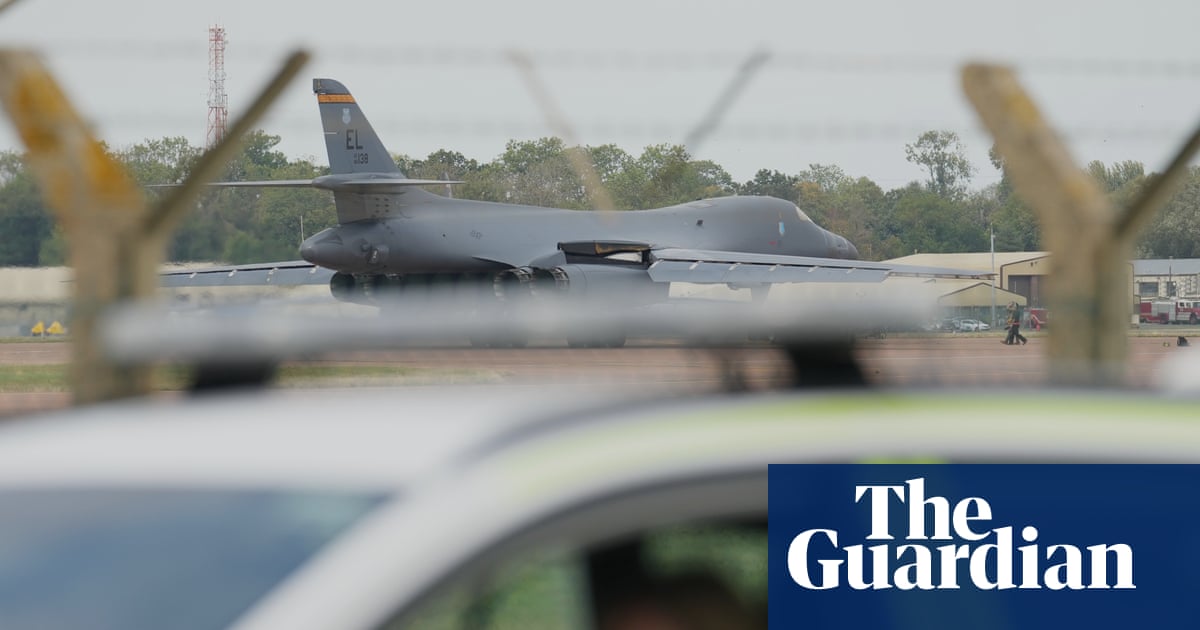
RAF Fairford is an exposed site, with plane spotters easily able to get up close enough to photograph and track the forward-deployed US B-1 and B-52 bombers, which with permission from the former prime minister Keir Starmer were taking off to make attack runs into Iran in the spring and early summer.
Dr Antonio Giustozzi, a terrorism specialist with the Royal United Services Institute, suggests the drive to the village was “a feint” where individuals, who may have been unwitting, were sent “to hint at what could happen”. But he is sceptical that Iran could pose a real military threat to Fairford or elsewhere.
A genuine attack on RAF Fairford or similar would almost certainly be a one-way mission ending in capture or even death, which it would be it hard to recruit for. But despite the low risks, the US chose to withdraw the B-1 bombers, which cost $300m (£225m) each, as a precautionary move. It was “an operational decision to reduce the risk”, Rich Knighton, the head of the UK armed forces, said on Thursday.
Meanwhile, Trump, desperate to lower oil prices, has set back any future attack on Iran until after the US midterm elections in early November. But regardless of other justifications for the US withdrawal from RAF Fairford, and the police investigation – which has yet to lead to any charges – the wider Iran threat in the UK is now elevated.
Prosecutors told a magistrates court on Saturday the pair were in contact with a third party, believed to be in Iran, who directed them and sent them “instructions on how to prepare an explosive device”. A trial at the Old Bailey has been scheduled.
The following month, in a Manhattan courtroom, al-Saadi pleaded not guilty and said he was “a prisoner of war”. He faces a terrorism trial, accused in one instance of participating in an arson attack on a synagogue in London via a FaceTime video call. Though nobody was killed in the campaign, al-Saadi is accused of telling an associate that he was engaged in “psychological warfare”.
Jonathan Hackett, a former US marine and intelligence specialist, says the threat in the UK and Europe will endure because Tehran believes it serves a purpose, though it will alter depending on who becomes responsible after al-Saadi. “The psychological effects alone are certainly important; the goal is to create a wedge between the US and its allies,” he added.
Dive deeper
- Although there is scepticism about Tehran’s capabilities, it has become clear it wants Britain to feel it poses a risk
- Britain may have been only peripherally involved in the bombing of Iran that Donald Trump and Benjamin Netanyahu started, but in the past fortnight it has become clear that Tehran wants to pose a threat inside the UK in response.
- That could come even though there remains British scepticism about Iran’s capability to pull off a drone raid on a secure facility far from Tehran.
- That is itself a significant step up from the regime’s longstanding campaign of assassination plots and threats against critics overseas, tasks the IRGC has traditionally hired criminal gangs to carry out.
- What is known is that five men from London drove up in three white vans shortly after midnight on 27 September, one of whom called 999 as they did so. All five were arrested in Whelford, a village next to the airbase, only to be released on