It's taking longer to find a new job after losing one
Podcasts & Shows Expand/collapse submenu for Podcasts & Shows Daily Morning Edition
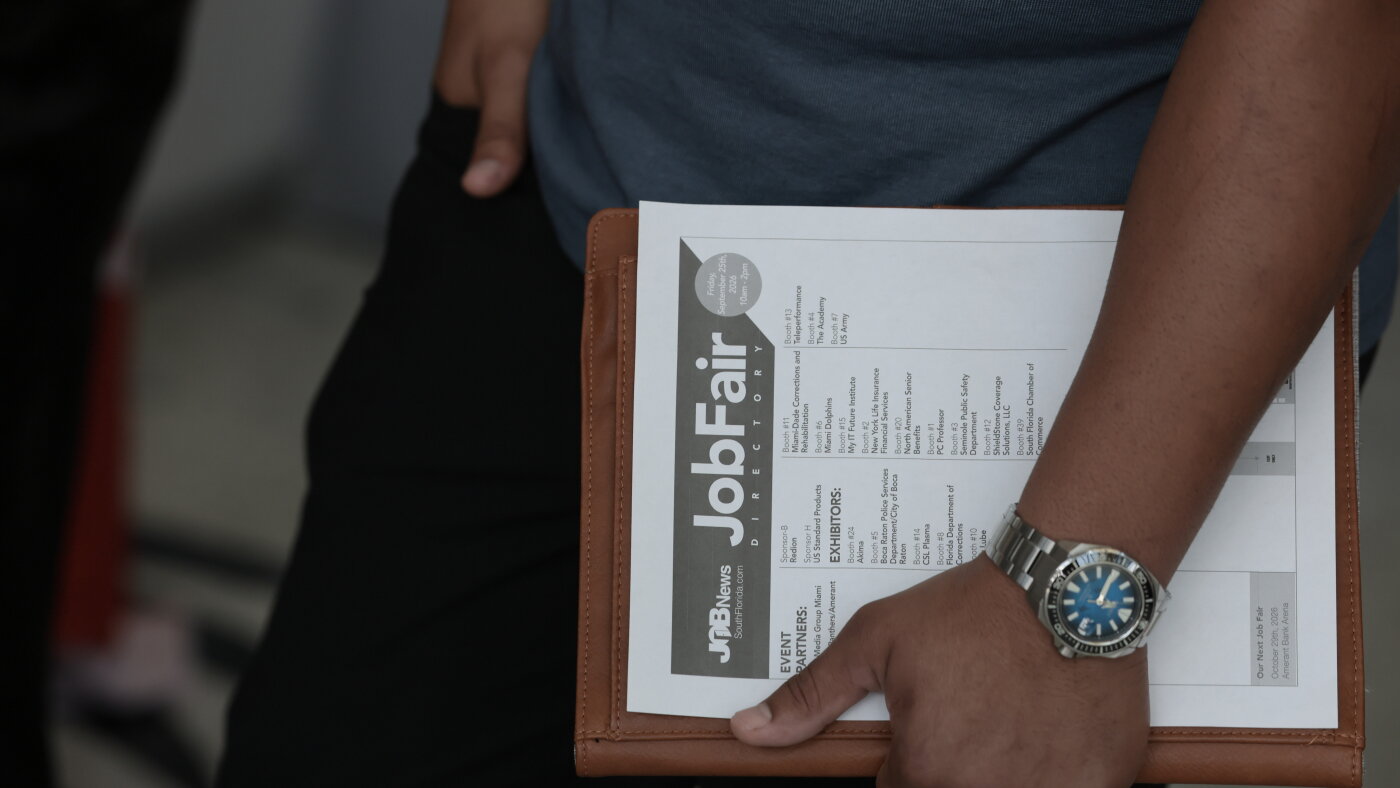
In a sluggish hiring environment, people who are unemployed are taking longer to find new jobs. In many cases, unemployment benefits run out long before people return to work. Joe Raedle/Getty Images North America hide caption
Evan Smith lost his job at a Colorado RV dealership this past spring after the company was sold. He's applied for numerous jobs since then, but hasn't found much traction.
"You find something that you're excited about or something that you think fits your profile and you go in and over 100 people have already clicked 'applied for it' in the last two weeks," Smith says. "So you just feel like you're a number."
In today's stagnant hiring environment, the numbers are not encouraging. U.S. employers added just 29,000 jobs last month. That's one job for every 244 unemployed workers. The average worker is taking longer to find a new job, and that means more people are exhausting their unemployment benefits before any new paychecks begin.
To be sure, the unemployment rate has remained very low: just 4.2% in September. But that's little consolation for those who are stuck on the outskirts of the job market, knocking on doors that rarely open.
"When you're one of the people that doesn't have a job, it doesn't really matter what the percentage is," says Cheryl Huff. "It's impacting your life in a big, big way."
Cheryl Huff has applied for dozens of jobs since getting laid off by the state government in Colorado four months ago. She's landed only a handful of interviews. Cheryl Huff hide caption
Huff was laid off from a state government job in Colorado four months ago. Since then, she's applied for dozens of positions, spending hours on each one, tailoring her resume to the specific job requirements. She's gotten only a handful of interviews —all by telephone — and a lot of what seem like automated emails.
Huff once got two messages at once from the same employer, one saying her application was under review and the other saying the job had already been filled.
"That's one of the frustrations that people are having," Huff says. "Did you even look at my stuff?"
In the meantime, Huff is paying $1,300 a month to maintain her old employer-provided health insurance. Her husband is retired, so their family budget is tight.
Dive deeper
- Podcasts & Shows Expand/collapse submenu for Podcasts & Shows Daily Morning Edition
- In a sluggish hiring environment, people who are unemployed are taking longer to find new jobs. In many cases, unemployment benefits run out long before people return to work. Joe Raedle/Getty Images North America hide caption
- Evan Smith lost his job at a Colorado RV dealership this past spring after the company was sold. He's applied for numerous jobs since then, but hasn't found much traction.
- "You find something that you're excited about or something that you think fits your profile and you go in and over 100 people have already clicked 'applied for it' in the last two weeks," Smith says. "So you just feel like you're a number."
- In today's stagnant hiring environment, the numbers are not encouraging. U.S. employers added just 29,000 jobs last month. That's one job for every 244 unemployed workers. The average worker is taking longer to find a new job, and that mean