Scientists may have found a shortcut to fusion energy
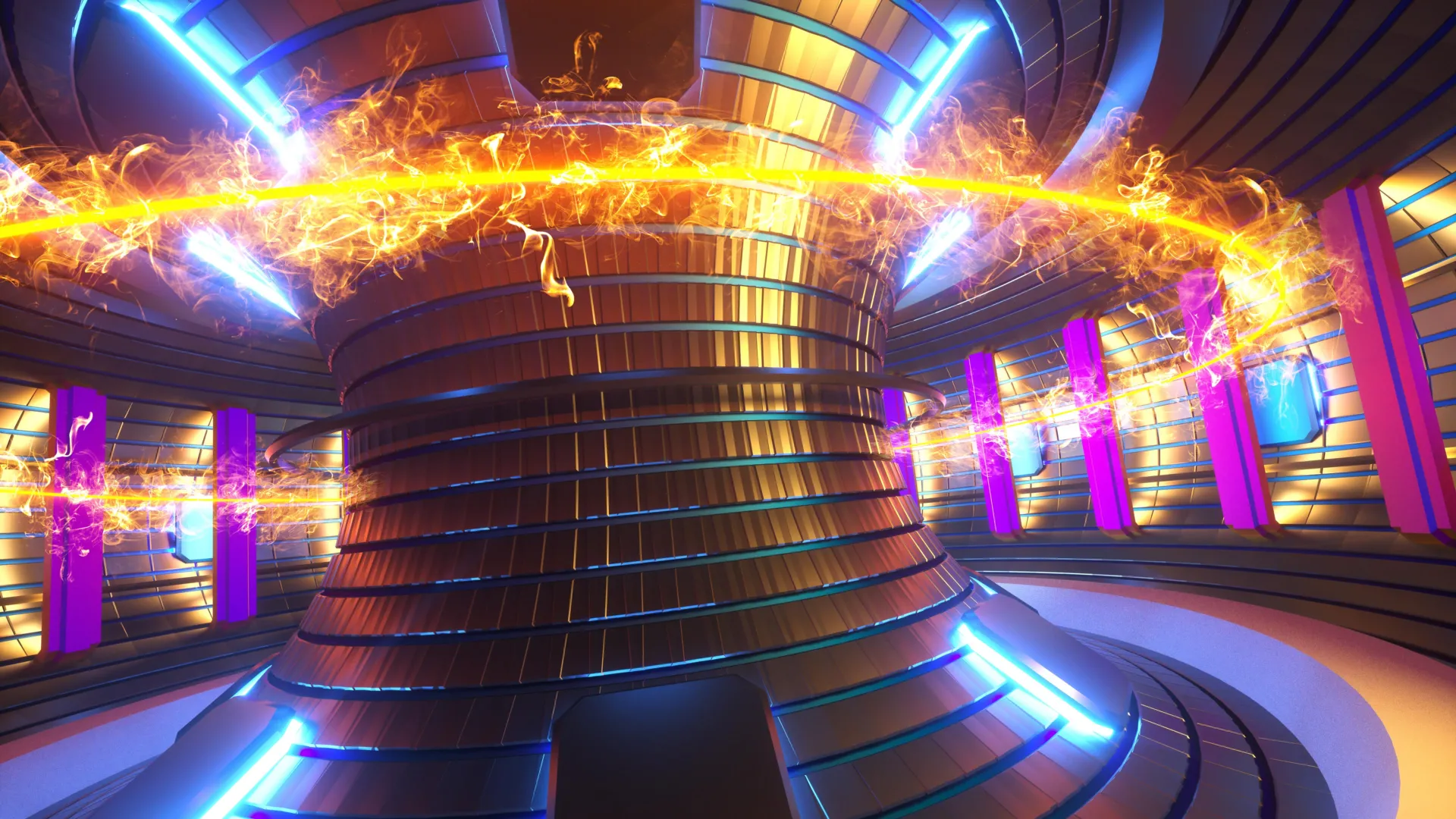
Scientists have uncovered a potentially far more efficient path to fusion ignition that could bring the dream of practical fusion energy closer to reality.
Scientists at the U.S.Department of Energy's (DOE) Princeton Plasma Physics Laboratory (PPPL) have identified a potentially much more efficient way to achieve fusion ignition, a major milestone in the pursuit of practical fusion energy. Their calculations suggest that changing the order in which plasma is heated and compressed could dramatically reduce the energy needed to reach a self-sustaining fusion reaction.
For more than seven decades, fusion researchers have relied on a mathematical rule to determine whether plasma can remain sufficiently hot and dense, for a long enough period, to sustain fusion without additional external heating. Known as the Lawson criterion, this equation defines the conditions required for ignition. However, it does not explain the most efficient way to achieve them.
Now, PPPL physicists Luis Delgado-Aparicio, Masayuki Ono, and Jonathan Menard have developed a more comprehensive version of the criterion. By incorporating four additional factors that influence fusion performance, they have mapped a promising route to ignition that could require substantially less energy than alternative approaches.
The research focuses on plasma, often called the fourth state of matter. Plasma forms when a gas becomes so energetic that its particles carry electrical charges. In fusion reactors, this extremely hot material contains the atomic nuclei that researchers hope to combine, releasing energy through nuclear fusion.
The ultimate goal is to produce a burning plasma, in which fusion reactions generate enough heat to sustain the process without continued external heating. Reaching this state efficiently remains one of the most important challenges in fusion energy research.
Delgado-Aparicio compares the discovery to finding a more efficient route through a mountain range.
Imagine that the energy requirements for fusion ignition form a landscape dominated by a towering mountain. The destination lies on the other side, but there are several possible routes to reach it.
Many proposed fusion strategies effectively attempt to climb directly over the mountain. They begin by increasing the density of the plasma and then supplying the enormous amount of heat needed to reach ignition.
The new calculations suggest that a different sequence could be considerably more efficient. Instead of increasing density first, researchers could heat the plasma before making it denser. This alternative route avoids the highest energy requirements while still reaching the desired conditions.
"A lot of companies want to climb the mountain head-on and spend enormous energy to get there," Delgado-Aparicio said. "Go around the peak instead. You reach the same place in a much smarter way, and you use far less energy."
The researchers identified a particularly important region of this mathematical landscape called the Cordey saddle.
Dive deeper
- Scientists have uncovered a potentially far more efficient path to fusion ignition that could bring the dream of practical fusion energy closer to reality.
- Scientists at the U.S.Department of Energy's (DOE) Princeton Plasma Physics Laboratory (PPPL) have identified a potentially much more efficient way to achieve fusion ignition, a major milestone in the pursuit of practical fusion energy. The
- For more than seven decades, fusion researchers have relied on a mathematical rule to determine whether plasma can remain sufficiently hot and dense, for a long enough period, to sustain fusion without additional external heating. Known as
- Now, PPPL physicists Luis Delgado-Aparicio, Masayuki Ono, and Jonathan Menard have developed a more comprehensive version of the criterion. By incorporating four additional factors that influence fusion performance, they have mapped a promi
- The research focuses on plasma, often called the fourth state of matter. Plasma forms when a gas becomes so energetic that its particles carry electrical charges. In fusion reactors, this extremely hot material contains the atomic nuclei th