Controversial vaccine trial touted by RFK Jr gets go-ahead in Guinea-Bissau
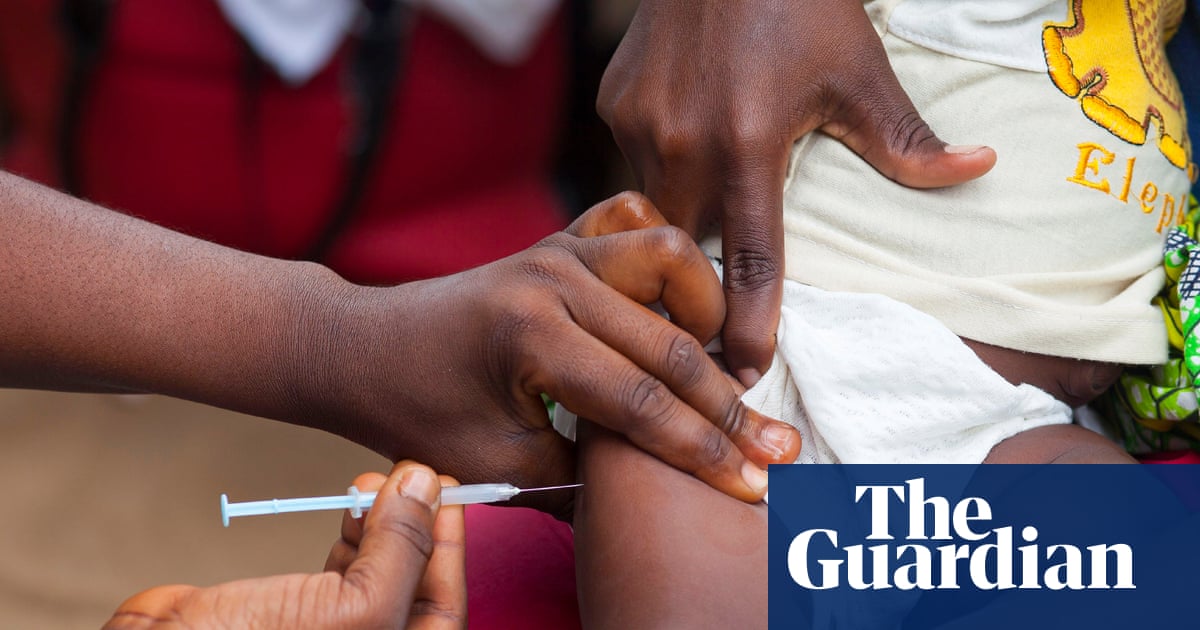
Recommended dose of hepatitis B vaccine will be withheld from thousands of newborns by Danish researchers
A controversial research trial that will withhold hepatitis B vaccines from some African newborns was given approval to move forward this week.
At an anti-vaccine conference last month, Kennedy praised the Danish researchers behind the trial and touted US-supported research on hepatitis B in newborns as exemplifying the Trump administration’s agenda for vaccines, which has included slashing vaccine recommendations and casting doubt on the safety and effectiveness of shots.
Kennedy would never be able to do the trial in the US because of its significant ethical concerns, Offit added. “He’s taking advantage of a developing country … Is it because children in Africa are more expendable than children here?”
An ethics committee at the researchers’ home institution of the University of Southern Denmark voted this week to proceed with the trial, and officials in Guinea-Bissau have also greenlit the project, which the health minister, Quinhin Nantote, initially said was suspended after international uproar earlier this year.
“You are now enrolling newborns in a lottery to test a hypothesis,” Hansen said. The children who are randomly selected not to receive the birth dose of the vaccine, those who “lost the lottery”, face in their earliest days the risk of contracting hepatitis B, which can cause irreversible lifelong damage. “They contract hepatitis B in the context of being part of a research project,” Hansen said, which made their infection happen, in effect, “by design”.
The US Centers for Disease Control and Prevention (CDC) has reportedly set aside $1.6m in this year’s budget for the project, and it will be matched with private funding from the Pershing Square Foundation, which was co-founded by the billionaire activist Bill Ackman, and the Bluebell Foundation.
The news that the trial was approved by the Denmark ethics committee was first reported on Thursday by CIDRAP News. This is the first time details of the updated protocol have been disclosed.
In previous research, half of children who contracted hepatitis B did so after birth, through community exposures. “This virus can be transmitted casually,” Offit said. It can live on surfaces for up to seven days, and it can be acquired by sharing washcloths, toothbrushes and fingernail clippers. In addition, the hepatitis B test has a 5% false negative rate, which could provide false assurance that a birthing parent does not have the virus.
According to the Helsinki declaration, international medical research must be approved by ethics committees in both the host and sponsor countries.
“It’s very unusual to bring this into a committee like that,” Støvring said. The national ethics committee in Denmark oversees medical research, but this study was outside of their purview because it won’t take place in Denmark.
Guinea-Bissau has some of the highest rates of hepatitis B in the world, with about 18% of adults carrying the virus. While it may be transmitted from mother to child during birth, it could also be transmitted from another parent, relatives, siblings or caregivers. Children who are infected with hepatitis B in the first year of life are significantly more likely to develop severe outcomes, including chronic infection and liver cancer.
Dive deeper
- Recommended dose of hepatitis B vaccine will be withheld from thousands of newborns by Danish researchers
- A controversial research trial that will withhold hepatitis B vaccines from some African newborns was given approval to move forward this week.
- At an anti-vaccine conference last month, Kennedy praised the Danish researchers behind the trial and touted US-supported research on hepatitis B in newborns as exemplifying the Trump administration’s agenda for vaccines, which has included
- Kennedy would never be able to do the trial in the US because of its significant ethical concerns, Offit added. “He’s taking advantage of a developing country … Is it because children in Africa are more expendable than children here?”
- An ethics committee at the researchers’ home institution of the University of Southern Denmark voted this week to proceed with the trial, and officials in Guinea-Bissau have also greenlit the project, which the health minister, Quinhin Nant