DIY fertilizer is a blessing as farmers face steep prices due to the Iran war
Podcasts & Shows Expand/collapse submenu for Podcasts & Shows Daily Morning Edition
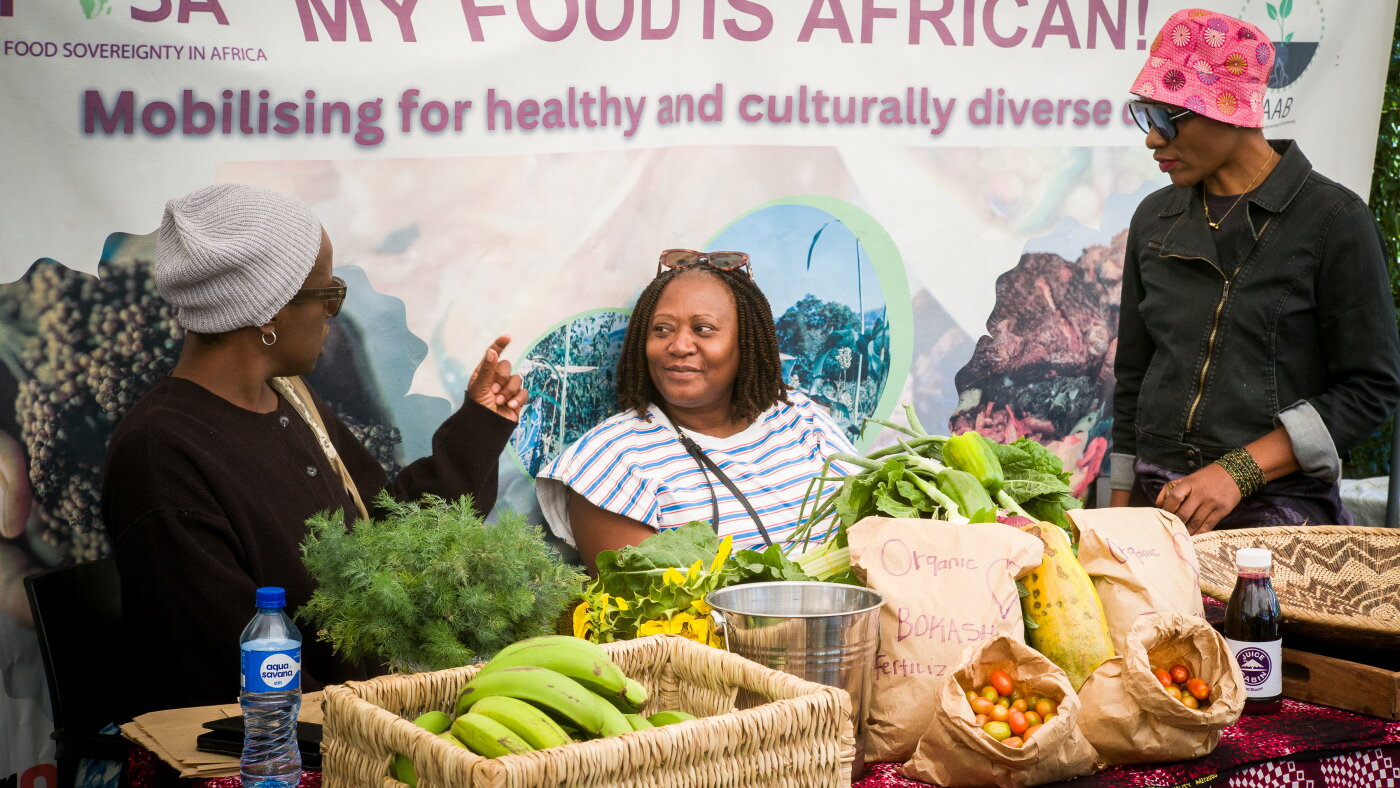
At a market in Zambia, organic vegetables share table space with bags of homemade bokashi fertilizer that sell for about $2.50 each. Andy Higgins for NPR hide caption
Shady fruit trees dot her fields. During the growing season, long tomato vines drape over trellises. There are tidy rows of corn, pumpkins and a local leafy green called blackjack. Eleven varieties of lettuce.
"I started taking vegetables to my workmates, and before I knew it I was supplying the supermarket," Newlove says. "It went on and on."
For many farmers, 2026 has been a challenging year. The Iran war choked off the Strait of Hormuz and dramatically halted international trade shipments — including fertilizers. Prices spiked globally. The effects were quickly felt in African countries, where smallholder farmers are often vulnerable to rapid changes in fertilizer costs.''
Newlove, however, didn't feel the pinch. For years, she's fertilized her plants with a homemade, fermented compost known as bokashi.
Kanangwa Newlove (right), the founder of Loctaguna Organics, and her team harvest organic vegetables. She also makes fertilizer known as bokashi. Andy Higgins for NPR hide caption
With roots in ancient Korean farming traditions and popularized in Japan, bokashi is relatively easy to make. According to Newlove, it's also highly effective.
"We could now have a potent fertilizer —– organic —– which is ready in [weeks]. For us that was amazing," Newlove says. "It was a game changer, to be honest."
Bokashi has become so popular in Zambia, she says, that farmers now sell homemade bokashi compost at markets and swap tips on social media. The Kasisi Agricultural Training Centre offers bokashi training and often sends students to her farm to see it in action.
"[Zambian farmers] have been looking for alternatives — how to grow food but reduce costs," says Rabecca Mwila of the Knowledge Platform for Organic Agriculture and Agroecology in Africa. "Inputs such as bokashi have come in to provide a cushion for them."
For home composters, bokashi is a method of fermenting food scraps in an anaerobic environment — no oxygen allowed! But many farmers make a version of bokashi outdoors. Ingredients are often easy to find on a farm: leaves or crop residues, animal dung, charcoal and ash from a fireplace. Then, they add yeast and a source of sugar (molasses or bananas, in a pinch) to jump start the fermentation process. The mixture heats up as microbes break it down.
Dive deeper
- Podcasts & Shows Expand/collapse submenu for Podcasts & Shows Daily Morning Edition
- At a market in Zambia, organic vegetables share table space with bags of homemade bokashi fertilizer that sell for about $2.50 each. Andy Higgins for NPR hide caption
- Shady fruit trees dot her fields. During the growing season, long tomato vines drape over trellises. There are tidy rows of corn, pumpkins and a local leafy green called blackjack. Eleven varieties of lettuce.
- "I started taking vegetables to my workmates, and before I knew it I was supplying the supermarket," Newlove says. "It went on and on."
- For many farmers, 2026 has been a challenging year. The Iran war choked off the Strait of Hormuz and dramatically halted international trade shipments — including fertilizers. Prices spiked globally. The effects were quickly felt in African