Brazil's big political rematch: What to know about the Brazilian election
Podcasts & Shows Expand/collapse submenu for Podcasts & Shows Daily Morning Edition
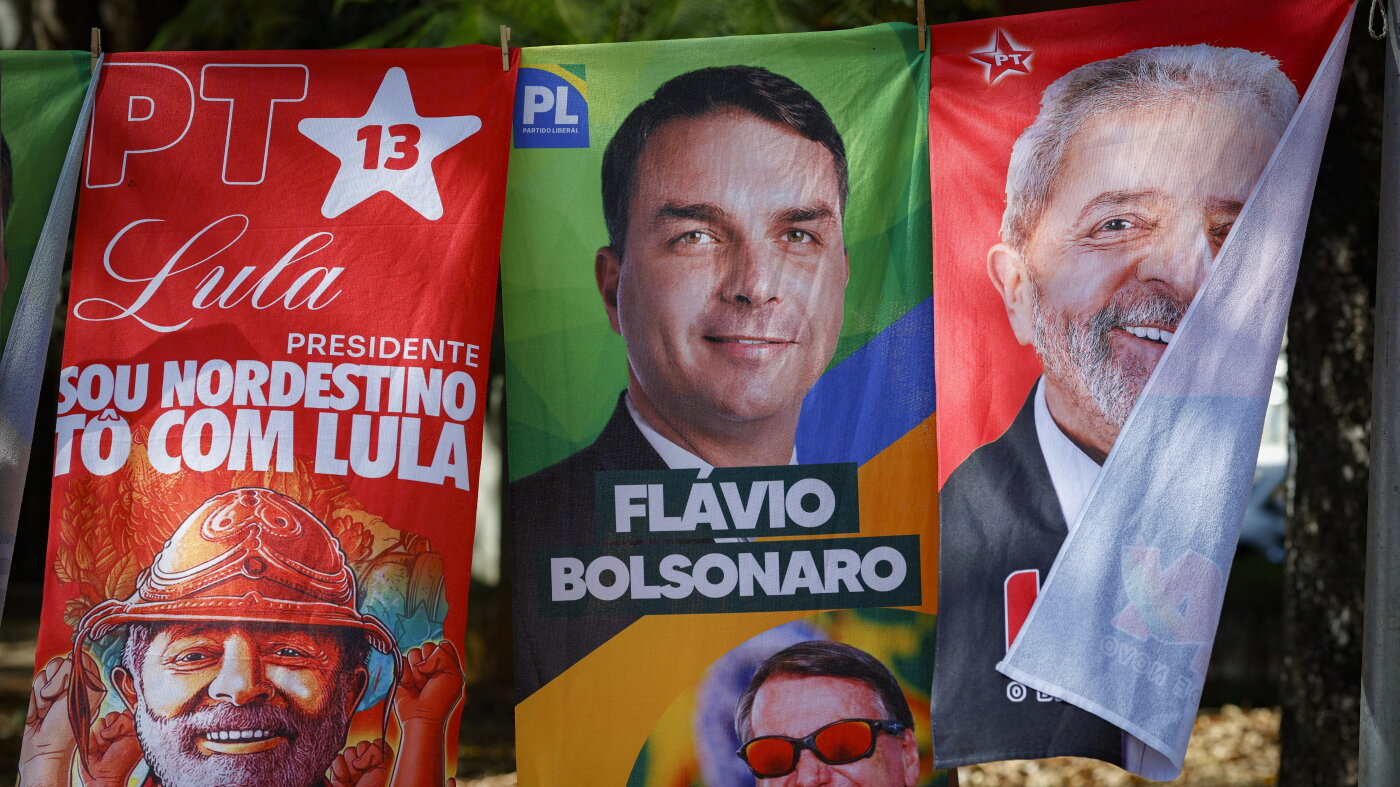
Towels and caps for sale depicting Brazilian presidential candidates Luiz Inacio Lula da Silva and Flavio Bolsonaro are seen in a residential area of Brasília on September 11, 2026. Brazil will hold a presidential elections on October 4, 2026. Sergio Lima/AFP via Getty Images hide caption
RIO DE JANEIRO — Brazil's presidential election is a rematch of the country's bitter 2022 contest — but with a twist. President Luiz Inácio Lula da Silva is facing Flávio Bolsonaro, the son of the man he narrowly defeated four years ago, Jair Bolsonaro.
Flávio, a 45-year-old senator, is carrying his father's political movement into Sunday's election. Jair Bolsonaro is now serving a 27-year sentence for plotting a coup to overturn that loss. His son has promised to pardon him if elected.
The younger Bolsonaro says he is "a more moderate Bolsonaro," but has voiced few policy differences from his father. He pledges to pardon his father over the coup conviction, has cast doubt on humans' responsibility for climate change, and supports making it easier for Brazilians to buy guns.
Lula, 80, is seeking a fourth presidential term. The result will determine whether Brazil stays with Lula's left-leaning government or returns the Bolsonaro movement to the presidency.
The next president is expected to nominate four of 11 Supreme Court justices, giving the winner a significant influence over the court for years to come.
The next president will also shape Brazil's economy and environmental policy, its relationship with the United States, and the future of its young democracy.
Polls suggest a tight race between Lula and Flávio Bolsonaro among a field of presidential candidates. Federal and state legislative seats and state governorships are also up for grabs. If no candidate for president or governor receives more than 50% of the valid votes Sunday, the two candidates with the most votes will continue to a runoff on Oct. 25.
Brazil uses electronic voting machines and typically counts the results within hours. By Sunday night, it will likely be clear who is headed to a runoff — and how strongly each candidate performed in the first round.
Jair Bolsonaro lost the 2022 election to Lula by a narrow margin and then became the central figure in an effort to reject the result. He is now serving a sentence for plotting a coup to overturn that loss, a scheme that included a plan to assassinate Lula, according to police.
The younger Bolsonaro has made clear that he intends to stand by his father. His pledge to pardon Jair if elected has turned the former president's legal fate into a campaign issue — and raised broader questions about the consequences of a Bolsonaro return to power for Brazil's democratic institutions.
Dive deeper
- Podcasts & Shows Expand/collapse submenu for Podcasts & Shows Daily Morning Edition
- Towels and caps for sale depicting Brazilian presidential candidates Luiz Inacio Lula da Silva and Flavio Bolsonaro are seen in a residential area of Brasília on September 11, 2026. Brazil will hold a presidential elections on October 4, 20
- RIO DE JANEIRO — Brazil's presidential election is a rematch of the country's bitter 2022 contest — but with a twist. President Luiz Inácio Lula da Silva is facing Flávio Bolsonaro, the son of the man he narrowly defeated four years ago, Ja
- Flávio, a 45-year-old senator, is carrying his father's political movement into Sunday's election. Jair Bolsonaro is now serving a 27-year sentence for plotting a coup to overturn that loss. His son has promised to pardon him if elected.
- The younger Bolsonaro says he is "a more moderate Bolsonaro," but has voiced few policy differences from his father. He pledges to pardon his father over the coup conviction, has cast doubt on humans' responsibility for climate change, and