NASA’s Roman telescope just opened its planet-hunting eye
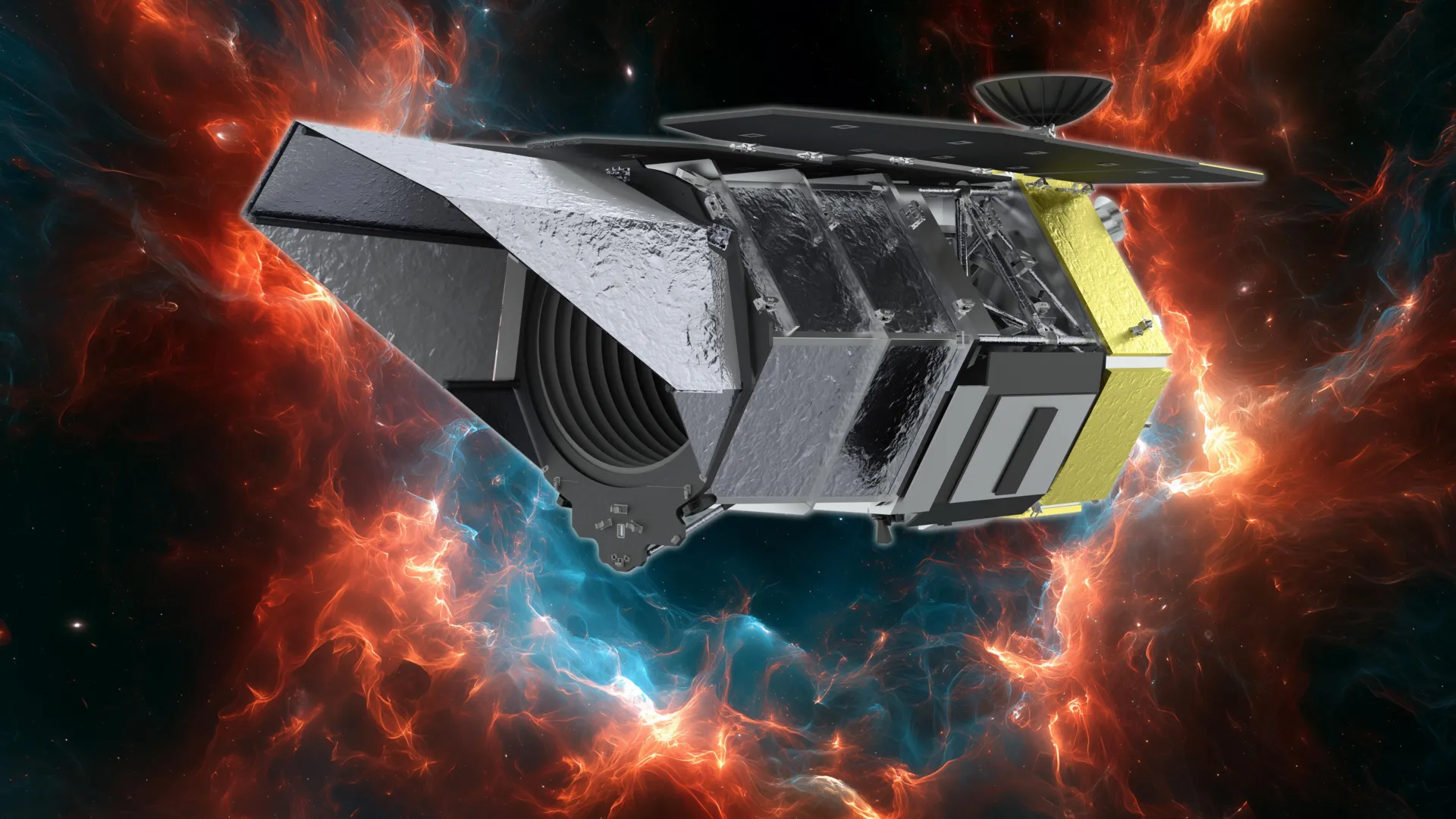
NASA’s Nancy Grace Roman Space Telescope completed tests of its pointing system in mid-September. The checks showed it could stay steady while observing targets. On Sept. 22, the Coronagraph Instrument received light from space for the first time.
Roman’s Wide Field Instrument has 18 detectors, each with a section that monitors a known guide star. The telescope uses those measurements to correct small shifts and keep observations sharp, which can take minutes or hours.
Engineers say Roman’s stability is already comparable to aiming a laser at a dime from about 150 miles away. They expect further tuning to improve it, potentially reaching a comparison distance of about 230 miles.
The team also plans to test spectral guiding, a method that uses patterns in light across different wavelengths to help position the telescope. Roman will use its existing science capability to collect those spectra, rather than relying on a separate guiding instrument.
Tests on Sept. 22 and 27 paired the guidance system with the coronagraph. The instrument is designed to block bright starlight so scientists can examine much dimmer planets and dusty disks around nearby stars. The team adjusted its focus and let it make an initial observation; testing of spectral guidance is expected in the coming weeks.
Key points
- Roman’s fine-guidance system passed tests to keep the telescope steady during observations.
- The coronagraph received cosmic light for the first time after joint stability checks.
- Engineers plan to validate spectral guiding in the coming weeks.