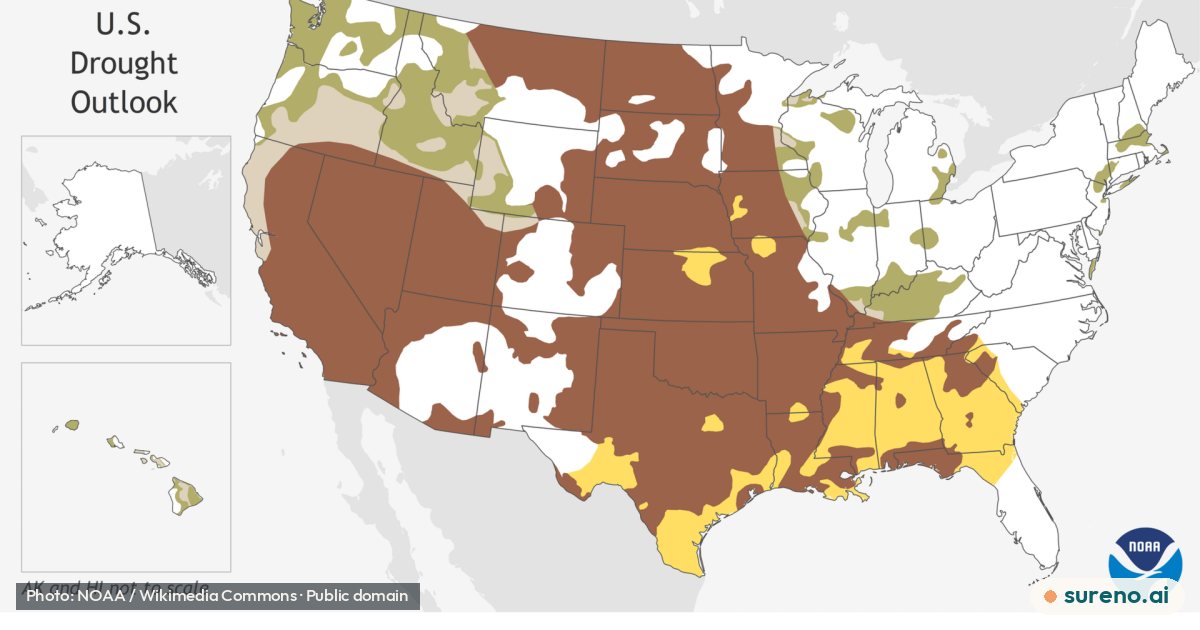
NOAA’s Winter 2026–27 Outlook: What New Yorkers Should Know
NOAA’s seasonal outlook points to warmer conditions across New York, but it does not say exactly how much snow any town will get.
The short version
- NOAA’s outlook gives New York a higher likelihood of above-normal temperatures through March 2027, with a 50% to 60% chance, according to the report. 1
- The precipitation outlook is less clear: western, central and northern New York have equal chances of above- or below-normal precipitation, while eastern areas are favored to be wetter. 1
- A seasonal outlook describes broad odds over a large area; it does not predict the exact temperature, snowfall or weather on a particular day.
- NOAA is a US agency that provides weather and climate information, among other work involving oceans, charts and marine life. 2
What is NOAA?
NOAA stands for the National Oceanic and Atmospheric Administration. It is a US scientific and regulatory agency that monitors weather, oceans and the atmosphere, makes forecasts, charts seas, and carries out work involving fisheries and protected marine species. 2
The winter outlook in the headlines comes from NOAA’s Climate Prediction Center, according to the report. 1 Its seasonal outlook is meant to describe broad chances over a period of months, rather than give a day-by-day forecast.
What does NOAA predict for New York’s winter?
The report says NOAA’s updated outlook favors above-normal temperatures across New York through March 2027. It puts the chance of a warmer-than-average winter at 50% to 60%. 1 That means warmer conditions are considered more likely than the alternatives, not guaranteed.
- Western, central and northern New York: equal chances of above- or below-normal precipitation. 1
- Eastern New York: a greater likelihood of above-normal precipitation, with the report giving a range of 33% to 50%. 1
Does a warmer winter mean less snow?
Not necessarily. The outlook described in the report is about the chances of seasonal temperatures and precipitation compared with normal. It does not provide a precise snowfall total for every place, and above-normal precipitation is not the same thing as a forecast of snow. 1
Rain, snow, sleet and ice depend on local conditions and the weather at the time. The report also notes that independent long-range outlooks differ: one almanac anticipates a mix of precipitation and points to possible inland snow during January and February. Those projections are not the same as NOAA’s seasonal outlook. 1
Why are people talking about NOAA now?
The headlines focus on a newly reported outlook for winter 2026–27, including the possibility of a warmer-than-average season in New York. 1 That can be useful for thinking about broad seasonal conditions, but it is not a promise about the weather in a particular week.
The report links the national winter pattern to a strong El Niño. El Niño is a climate pattern involving unusually warm surface water in part of the tropical Pacific; the source reports that this pattern was influencing models for the winter. 1 A seasonal outlook still describes probabilities, not a certain outcome.
What should an ordinary reader take from the outlook?
For now, read the forecast as a broad signal: warmer-than-average temperatures are favored statewide, while precipitation prospects vary by region and are less decisive in much of the state. 1 It cannot tell a household whether a specific storm will bring snow, rain or ice.
For plans that depend on particular dates—such as travel or outdoor activities—check current local forecasts as the date approaches. Seasonal forecasts are not a substitute for those short-range updates.
What is still uncertain?
The source gives regional probabilities but does not provide town-by-town snowfall amounts, the timing of individual storms, or a detailed account of how the outlook may change. 1 It also reports differences between NOAA’s broad outlook and almanac projections, so readers should not treat every long-range forecast as saying the same thing.
What we don't know yet
- How much snow any particular New York town will receive.
- When individual cold spells, storms, rain or ice events will occur.
- Whether the broad seasonal probabilities will change as winter approaches.
Share this explainer
Get this every day, on every new tab
Sureno Browser brings the day's stories, explained simply, to your start page.
Questions people ask
Will New York have a warm winter in 2026-27?
NOAA’s outlook favors above-normal temperatures across New York through March 2027, with a reported 50% to 60% chance of warmer-than-average conditions. That is a probability, not a guarantee. 1
Does NOAA say New York will get less snow?
The reported outlook does not give a statewide snowfall total or a town-by-town snow forecast. It describes temperature and precipitation chances, which do not by themselves determine whether precipitation will fall as rain, snow, sleet or ice. 1
Will eastern New York get more precipitation this winter?
The report says eastern parts of the state are favored to have above-normal precipitation, giving a range of 33% to 50%. It does not specify how much precipitation a particular location will receive. 1
What does NOAA do besides weather forecasts?
NOAA monitors weather, oceans and the atmosphere, charts seas, conducts deep-sea exploration, and works on fisheries and protection of marine mammals and endangered species in US waters. 2
Can NOAA’s winter outlook predict a specific storm?
No. The outlook described in the report gives broad seasonal probabilities, not the timing or details of an individual storm. Check a current local forecast for weather on a particular date.
Sources
- NOAA Predicts Warmer Winter Across New York State — Oduu, 2026-10-07
- National Oceanic and Atmospheric Administration — Wikipedia
Free tools for this
They run in your browser. Nothing is uploaded and there is nothing to sign up for.
More to read
 Home & LifeWater supply: what it is and why problems are in the newsOct 7, 2026 · 4 min read0 views
 Home & Lifeन्यूनतम मजदूरी क्या है और अक्टूबर 2026 में क्या बदला?Oct 7, 2026 · 4 min read0 views
 Home & LifeIndiramma housing: October 9 payment deadline and rulesOct 7, 2026 · 4 min read0 views
 Home & LifeAadhaar Name Correction: What the New Rules RequireOct 7, 2026 · 3 min read0 views
 WorldFormer Prince Andrew's Action Against Police ExplainedOct 5, 2026 · 2 min read3 views
 Home & LifeWhat Social Security Is and How Its Benefits WorkOct 7, 2026 · 3 min read0 views
 Home & LifeWho Are Ukrainians, and Why Are They in the News?Oct 7, 2026 · 4 min read0 views
 Home & LifeSancor Seguros: what it is and why its 80th anniversary mattersOct 7, 2026 · 3 min read0 views
 Home & LifeCapital punishment: what it is and why it is debatedOct 7, 2026 · 4 min read0 views
 SportsLakers Preseason Opener: What to Know About the Kings GameOct 5, 2026 · 4 min read2 views