Vagus Nerve Stimulation and Learning: What Research Shows
A mouse study suggests signals traveling from the body to the brain may help practiced motor skills last, but the finding is not proof of benefit in people.
The short version
- Researchers at Tohoku University studied whether stimulating the vagus nerve after practice affects lasting motor learning in mice. 1
- In the mice, stimulation after training was associated with stronger long-term motor learning. 1
- The researchers linked the effect to rhythmic changes in brain blood vessels, but the source describes this as a possible explanation rather than a settled mechanism. 1
- The reported finding is from mice; the supplied source does not establish that stimulation improves learning in people. 1
What did the researchers report?
Researchers at Tohoku University reported that stimulating the vagus nerve after training helped mice develop stronger long-term motor learning. Motor learning means learning movements or physical skills through practice. The finding suggests that what happens after practice may matter as the brain turns a newly practiced skill into a lasting one. 1
The report also connects the effect with rhythmic changes in brain blood vessels. This points to one possible way body-to-brain signals could be involved, but the supplied account does not establish exactly how the process works. 1
What is vagus nerve stimulation?
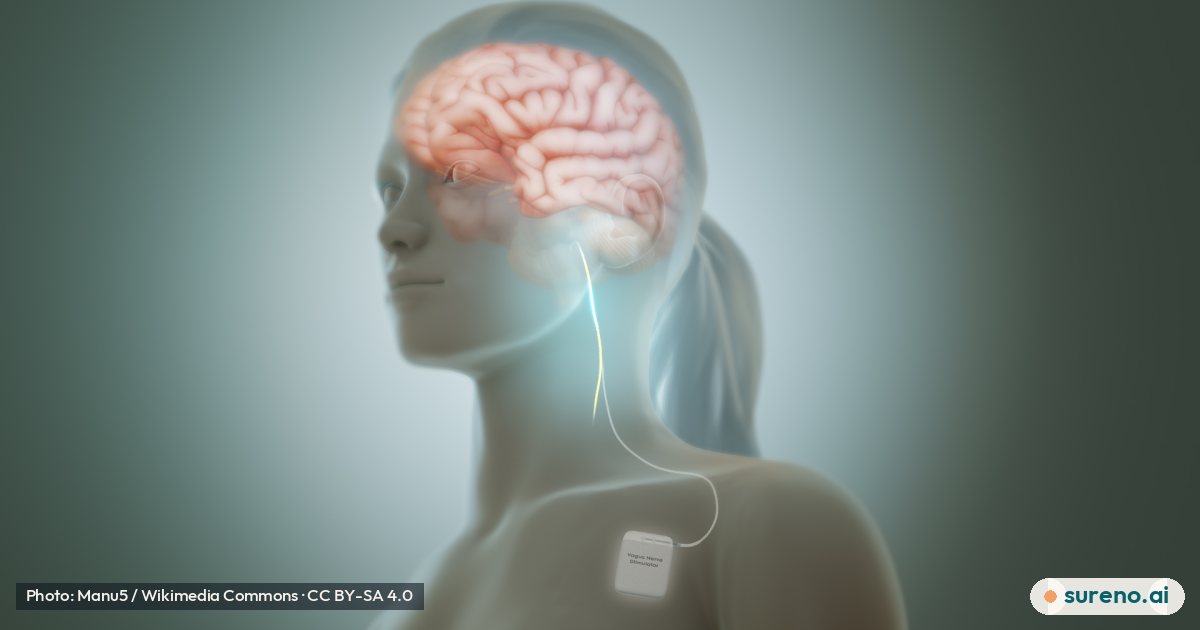
The vagus nerve is a major communication pathway between the brain and internal organs. It carries information from the body to the brain and also carries signals in the other direction. Vagus nerve stimulation, or VNS, means applying stimulation to influence this pathway. 1
VNS is already clinically approved for treating several disorders, according to the research report. That existing use does not mean it is approved or established as a way to improve learning. The new result described here concerns mice, not a demonstrated learning treatment for people. 1
What remains unclear?
The supplied report does not show whether the finding will apply to human learning, which kinds of skills might be affected, or how long any effect might last. It also does not provide enough detail to assess the study design or the size of the effect. These are important limits when interpreting an early animal finding. 1
For the study announcement and its explanation, read the ScienceDaily report about the Tohoku University research. The available sources do not include a direct university announcement or the underlying research paper, so further details cannot be verified from them. 1
What we don't know yet
- Whether the result applies to people.
- Whether stimulation affects different kinds of learning or skills.
- How long any effect lasts and what mechanism explains it.
- The supplied account does not provide enough study detail to evaluate the effect's size.
Share this explainer
Health news without the hype
Sureno Browser shows official health updates on your start page, explained simply.
Questions people ask
Can vagus nerve stimulation help people learn new skills?
The finding described here comes from mice, so it does not show that VNS helps people learn new skills. Human effects remain unknown based on the supplied research report. 1
What is vagus nerve stimulation?
Vagus nerve stimulation is a way of influencing the vagus nerve, a communication pathway between the brain and internal organs. The report says VNS is clinically approved for several disorders, but it does not establish it as a learning treatment. 1
Sources
- Vagus Nerve Stimulation Could Help New Skills Stick — ScienceDaily
Free tools for this
They run in your browser. Nothing is uploaded and there is nothing to sign up for.
More to read
 HealthMehmet Oz and the ACA Fraud Crackdown: What It MeansOct 5, 2026 · 4 min read0 views
 HealthWhat to Know About the Autus Valve for ChildrenOct 5, 2026 · 2 min read0 views
 SportsLions vs. Panthers: What to Know About the NFL GameOct 5, 2026 · 3 min read3 views
 WorldFormer Prince Andrew Challenges Police Search Warrants in CourtOct 5, 2026 · 5 min read4 views