
Morning
Bryant Park
Midtown
Take a gentle stroll or sit among the gardens before exploring nearby landmarks.
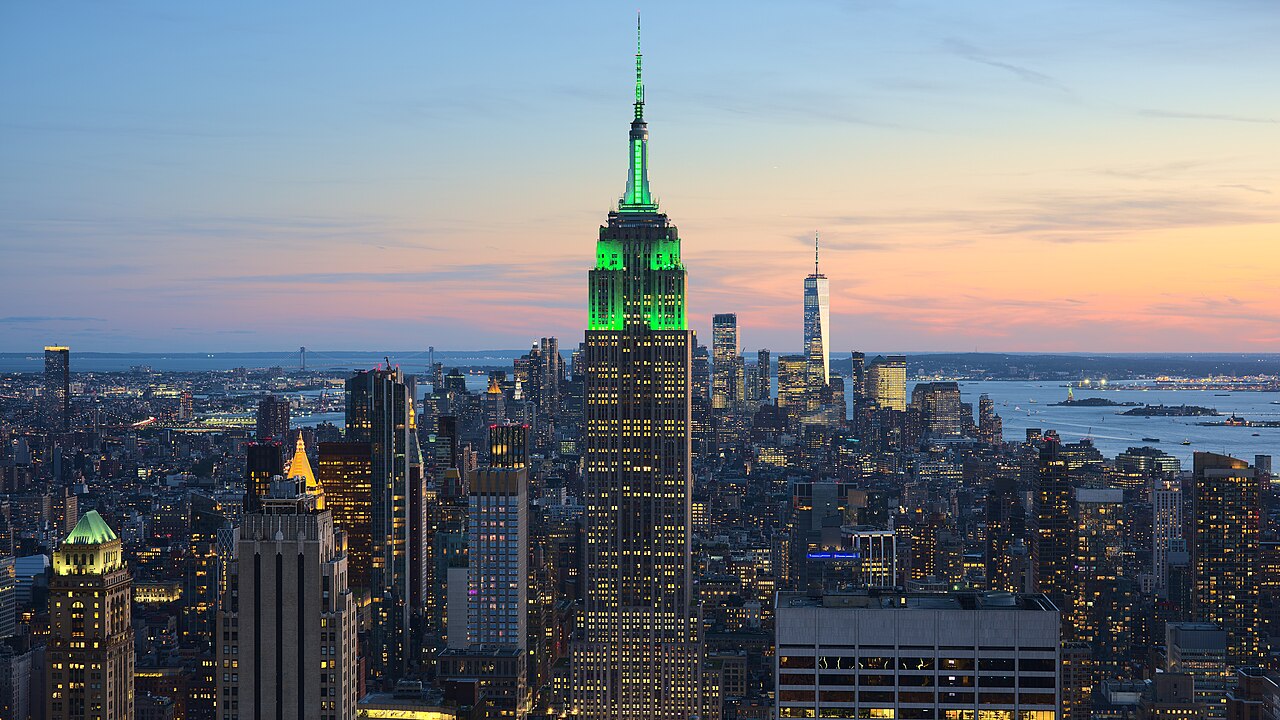
A relaxed first visit with landmark views, gentle walks, and time to rest. New York is large, so plan each day around one area.
The most comfortable months for walking about are July, August and September: mild days and less rain. The warmest month is July, at about 79°F (26°C) in the afternoon. The wettest is December.
Bars show the typical night-time low to daytime high; the numbers are daytime highs in °F and rain in millimetres for the month. Averages for 2001–2020 from NASA POWER, so a given year can be warmer, colder or wetter.
Written with AI from public facts about New York, then checked by Sureno's rules. Opening times and prices change: check them before you go.
Midtown
Take a gentle stroll or sit among the gardens before exploring nearby landmarks.
Rockefeller Center
See the city from an observation deck, with views that include Central Park and the Empire State Building.

Theater District
See the bright signs at an unhurried pace and choose a nearby restaurant for dinner.

Upper Manhattan
Enjoy a short, flat section of the park and pause on a bench when you like.

Upper East Side
Choose a few galleries rather than trying to see the whole museum in one visit.

Have dinner at a neighborhood restaurant and keep the evening close to your hotel.

Lower Manhattan
Take the free ferry for harbor and Statue of Liberty views; check current service before setting out.

World Trade Center
Visit the outdoor memorial at a thoughtful pace, with time to rest nearby.

Financial District
Choose from the restaurants along this historic cobbled street, or simply enjoy the atmosphere.
The official New York tourism siteWhere to sleep, on Wikivoyage
New York, often called New York City (NYC), is the most populous city in the United States. It is located at the southern tip of New York State on New York Harbor, one of the world's largest natural harbors. The city comprises five boroughs—Manhattan, Brooklyn, Queens, the Bronx, and Staten Island—each being coextensive with its respective county. It is the geographical and demographic center of both the Northeast megalopolis and the New York metropolitan area, the largest metropolitan area in the United States by both population and urban area. New York is a global center of technology, fina…
From Wikipedia (CC BY-SA 4.0).
Photos: Wikimedia Commons, credited on each picture. Climate: NASA POWER (public domain). Introduction: Wikipedia (CC BY-SA). The plan was written with AI from those public facts.


