


Morning
Federation Square
City centre
Take a relaxed look around this central meeting place and its public spaces.
A gentle first visit to Melbourne, with central sights, gardens and easy meals.
The most comfortable months for walking about are January, February, March, April and December: mild days and less rain. The warmest month is January, at about 78°F (26°C) in the afternoon. The wettest is November.
Bars show the typical night-time low to daytime high; the numbers are daytime highs in °F and rain in millimetres for the month. Averages for 2001–2020 from NASA POWER, so a given year can be warmer, colder or wetter.
Written with AI from public facts about Melbourne, then checked by Sureno's rules. Opening times and prices change: check them before you go.
City centre
Take a relaxed look around this central meeting place and its public spaces.

Southbank
See a selection of the gallery’s art and take a seated break.

Southbank
Choose a relaxed riverside meal and enjoy views across the Yarra.

South Yarra
Enjoy a gentle stroll among lawns, trees and lakes, with places to rest.

Kings Domain
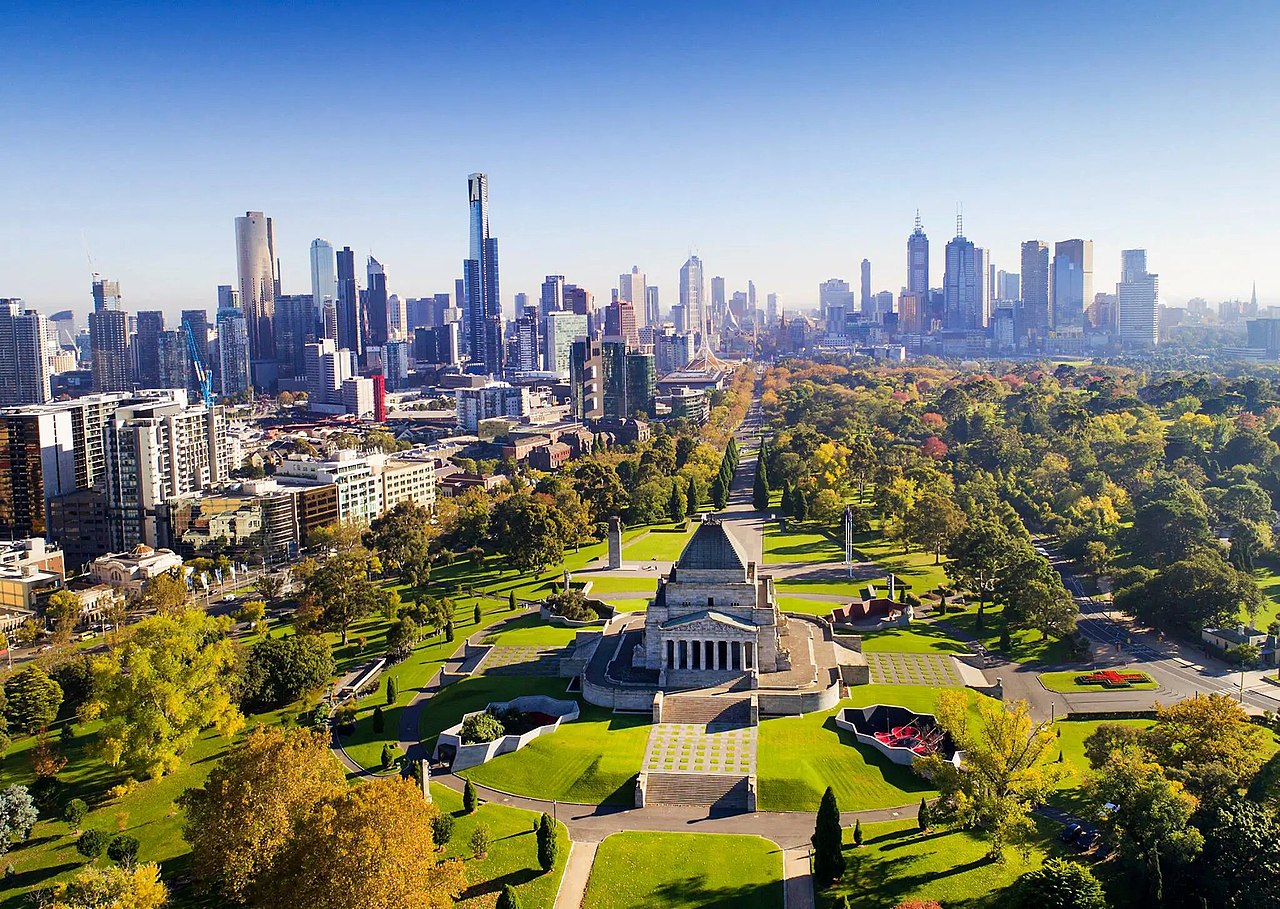
Visit this memorial and its grounds for history and broad city views.

City centre
Browse the lively dining area and choose a meal to suit your group.

City centre
Explore this historic arcade at an unhurried pace and pause for coffee.

St Kilda
Enjoy the seaside promenade and bay views; keep the walk as short as you like.

St Kilda
Pick a casual dinner or a sweet treat along this well-known street.
Melbourne is the capital and most populous city of the Australian state of Victoria and the second-most populous city in Australia. The city's name generally refers to a 9,993-square-kilometre (3,858 sq mi) area, comprising an urban agglomeration of 30 local government areas. The name is also used specifically to refer to the local government area, also named the City of Melbourne, whose administrative area is centred on the Melbourne central business district and some immediate surrounds.
From Wikipedia (CC BY-SA 4.0).
Photos: Wikimedia Commons, credited on each picture. Climate: NASA POWER (public domain). Introduction: Wikipedia (CC BY-SA). The plan was written with AI from those public facts.


