

Parrot-Like Chewing Muscles Helped Infernogallus jamesi Eat Fruit, Scientists Discover Strange Dinosaur Evolved for the Diet
A rare dinosaur discovery
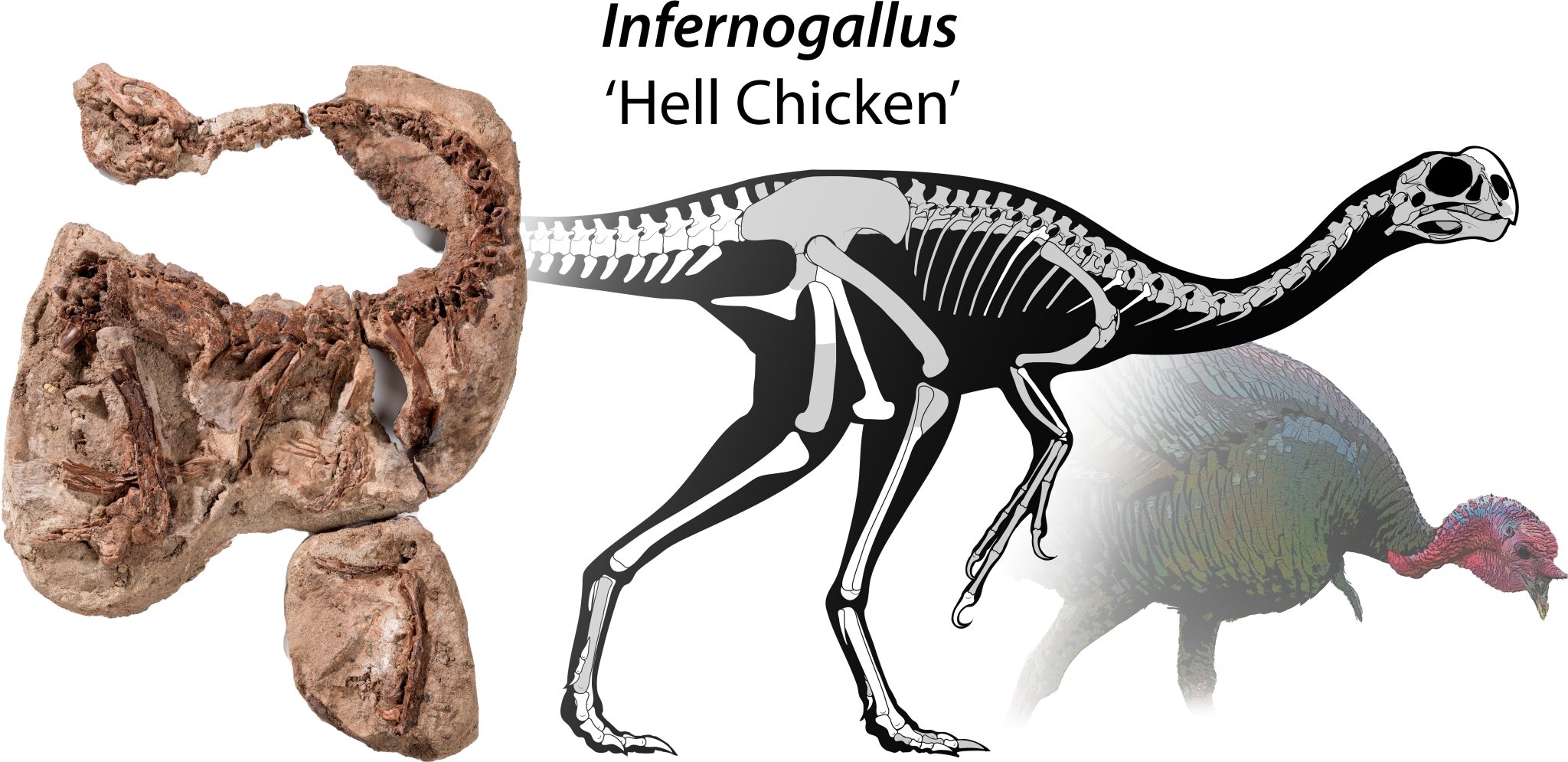
Infernogallus jamesi is the first known dinosaur identified with anatomical features specifically associated with fruit consumption. Researchers from Stony Brook University, the Royal Ontario Museum and the North Dakota Geological Survey made the discovery. The study, led by Dr. Gregory Funston, appeared in Nature Communications.
The dinosaur’s name means “hell chicken,” referring to the Hell Creek Formation, where its fossils were found. That formation spans Montana, North Dakota, South Dakota and Wyoming, and contains remains of T. rex and Triceratops, which lived alongside Infernogallus. Its nearly complete skull and partial skeleton are on display at the Royal Ontario Museum.
Clues in the skull
The fossil’s forward-positioned chewing muscles are unusual among animals. A similar arrangement occurs in some mammals with complex chewing and in certain fruit-eating birds, including the modern vulturine parrot, Psittrichas.
Researchers say the structure suggests Infernogallus processed soft food in its mouth rather than relying on its gut. Its jaw movement may have helped remove the flesh of stone fruits from their hard pits.
Fruit and dinosaur evolution
The findings point to a connection between changing plant life and dinosaur feeding adaptations. As fruits grew larger and more common, caenagnathids developed increasingly specialized ways to chew, the study reports.
Dr. David Evans, the paper’s senior author and a Royal Ontario Museum curator, said complete fossils of small dinosaurs such as Infernogallus are uncommon. He said the skull offers new insight into dinosaur feeding and evolution, while underscoring how much remains to be learned about the animals of the T. rex era.
Key points
- Infernogallus jamesi is the first known dinosaur with anatomical adaptations linked specifically to fruit eating.
- Its chewing muscles resemble those of a modern vulturine parrot.
- The dinosaur may have used its mouth to separate fruit flesh from hard pits.
- Its fossils were found in the Hell Creek Formation and are displayed at the Royal Ontario Museum.