

Wage restraint and longer hours put german auto workers back on the foot as sector reels from high costs and competition
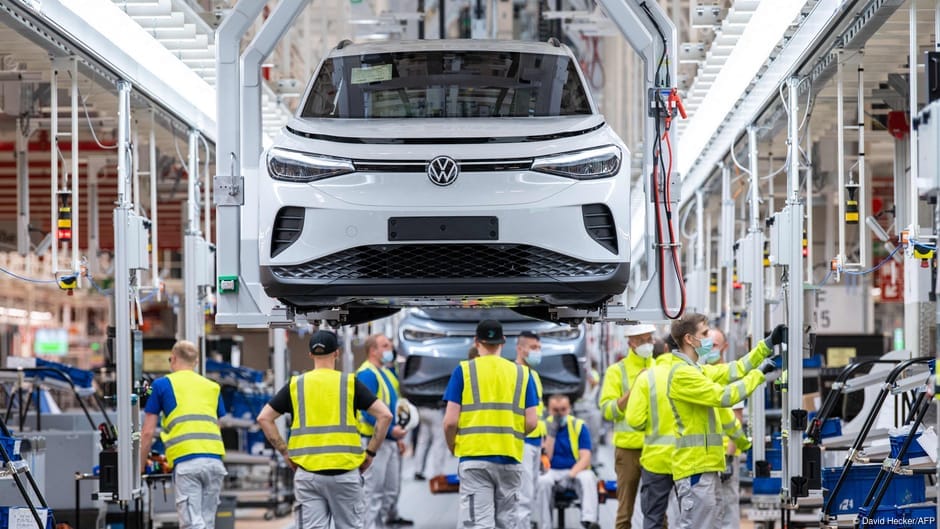
Negotiations test workers’ leverage
When negotiations began at Volkswagen on Tuesday, the balance of power appeared to favor management. The carmaker wants wages frozen for two years and several allowances and bonuses cut.
Volkswagen and Mercedes are also seeking longer working hours at the same pay, and have threatened to hold back investment in German factories. Unions have answered with warning strikes and the possibility of larger walkouts.
A long history of cooperation
German auto workers gained pay and benefits during the industry’s boom years. Between 2011 and 2019, their pay rose faster than the average German wage; in early 2025, hourly earnings were nearly a third higher than the typical worker’s when bonuses and allowances were included, Destatis said.
Volkswagen’s system of worker representation dates to a 1945 agreement, with employee-led councils and unions representing labor. In 1960, Berlin secured extra votes for government officials on the company’s supervisory board, including representatives of Lower Saxony.
Industry pressures reshape priorities
Researchers say workers’ representatives have increasingly focused on protecting plants and jobs as companies pursued cheaper labor abroad. The transition from combustion engines to electric vehicles has also weakened the case for keeping production in Germany.
Slow electric-car sales and competition from Chinese manufacturers have highlighted cost differences. Labor researcher Thomas Haipeter of the University of Duisburg-Essen said workers’ representatives face pressure to make concessions to protect jobs, while lacking a more assertive strategy.
Cuts exchanged for job security
In 2024, Volkswagen canceled labor agreements and threatened factory closures. After negotiations, labor accepted €1.5 billion a year in abandoned wage increases and the elimination of 50,000 positions through attrition, in return for job security for current employees through 2030.
This summer, management proposed restructuring that included closing four German plants. It delayed that decision after negotiations but planned another 50,000 positions for attrition. Unions are also confronting demands for employees to work more for the same pay, or less for reduced hours.
Key points
- Volkswagen wants a two-year wage freeze and cuts to allowances and bonuses.
- Volkswagen and Mercedes are seeking longer hours at the same pay.
- Germany’s auto industry lost more than 123,000 jobs between 2019 and 2025, according to the Ifo Institute.
- Volkswagen workers accepted major cuts in 2024 in exchange for job security through 2030.