

Trump appeals in state and federal courts seek to erase hush money criminal conviction
Federal judges question transfer request
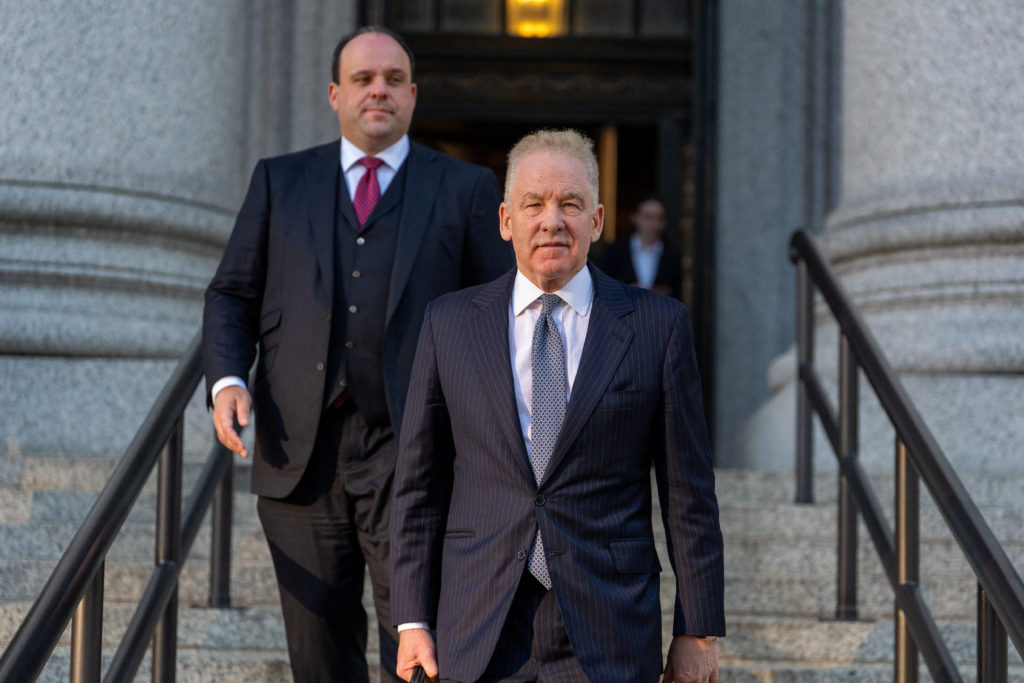
A three-judge panel of the 2nd U.S. Circuit Court of Appeals heard arguments for more than an hour on Monday. Trump’s lawyer, Robert Giuffra Jr., asked the judges to take control of the case and halt deliberations in the New York Appellate Division while the federal court considers his request.
Giuffra said Trump could otherwise wait years for state appellate courts to rule before seeking review from the U.S. Supreme Court. Judge John M. Walker Jr. questioned how the transfer would work after briefs had been filed and arguments heard in state court. Chief Judge Raymond J. Lohier Jr. said he saw no congressional authorization for the procedure Giuffra proposed.
Giuffra responded that a provision allowing post-verdict transfer petitions was a “safety valve,” and said it was meant to prevent gamesmanship. The panel did not issue an immediate decision.
Two appeals proceed at once
Trump is pursuing a federal court challenge alongside a conventional appeal in New York’s state court system. The Appellate Division heard arguments on Nov. 5 and has not yet ruled.
The federal case concerns Trump’s latest effort to move the prosecution out of state court, where he could seek dismissal based on presidential immunity. He asked the 2nd Circuit to intervene after federal Judge Alvin K. Hellerstein rejected his request for a third time in August.
After Trump appealed Hellerstein’s second denial, the 2nd Circuit directed the judge to reconsider, saying he had not weighed “important issues relevant” to the transfer request. Hellerstein, who died last month at 92, wrote that hush money payments and covering up an embarrassment were not covered by presidential immunity.
Arguments over evidence and conviction
Trump was convicted in May 2024 on 34 felony counts of falsifying business records. The case involved a $130,000 payment to adult film performer Stormy Daniels, which prosecutors said was obscured through those records.
Giuffra argued that prosecutors relied on evidence of official acts that the Supreme Court later barred under its July 2024 ruling on presidential immunity. He cited testimony about Trump’s Oval Office conversations, workflow and social media posts.
A bid to shed historic distinction
The case went to trial while Trump was campaigning to return to the White House. He is the first U.S. president convicted of a crime, and he is seeking to overturn that distinction through his appeals.
The federal panel must decide whether it can or should intervene while the state appeal is pending. Neither court has yet ruled on Trump’s efforts to erase the conviction.
Key points
- Trump is challenging his New York conviction through state and federal court appeals.
- The 2nd Circuit questioned whether it could transfer the case from state court.
- Trump was convicted on 34 felony counts over records tied to a $130,000 payment.
- The state Appellate Division and federal appeals panel have not yet ruled.